


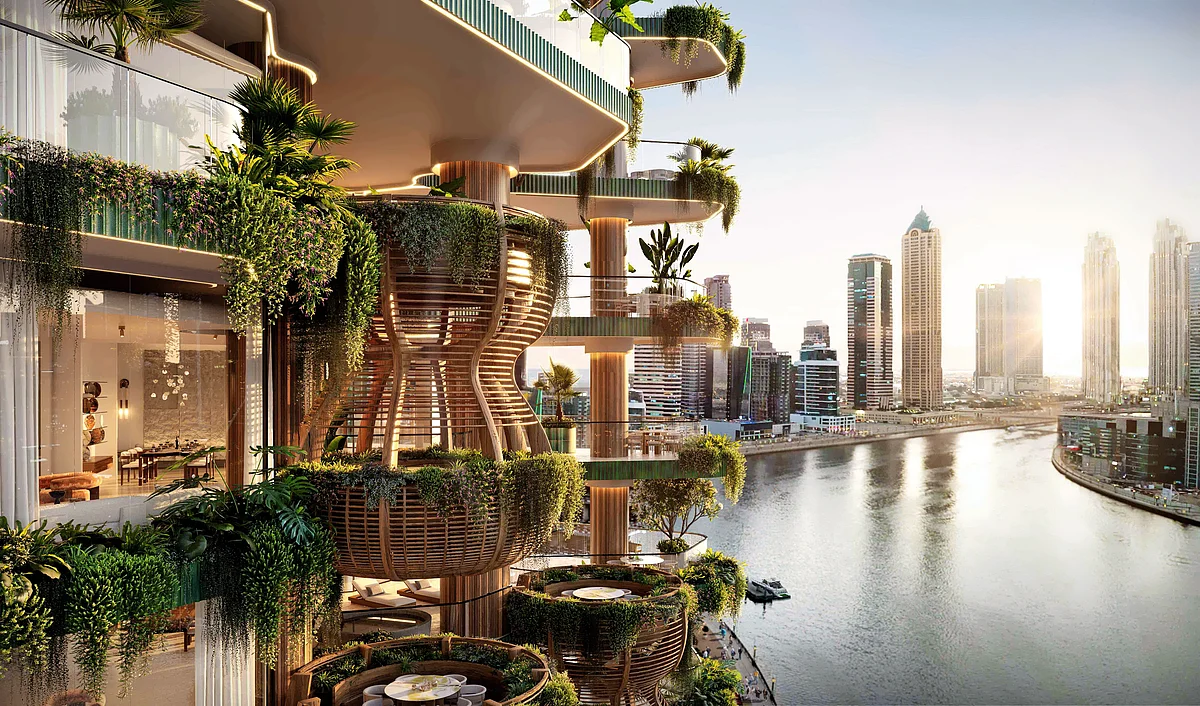
Is Regenerative Real Estate The UAE's Next Big Shift?


That is one of the questions driving interest in regenerative real estate, a concept that goes beyond making buildings more energy-efficient. The idea is to design developments that not only reduce their environmental footprint but also improve living conditions, support natural ecosystems and make better use of resources throughout their lifespan.
Recommended For YouThe distinction matters for an industry with a considerable environmental footprint. Buildings and construction account for around 32% of global energy consumption and 34% of carbon dioxide emissions, according to the United Nations Environment Programme (UNEP).
In the UAE, developers are beginning to explore how these principles could influence residential projects, from the materials used during construction to indoor air quality, water management and the ability of buildings to adapt over time.
The challenge, however, lies in putting these principles into practice. Measuring their impact, managing development costs and making regenerative design commercially viable beyond the luxury segment will be important in determining how widely this approach is adopted across the UAE property market.
Beyond Reducing Environmental Impact
Regenerative development takes a broader view of building performance, considering not only environmental efficiency but also the quality of living spaces, their relationship with nature and their ability to respond to local climate conditions.
Alex Zagrebelny, Founder and CEO of R.Evolution, believes this requires a different approach to how developments are planned and assessed.
“Regenerative real estate goes further. It aims to create net-positive outcomes for people and for the local environment, so the building doesn't just 'perform better', it actively improves the living conditions around it,” he says.
In practical terms, this could involve greywater recycling for landscaping, solar energy, vertical greenery and materials that support healthier indoor environments. In the UAE, where high temperatures and humidity place additional demands on buildings, Zagrebelny says factors such as mould prevention, durability and climate resilience also need to be considered from the design stage. The growing emphasis on building performance is also changing how developers think about residents' health.
Sparsh Jain, Co-Founder and CEO of Wellcube, says the conversation is expanding beyond a building's environmental footprint to include the conditions people experience inside it.
“We are now becoming much more conscious of the fact that buildings are also health environments,” he says.
Air and water quality, lighting, acoustics, thermal comfort and access to nature are among the factors influencing residential design. These considerations are particularly relevant in Dubai, where the climate means residents spend considerable time indoors.
At Wellcube, Jain says the company has sought to incorporate wellness into the residences themselves rather than relying solely on facilities such as gyms and spas. Its serviced residences include the StayWell Premier programme by Delos, which focuses on air and water quality, circadian lighting and sleep, alongside biophilic design and natural materials.
“A healthy building should not simply contain a gym or a spa. The building itself should make healthy living easier,” Jain says.
He believes Dubai's existing green-building framework, Al Sa'fat, provides a foundation for placing greater emphasis on residents' health alongside environmental performance.
There is also evidence that health and wellbeing are becoming more important in how people assess their surroundings. According to JLL's 2025 Global Consumer Experience Survey, cited by Jain, 71 % of respondents considered living in a healthy city important, while 68 % said health and wellness influenced their choice of places for different activities. Although the findings do not specifically measure demand for regenerative housing, they point to the growing importance people place on healthier environments.
What Happens After Residents Move In?
The effectiveness of regenerative design depends on more than the features incorporated into a building. What matters is how well those systems perform in everyday use, from maintaining indoor air quality to reducing water consumption and supporting the surrounding environment.
Zagrebelny says performance should be assessed through design targets, operational monitoring and checks after occupancy, rather than relying on certifications alone.
At R.Evolution, he says indoor air quality is one of the areas being addressed through ventilation and filtration systems. Its projects are designed to refresh indoor air six times per hour, with MERV 14 filtration used to capture fine particles, including PM2.5, which are a particular concern in Dubai because of dust and traffic emissions.
The company also looks at water consumption and reuse, including greywater used for irrigation, while biodiversity assessments should consider whether plants survive and grow over time rather than simply how much greenery is installed.
Jain believes the distinction between a building's features and its actual performance is particularly important.
“The biggest mistake would be to measure wellness through the number of amenities a development has,” he says.“A building can have a beautiful spa, gym and pool and still have poor indoor air quality or an uncomfortable thermal environment.”
He points to measurable factors such as air and water quality, lighting, acoustics and thermal comfort, as well as frameworks such as WELL, which assess different aspects of building health and performance.
Environmental performance also needs to be assessed over a building's lifetime, taking into account energy and water consumption, waste and carbon emissions. Jain says biodiversity should go beyond decorative greenery to consider native planting, soil health and how landscaped areas support local ecosystems.
He also stresses the importance of monitoring buildings after they are occupied, when actual performance may differ from initial design expectations.
“A building can perform very differently in operation from how it was designed on paper,” Jain says.“Ultimately, the question should be: did the building perform as promised six months or two years after guests moved in?”
Does the Business Case Stack Up?
Building with regenerative principles can come at a higher initial cost. Better materials, advanced building systems and additional performance monitoring can increase development expenses, although the long-term savings and potential impact on property value may help offset some of that investment.
Zagrebelny acknowledges that there is usually an upfront premium, particularly when higher-quality building systems, careful material selection and ongoing monitoring are involved.
“However, the business case becomes stronger when regenerative features reduce operating cost risk and improve resident experience,” he says.“If a building maintains healthier air quality, controls moisture safely, and reduces water dependence through engineered reuse, you typically see fewer operational problems and lower long-term maintenance burdens.”
“When those outcomes are measurable and communicated clearly, regeneration can translate into stronger demand, more resilient asset value, and improved marketability over time,” he adds.
Independent certifications such as LEED Platinum and WELL Platinum, where applicable, can also strengthen investor confidence by providing third-party assessment, he adds.
Jain agrees that upfront costs can be higher but says the focus should extend beyond construction expenses.“Some interventions are relatively inexpensive if they are considered during design but become extremely expensive to retrofit later,” he says.
Building orientation, glazing, ventilation, daylight, landscaping and water systems are among the decisions that can affect both operating costs and long-term performance.
“The bigger shift, however, is thinking about the total value of the asset rather than just the cost of construction,” Jain says.“If a building has lower operating costs, greater resilience, better indoor environmental quality and stronger appeal to residents, those characteristics can contribute to its long-term competitiveness.”
However, he cautions against assuming that every wellness feature will automatically increase property values.
“That relationship depends on location, execution, market positioning and whether buyers actually value the feature,” he says.
Jain says the value lies in combining healthier living conditions with operational efficiency.
“A well-designed home should support sleep, movement, comfort, connection with nature and healthy routines while also being efficient to operate,” he says.“If you can achieve both, you are creating a more resilient asset rather than simply a more expensive one.”
Regenerative design is still largely associated with high-end residential developments, where buyers may be more willing to pay for advanced building systems and wellness features. Bringing these approaches into mainstream housing will depend on making them more affordable and easier to implement.
Zagrebelny believes wider adoption is possible but says it will require changes across the construction industry.
“Regulations and standards need to reward measurable performance, procurement must make high-performance systems more accessible, and the industry needs the skills to deliver regeneration consistently at scale,” he says.
He also points to the need for more standardised and cost-effective technologies, particularly in areas such as air filtration, water reuse, building protection and indoor air monitoring.
Jain, meanwhile, believes it is important to distinguish between the principles of healthier building design and the expensive amenities often associated with luxury developments.“A marble spa, advanced recovery technology or a highly specialised wellness clinic is not necessary to create a healthier home,” he says.
Good daylight, ventilation, thermal comfort, acoustics, access to greenery and better water management are among the measures that can be incorporated into residential design without relying on elaborate wellness facilities.
The UAE already has a regulatory foundation for sustainable construction, including Dubai's Al Sa'fat green building system and the Dubai Building Code. Jain says the next step is to make higher building performance more accessible through clearer standards, affordable technology and greater awareness among developers and buyers.
“I also think the industry needs to stop equating wellness with expensive amenities,” he says.“A building does not become healthy because it has a cold plunge.”
“The ultimate goal should be simple: sustainability should not be something you pay extra to experience. It should become part of what a well-designed building fundamentally is.”
ALSO READ- Dubai buyers shift from bigger homes to convenient 15-minute communities that save time UAE homebuyers shift to lifestyle-led communities as wellness real estate surges Real estate success is about creating life, not just buildings, says Emaar founder

Legal Disclaimer:
MENAFN provides the
information “as is” without warranty of any kind. We do not accept
any responsibility or liability for the accuracy, content, images,
videos, licenses, completeness, legality, or reliability of the information
contained in this article. If you have any complaints or copyright
issues related to this article, kindly contact the provider above.


Comments
No comment