


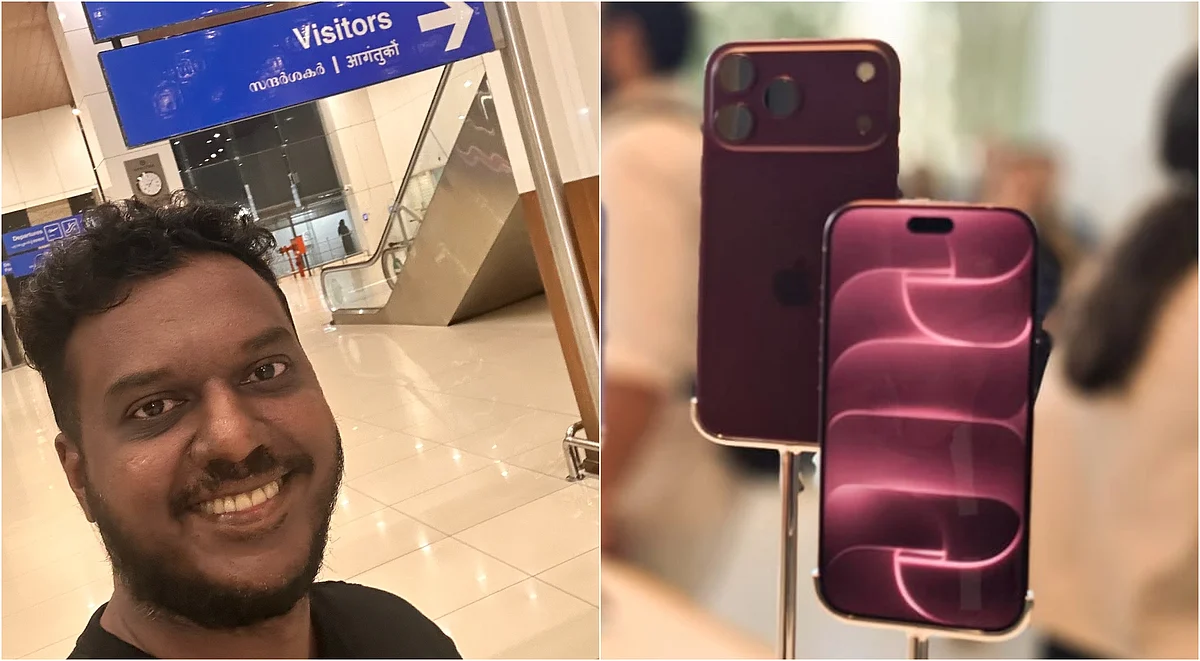
UAE Expat To File Court Case Over Iphone Seized At Indian Airport What Customs Law Says


According to the Indian expat, Kerala customs officials offered Ajas a "settlement" and suggested he pay "a very minimum duty" to get the phone back; however, Ajas said he refused. Unwilling to pay any money to get his phone back, the entrepreneur is now exploring legal options. He said he would also "try to file a Public Interest Litigation in court to direct customs to remove the ambiguity in this law".
Recommended For YouStay up to date with the latest news. Follow KT on WhatsApp Channels.
Khaleej Times spoke to two lawyers to get a better understanding of Indian customs law. According to Shabeel Ummer, a Dubai-based lawyer, while electronic devices qualify as personal effects, they are not automatically exempt simply because the passenger calls it personal property.
Sharjah-based lawyer Hakkim Ottapalam added that the examining customs officer has the authority to examine the goods, assess their value and determine the applicable duty in accordance with the relevant provisions of the Customs Act, 1962, including Section 81 and applicable rules. However, both lawyers agreed that the customs law does not differentiate between new and old when it comes to personal effects.
Ajas, whose video of the protest went viral, has said the intention was not social media fame. Nevertheless, he was surprised by the overwhelming response from Indian expatriates after his friend uploaded the video. The post garnered over 4.7 million views, with several non-resident Indians thanking him for speaking out on the matter. Some have even offered financial and legal assistance, Ajas said, adding that he refused to accept money from anyone.
Ajas, who has been living in Dubai for nearly one year, is the founder of Eduport, a learning app for Kerala students. The Indian firm also has an office in Sharjah, which is why he frequently travels between India and UAE. The expat said he decided to react because "someone should raise their voice".
What happened at Kochi airport?On October 23, Ajas landed at Kochi's Nedumbassery airport around 9pm. When he arrived at the customs counter, he was asked about the value of his new burgundy iPhone 18 Pro, which he had bought in Dubai the previous day for Dh5,950.
Although the device was out of its box and intended for personal use, the customs officer said he would have to pay a duty since the value was more than Rs75,000 (approx. Dh2,890). He was also carrying a second phone on his person at the time - an iPhone 14 that he'd been using for a few years.
Ajas said his first reaction was to refuse to pay "even one rupee unjustly". He decided he would stay in the airport till he got his phone back to protest what he described as an 'injustice'. The expat said he did not create any noise since it was an airport and a "high security area".
While he was allowed to sit there for a few hours, Kerala's Central Industrial Security Force (CISF) personnel were called in around 2am. Ajas said they took him out of the airport by force and a case was filed against him by the customs officials for "interfering in their duty".
'Grey area' in lawAjas said the customs law does not discriminate against new and old when it comes to personal effects as long as they are not being used for commercial purposes, so it is unclear why he was stopped for holding a new iPhone. The law also does not have a set limit on the number of devices that can be brought in for personal use, he said, questioning why bringing in two phones was a problem.
The reason he decided to take this matter to court is because he says this grey area should not exist. If there is a limit on the number of devices that can be brought in on personal use, then it should be specified, similar to how Indian law sets limits for gold and jewellery, he added.
Ajas noted that when there is room for doubt, it creates a hurdle for the common man.
What does the law say?Ajas' story has gained widespread coverage, leaving many wondering what the law says, and how it defines personal effects. Khaleej Times talked to lawyers to aid with a deeper understanding of the legal perspective.
Firstly, what goods does Indian customs law say can be carried duty-free? According to Indian law, "ordinary belongings reasonably needed for personal use and daily life during travel are generally allowed duty-free", said Shabeel, head of Legal and HR at V Group International.
Can new items be considered personal effects? Hakkim, an advocate in Farouq Abdalla Lawyer and Legal Consultants, said the rule does not state that an item must be "used or old" to qualify, meaning that a new device can be considered a personal effect.
Shabeel clarified that an electronic device is not automatically exempt simply because the passenger calls it personal property. Customs may consider its value, condition, quantity, purpose, and circumstances, he said.
Hakkim added that "where necessary, the passenger should be prepared to explain the purpose of the purchase and provide reasonable supporting evidence". This may include call history, messages, account information or other relevant records may help establish the circumstances. The customs officer may examine these factors when making an assessment under the applicable law, he added.
Both lawyers agreed that there is no limit on the number of phones a passenger can carry.
Shabeel gave a further breakdown on how situations may vary, under the existing laws:
- Two phones already owned and regularly used: This is a stronger case for treating both as personal effects, although the facts and applicable rules still matter.
One existing phone and one newly purchased iPhone: The new phone may be assessed differently; its intended personal use does not by itself guarantee exemption.
Multiple new or boxed phones: These may raise questions about the purpose of import and whether the goods qualify for passenger baggage concessions.Is there a way to appeal decisions? Hakkim said Section 128 of the Indian Customs Act, 1962, provides a mechanism for appealing certain customs decisions to the Commissioner (Appeals). The applicable limitation period and procedural requirements should be verified for the particular order before filing an appeal.
Although the case has attracted much attention, both lawyers also cautioned against jumping to conclusions. "Without examining the complete facts, the relevant documents and the applicable legal provisions, it would not be appropriate to conclude that either party acted unlawfully," Hakkim said. "Reported facts are separate from judicial determination of the legality of the incident," Shabeel added.
ALSO READ- Indian court rejects Adani plea that duty-free shops are beyond domestic laws UAE summer travel: What you can and cannot bring into Dubai UAE travel rules: List of surprising items you cannot carry in your luggage

Legal Disclaimer:
MENAFN provides the
information “as is” without warranty of any kind. We do not accept
any responsibility or liability for the accuracy, content, images,
videos, licenses, completeness, legality, or reliability of the information
contained in this article. If you have any complaints or copyright
issues related to this article, kindly contact the provider above.


Comments
No comment