


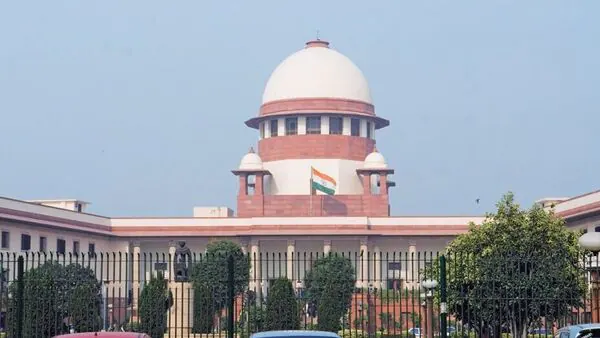
'Don't Treat People's Lives As Commerce': SC Pulls Up Centre And Hospitals Over Medicine Mark-Ups


A bench of Justices Vikram Nath and Sandeep Mehta reserved its order in a public interest litigation (PIL) filed in 2023 by advocate and activist Kishan Chand Jain, seeking affordable medicines and reforms in drug pricing and medical regulation.
The court also questioned hospitals' pricing practices, asking why medicines were sold to patients at maximum retail prices (MRPs) that were far above their procurement costs.
“The lives of people, Ms Bhati... don't take it as commerce. Treat it as the life of the poorest citizen of this country,” the bench told additional solicitor general Aishwarya Bhati, appearing for the Centre.“We have asked you no less than 30 times to tell us this justification,” it added.
Also Read | Boardroom friction drives listed companies to law firms for governance adviceThe hearing took place after the government capped trade margins at 30% of the MRP for selected non-scheduled anti-cancer medicines through a notification issued on 17 October. According to the Centre's submission, the measure is expected to reduce retail prices by 20-70%.
The bench also pulled up the National Pharmaceutical Pricing Authority (NPPA) over its delayed intervention and questioned whether the latest measure would meaningfully lower prices when the original MRP was itself substantially inflated.“Your body seems to be totally defunct, with due respect,” the bench remarked while questioning the authority's record on addressing excessive markups.
The court cited the case of a chemotherapy injection that a medical dealer said he could procure for ₹11,000 but for which a hospital charged ₹1.3 lakh. It asked the government to explain the disparity and why it had taken so long to intervene.
The final ruling will determine the extent to which the Supreme Court can intervene to address excessive medicine mark-ups and whether broader price regulation is warranted. The decision will be closely watched by the pharmaceutical industry, hospitals and policymakers, given its potential implications for the Centre's pricing policy and patients' out-of-pocket healthcare costs.
Centre's argumentBhati argued that the government's policy sought to balance the availability of essential medicines at reasonable prices with innovation, competition, industry growth and employment. It favoured targeted interventions over comprehensive price controls, she submitted, cautioning that excessive regulation could affect investment and the availability of medicines.
“Our policy is based on these four limbs,” she told the court, referring to the availability of essential medicines at reasonable prices, innovation, competition and industry growth, including employment and shared economic well-being.
Also Read | How the Polycab case exposes the misuse of IBC for small duesThe bench, however, questioned the adequacy of the existing framework, asking why a medicine's initial MRP could be set far above its supply price and then be allowed to rise annually.“You at the initial level fix the MRP right up to the moon. Then you increase by 10%,” the bench remarked.
It also challenged the government's reliance on market forces to regulate prices, saying patients had limited bargaining power and little information about the prices at which hospitals and retailers procured medicines.
What hospitals saidSenior advocate Mukul Rohatgi, appearing for hospitals, argued that medicine margins helped private healthcare facilities meet the costs of maintaining operating theatres, catheterisation laboratories, MRI machines and round-the-clock medical staff. He said public hospitals were overstretched and private facilities needed adequate resources to provide healthcare.
Rohatgi warned that restricting medicine margins could force hospitals to raise charges for other services. He also said listed hospitals typically operated on profit margins of around 10% and needed to invest thousands of crores of rupees in upgrading equipment.“These hospitals are listed companies... 10% is the profit of all these hospitals. I have to bring in thousands of crores every year to update machinery,” he told the bench.
Also Read | Why sports broadcasters keep returning to court over piracyThe bench suggested that medicine packaging display both the MRP and the price to retailer (PTR) to improve transparency. It also raised concerns about whether financial incentives arising from high medicine margins could encourage unnecessary procedures, though it clarified it was not making a definitive finding that such practices had occurred.

Legal Disclaimer:
MENAFN provides the
information “as is” without warranty of any kind. We do not accept
any responsibility or liability for the accuracy, content, images,
videos, licenses, completeness, legality, or reliability of the information
contained in this article. If you have any complaints or copyright
issues related to this article, kindly contact the provider above.


Comments
No comment