


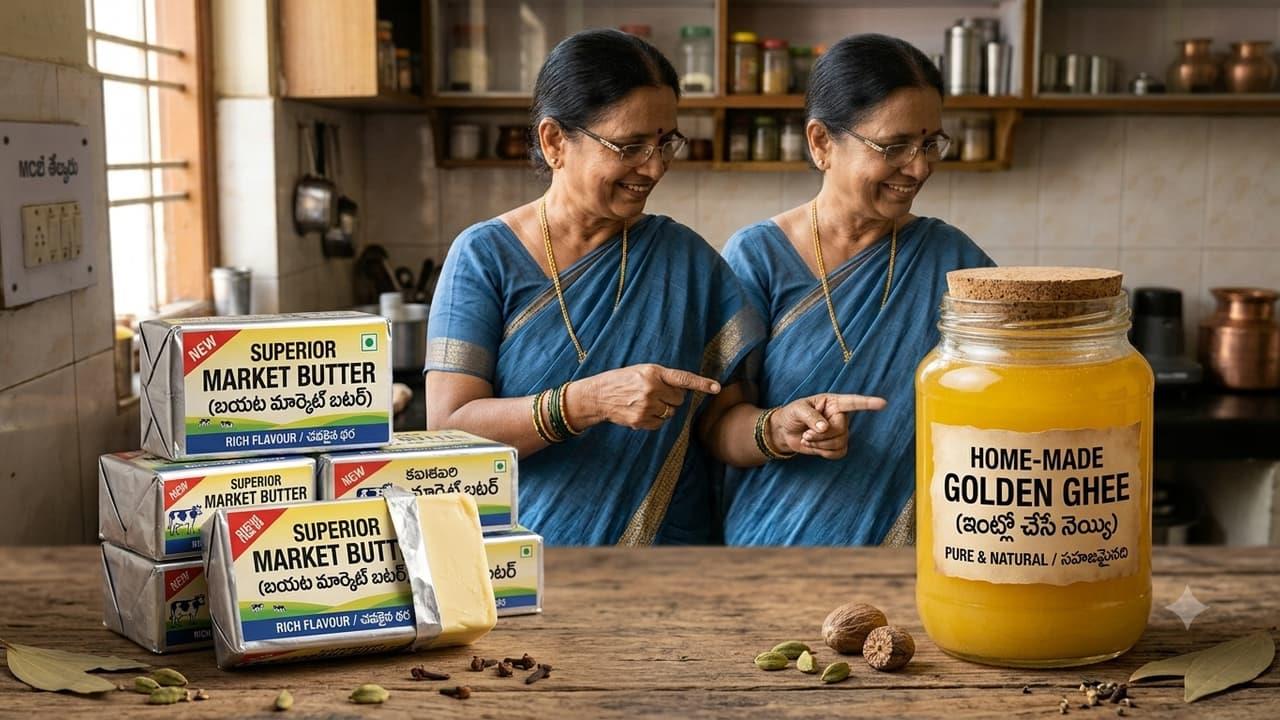
Ghee Or Butter? Know The Real Difference And Which Is Healthier


People used to completely avoid ghee earlier. They thought it makes you fat and spikes cholesterol. But ghee is back in trend now. Experts say you must eat at least one spoon of ghee every day because it is a superfood. We also hear a lot about butter. A common doubt hits all of us: Is our daily market butter better, or is our traditional homemade ghee the real deal? What exactly is the difference between the two?
Market butter contains water, milk proteins, and salt mixed into milk or cream. Brands sell it in a packaged and processed form.
Ghee, on the other hand, comes from melting butter or cream over a flame. This heating process evaporates all the water. It leaves behind only pure fat without any artificial chemicals.
Difference in nutrients and calories...
Let us look at the calories. 100 grams of butter gives you around 717 calories, while 100 grams of ghee packs 900 calories. Butter contains 3 grams of trans fats, but pure ghee has zero trans fats. Ghee also gives you plenty of omega fatty acids and Vitamin A.
Nutritionists say ghee gives amazing benefits to our body if you eat it in moderation. Ghee helps increase good cholesterol and cuts down the bad cholesterol in our body. It works wonders in keeping your digestion healthy and giving your skin a natural glow. Pure ghee absorbs very easily into the body compared to processed butter, which has trans fats. Ghee does a lot of good for your overall health. That is exactly why picking ghee over butter for your daily cooking is the best choice.

Legal Disclaimer:
MENAFN provides the
information “as is” without warranty of any kind. We do not accept
any responsibility or liability for the accuracy, content, images,
videos, licenses, completeness, legality, or reliability of the information
contained in this article. If you have any complaints or copyright
issues related to this article, kindly contact the provider above.


Comments
No comment