


The ISIS We Thought Was Finished


الموقع الرسمي لراديو البلد
Main navigation- أخبار تقارير مقالات تحقيقات فيديو راديو البلد مشاريع نشاطات ومقابلات بودكاست عمان نت لايت English
- وزير الصحة إبراهيم البدورأعلن، اليوم السبت، أن 27 مصابا بحادثة إطلاق النار في محافظة الكرك يتلقون العلاج في عدد من المستشفيات، مبينا أن حالتين حرجتين تتلقيان العلاج في مستشفى الأمير علي بن الحسين العسكري، فيما تتمتع بقية الحالات بالاستقرار. وزير التربية والتعليم وتنمية الموارد البشرية، الدكتور عزمي محافظة، يعمم على مديري التربية والتعليم في مختلف محافظات المملكة، تخصيص الإذاعة المدرسية غداً الأحد لإدانة الهجوم الإرهابي الذي استهدف كنيسة بلدة حمود في محافظة الكرك، والتأكيد على قيم الوحدة الوطنية والعيش المشترك بين الأردنيين. أجراس الكنائس في الأردن وفلسطين قرعت، اليوم السبت، عند الساعة الثانية عشرة ظهرا بتوقيت الأردن، إكراما لأرواح شهداء الهجوم الإرهابي الذي استهدف كنيسة القديس جاورجيوس للروم الأرثوذكس في قرية حمود بمحافظة الكرك، أمس الجمعة. قوات الاحتلال الإسرائيلي اعتقلت، فجر السبت، 15 فلسطينيا من محافظة نابلس، وفق وكالة الأنباء الفلسطينية. إدارة الأرصاد الجوية تتوقع، أن تشهد أجزاء من المناطق الشمالية والشرقية في الأردن، السبت، زخات متفرقة من المطر قد تكون مصحوبة بالرعد أحيانا، مع نشاط للرياح المثيرة للغبار، خصوصا في مناطق البادية.
- ISIS lost its state, but the movement did not disappear. Its networks and ideas remained dormant, capable of resurfacing as regional and domestic conditions change. Churches had already featured among potential targets before the Karak attack. They accounted for 3.8% of the planned targets identified in the cases examined by the study. Universities are central to prevention efforts. University graduates and students accounted for approximately 68% of the cases in the latest study's analysis, challenging the assumption that extremism is primarily associated with limited education. Unemployment is not a comprehensive explanation. Only 7.6% of those covered by the available occupational data were registered as unemployed, while employed people, professionals and members of the middle class were also represented. Extremist cells have roots and social histories. Understanding cases in Irbid, Karak and Ramtha requires tracing family ties, friendships, prison encounters and contacts abroad, while distinguishing these connections from direct organisational affiliation. Extremism reproduces itself across generations. Cases involving fathers, sons and grandchildren, as well as siblings, women and minors, point to increasingly entrenched family and social networks. The concept of the "social club of jihadists" helps explain recruitment. Family ties, friendship and professional relationships provide trust and reinforce radicalisation, while the internet facilitates communication, propaganda and cross-border connections. The movement's geographical footprint is changing. Zarqa's share declined while Amman's increased in comparative samples, highlighting the need to update prevention strategies at the neighbourhood, refugee camp and local network levels. Completing a prison sentence does not necessarily end radicalisation. The cases documented by the study call for a reassessment of prison policies and rehabilitation programmes, with a continuous framework for intervention before, during and after incarceration. Countering extremism requires an engaged society and an integrated approach. Security measures must be combined with intellectual dialogue, psychological and social rehabilitation, political participation, culture, the arts and sport. Success should be measured by behavioural change and social reintegration, not by the number of activities delivered.
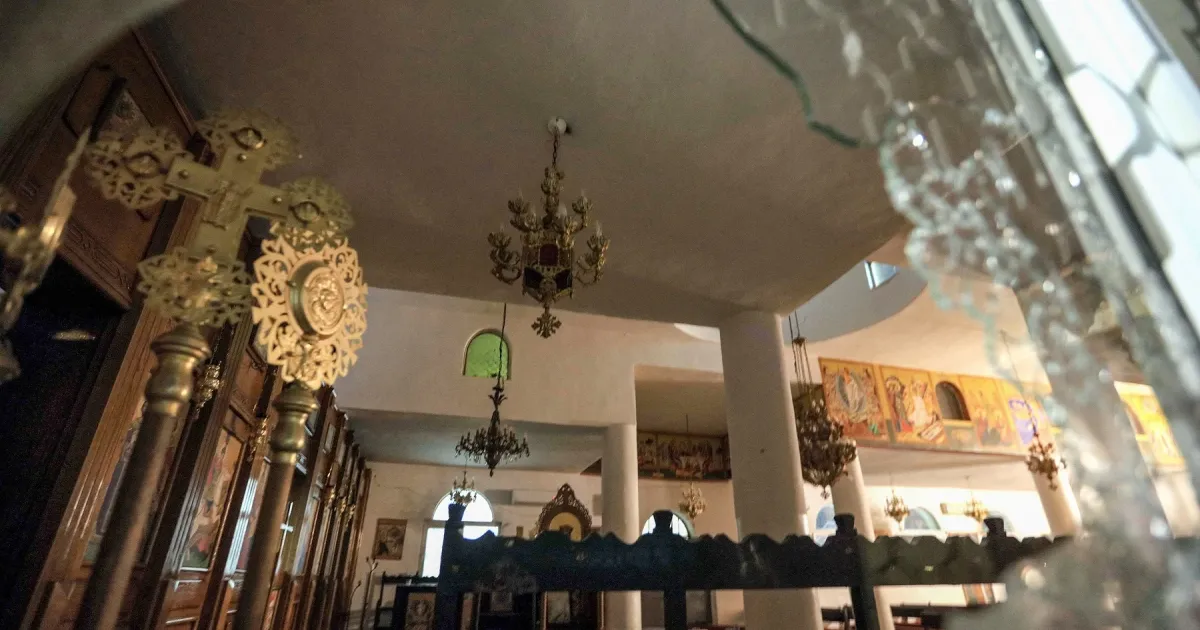
The attack on Hamoud Church in Karak struck a deep chord among Jordanians. Its impact went beyond the brutality of the killings and the number of victims, touching the sense that the attack had targeted the very fabric of their shared social life. The church is part of Karak's history, collective memory and the relationships that bind its people together. Christians are not a community living on the margins of society whose place within it needs to be explained. They are an integral part of its formation. Jordanians therefore felt that the bullets had struck their own home, and that people who had gone to mourn a deceased woman had returned, in some cases, as victims of a crime that violated both life and death.
The royal presence and the wave of public and political solidarity expressed a shared national sentiment and a refusal to allow the attack to achieve its broader objective: turning religious difference into mutual fear and undermining trust built over generations. The first confrontation with terrorism begins by defeating the meaning it seeks to impose on society, affirming that the victims are our own people, and recognising that protecting churches and mosques, and safeguarding freedom of worship, are national responsibilities that admit no hesitation.
Solidarity, however necessary, must be translated into knowledge, policy and sustained action. Otherwise, after every attack, we will simply reaffirm the values we believe in, return to our ordinary lives and leave the conditions that allow such crimes to recur operating out of sight.
The initial official toll was seven people killed and 34 injured. Media reports on the morning of 24 October put the figures at eight killed and 40 injured. The perpetrators' organisational links remained under investigation. This distinction is fundamental. The crime itself warrants unequivocal condemnation, but attributing it to a particular organisation and establishing the nature of any relationship with that organisation require evidence. Similarities in objectives and methods cannot substitute for an investigation.
Waiting for the investigation's findings does not mean suspending analysis. We have accumulated substantial research on Jordan's jihadist movement, its generational shifts, social networks, geographical distribution and experience in prisons. This body of work allows us to examine the attack within a broader context, rather than reducing it to a fleeting media narrative or using it to revive convenient explanations that do not withstand scrutiny.
The dormancy we mistook for an endingPart of the shock stems from the belief that ISIS came to an end when its territorial state collapsed in Iraq and Syria, and that years of relative calm meant the ideas it espoused had faded away. Yet the central question in our study, Jordanian Jihadists and the Collapse of the ISIS State, was different: what actually collapsed, and what survived? The study also appeared as a chapter in Islamists in Jordan: Religion, State and Society, published by the Politics and Society Institute, with contributions from Hassan Abu Hanieh and Abdullah Al-Taie. Did military defeat lead to an ideological reassessment, or did it merely reduce activity while the movement waited for different circumstances?
This was why we returned to the movement after its initial rise had receded. We sought to understand the impact of defeat and imprisonment, particularly as the sentences of people detained during the organisation's period of expansion approached their end. Treating this transition as the automatic end of the problem assumes that an idea dies when the authority embodying it falls, and that people necessarily reconsider their convictions when the organisation in which they believed is defeated. Experience supports neither assumption.
Some followers may interpret defeat as a test of faith, the result of leadership mistakes or a conspiracy, without questioning the underlying ideology. Others may genuinely withdraw, while a third group may simply suspend its activities under security pressure. These are different trajectories that cannot be collapsed into a single outcome, nor can they be measured solely by the number of attacks.
The study therefore warned against relying on what is visible on the surface. Dormancy may reflect an important security success in restricting the movement's ability to operate, but it does not prove that the environment capable of reproducing a willingness to use violence has disintegrated. We must distinguish between the collapse of a state, the decline of an organisation, the survival of a movement and the persistence of local networks that carry its ideas and enable its possible revival.
The confrontation in Ramtha in November 2025 served as a reminder. Jordan's Public Security Directorate announced that two brothers who espoused takfiri ideology had been killed during a raid in which three security personnel were injured. The incident highlights the continuing threat and the importance of family relationships in understanding some cases. It does not, in itself, establish any organisational connection to the recent attack in Karak.
Conversely, a major and horrific attack does not necessarily indicate the existence of a large central organisation operating an extensive network inside the country. It may involve a small group or individuals linked by previous relationships. An investigation might uncover contact with people abroad or ideological influence without direct organisational subordination. Ideological influence, support, direction and command are different levels of involvement. Careful analysis distinguishes between them instead of leaping from the scale of a tragedy to assumptions about the size of the organisation behind it.
The targeting of churches was not absent from earlier case files. The latest study identified churches among the planned targets in 3.8% of the cases examined, alongside security agencies, foreign interests, embassies, tourists and other targets. This figure refers to the distribution of targets identified in the case files, not to the probability of an attack occurring. It nevertheless shows that what shocked society when it materialised in bloodshed had already figured in the thinking of some groups.
In the ISIS worldview, civilians can become legitimate targets and sacred places can be turned into killing grounds when the world is reframed through takfir, the excommunication of others as unbelievers, and the legitimisation of bloodshed and terror. The deeper question is how a person comes to believe that killing neighbours or fellow citizens is justified, and how such a conviction acquires a force capable of overriding the everyday bonds and restraints that should prevent such a crime.
From an organisation to the small society that sustains itThis question leads us to a concept that has been central to our research: the "social club of jihadists". It refers to the network of relationships that gives extremist ideas an environment in which they can survive and endure, extending from kinship and marriage ties to friendship, professional relationships, neighbourhoods, mosques and clubs. Within these circles, an ideological message does not travel as an abstract text. It is carried by trust, loyalty, affection and a sense of belonging.
A young person may trust an individual before accepting the ideas that person promotes. He may enter a circle of friends before joining an ideological group. Within that circle, his experiences are gradually reinterpreted. Personal problems, political frustrations and religious questions are woven into a single narrative that explains his suffering, identifies those responsible and proposes a course of action.
The strength of this environment lies in its ability to offer more than an ideological message. It provides recognition, status, companionship and a sense of purpose. Abandoning an extremist conviction may therefore threaten the loss of an entire social world that a person has built around it. Challenging that conviction sometimes requires helping the individual establish relationships and a life beyond the circle that has monopolised his sense of belonging.
This also exposes the limitations of explanations that make the internet the principal cause of everything. Our research assigned a central role to primary relationships in recruitment and mobilisation, while viewing the internet as a facilitator of communication, propaganda and contact with members of the organisation abroad. This does not deny the importance of online radicalisation. It does, however, prevent us from reducing the entire process to a screen.
The question is not simply what a young person watches, but who sends him the material, why he trusts that person, who discusses it with him and which group gives it legitimacy. The sender may be a relative who joined the organisation abroad, a university colleague or a friend from the neighbourhood. An acquaintance may begin online and then develop into a social relationship. The two worlds overlap, but monitoring content alone does not dismantle the relationships that give it influence.
This becomes even more important when we consider generational and family dynamics. The book documented cases in which involvement with the movement extended from father to son and, in some instances, across three generations. It also identified cases involving brothers, sisters and minors. These patterns suggest that certain environments have become capable of transmitting memories, symbols and relationships even as the names of organisations and their leaders change.
This is not a matter of extremism being biologically inherited, nor is it a reason to judge entire families. Families may be the first victims of radicalisation and among the actors best placed to help their members escape it. But ignoring the socialisation that takes place within these circles makes it impossible to understand how extremist environments persist. Stigmatising an entire family, meanwhile, may destroy one of the most important bridges through which someone could leave.
We therefore need to trace the histories, or genealogies, of cells and groups. This means understanding how their members first met, the paths of influence between them, their family relationships, their experiences in prison and their contacts abroad. A new group may not be a direct organisational continuation of its predecessor, yet it may emerge from some of the same relationships, memories and sources of trust. Treating every case as an entirely separate beginning produces an incomplete picture.
Who are we trying to reach through prevention?Understanding this environment requires us to reconsider common assumptions about the people who join it. It is inaccurate to suggest that they are all unemployed, poorly educated or drawn from a single social class. Nor should the label "mentally ill" become a blanket diagnosis that saves us from investigating individual cases. Psychological assessment is specialised work that must be conducted individually. The brutality of an act alone does not establish its psychological origins.
Correcting these assumptions also requires precision when using our own research. The book The Sociology of Extremism and Terrorism in Jordan drew on a database of 760 cases, although the available information varied across indicators. It identified people with lower levels of education and those without work, alongside business owners, professionals, teachers and employees. The findings revealed social diversity that cannot be explained by a single factor.
The more recent study, covering the period from 2017 to 2021, identified a significant shift. Among cases with available educational data, 36.9% held bachelor's degrees. The analysis estimated that university graduates and students together accounted for approximately 68%, while 7.6% of those for whom occupational information was available were registered as unemployed. This last figure is not a national unemployment rate calculated against the labour force. It is nevertheless sufficient to challenge the assumption that a lack of employment provides a comprehensive explanation.
Engineering students and graduates were also represented. However, information about academic specialisation was available for only 36 cases, so this indicator cannot be generalised into a broader percentage, nor can any university discipline be held responsible for explaining extremism. The point is that education, employment and social class do not provide automatic immunity. Prevention strategies that focus exclusively on young people who have dropped out of school or cannot find work risk overlooking significant sections of the population.
We examined part of this question in a joint study with Moamen Gouda and Nivin Bandakji, published in the British Journal of Middle Eastern Studies, volume 50, issue 5, in 2023, pages 1275–1297. The article was titled Understanding the Jihadi Salafi Threat in Jordan in 2011–2017 and was first published online on 24 May 2022.
That study analysed a database of 780 cases, with the availability of information varying across indicators. It used relative deprivation as a way to understand the interaction between education, employment and perceptions of social status. The issue is not simply what a person possesses, but the gap between what he expects for himself and what he believes he can achieve. He may be employed yet feel that his future is blocked, hold a university degree that has not brought the recognition he anticipated, or enjoy relative stability while searching for an identity and a role in a larger cause.
Frustration, however, is widespread, while extremists remain a minority. Relative deprivation does not automatically lead to violence. This is where the social network becomes important: it gives frustration an ideological interpretation, places it within a narrative of conflict and presents violence as a means of recovering dignity and agency. Understanding the phenomenon requires connecting circumstances with ideas and relationships rather than selecting one factor and dismissing the rest.
The movement's geographical distribution has also changed. A comparison presented in the latest study showed Zarqa's share declining from approximately 40.7% in earlier data to around 27%, while Amman's share rose from roughly 12% to 32%. These are proportions within the samples examined, not estimates of the prevalence of extremism among the populations of those cities. They nevertheless point to the need to update prevention strategies and examine neighbourhoods, refugee camps and local networks rather than relying exclusively on the names of cities historically associated with the movement.
The study also found that people under the age of 30 accounted for 79% of the 280 cases for which age data were available. The presence of minors and school students is particularly concerning. It brings us directly to the role of educational and socialisation institutions, and to the need to distinguish between an adolescent at the beginning of a process of radicalisation, someone promoting extremist ideas, a recruiter and an individual who has progressed to planning violence. Different trajectories require different interventions.
Prevention must begin before prison and continue after releaseGiven the nature of the phenomenon, counterterrorism cannot be reduced to apprehending and isolating individuals, important as those measures may be when a genuine threat exists. Security operations can stop an attack and protect lives. They cannot, on their own, give a young person a sense of purpose, address his relationships and fears, or provide a convincing path out of an extremist group.
Jordan has accumulated valuable experience, from the Amman Message to preventive strategies and programmes in correctional and rehabilitation centres. But the existence of such efforts does not exempt us from evaluating their impact. We need to ask what has actually changed as a result of these programmes, which groups they have reached, whether the changes have lasted beyond the programmes themselves, where they have failed and why.
We must move from counting activities to measuring outcomes. The number of seminars, lectures and participants tells us little, by itself, about changes in beliefs and behaviour. Someone may attend a programme without being convinced by it, change his behaviour without reconsidering his ideology, or revise some of his beliefs while still needing time and support to break with previous relationships. These distinctions must be incorporated into evaluation.
This is where the integrated approach we have advocated becomes important. It begins by defining the problem and the responsibilities of the actors involved. It creates a continuous pathway linking prevention, judicial proceedings, rehabilitation and post-release support, while identifying opportunities to leave extremism at every stage rather than waiting until a violent trajectory is complete before addressing its consequences.
Before a case reaches court, where the law and the circumstances permit, there should be opportunities for assessment and early intervention, particularly for minors and people at the beginning of a process of radicalisation. Distinguishing between curiosity, sympathy, promotion, recruitment and the planning of violence is not an act of leniency. It is essential to choosing an appropriate response and preventing someone with limited involvement from becoming more deeply embedded in an extremist environment.
During trial and the execution of a sentence, the legal process should be accompanied by an individual assessment. What motivates the person? What is his relationship with the group? Is he open to reconsidering his beliefs? Which family members could help? What educational, psychological and social needs must be addressed? A judicial file establishes legal responsibility, but it does not, by itself, provide a rehabilitation plan.
Inside prison, it is not enough to count the time remaining on a sentence. We must ask what happens during that time. The study documented cases in which extremist activity resumed after release, including one in which four people met inside a juvenile detention facility and later became involved in a new case after leaving. These cases do not establish a comprehensive national rate of reoffending. They do, however, show how an institution intended to support rehabilitation can become an environment in which new relationships form and reproduce the very problem it is supposed to address.
Classification, the grouping of prisoners and separation policies therefore require an outcome-based review, as do living conditions, treatment and contact with families. The objective is to protect the institution, its inmates and society, while recognising that humiliation and a lack of prospects may provide additional material for narratives of grievance. Applying the same procedure to everyone also ignores differences in susceptibility to influence and readiness to use violence.
Nor is it sufficient to rely on preachers and religious figures alone, important as religious dialogue and the dismantling of interpretations that legitimise killing may be. Some cases are driven by a search for status, anger, loyalty to friends or experiences of loss. These require psychologists, sociologists, behavioural specialists and family counsellors working together in a team capable of developing individual plans and reviewing them regularly.
The period after release is no less important. A person returns to his family, workplace and neighbourhood, and may also return to the network that recruited him. If the doors to education, employment, travel and social integration are closed, while the extremist group remains the only community willing to welcome him, we have effectively narrowed the options for leaving that we are asking him to choose.
The study therefore called for a behavioural support and counselling programme, accompanied by follow-up, as well as a comprehensive review of how restrictions are applied, taking account of individual circumstances and conduct. Security monitoring proportionate to the level of risk remains necessary. But it must be accompanied by support that enables those who want to build a different life to do so and see tangible results from their decision, rather than remaining indefinitely trapped by the identity of a former prisoner.
Most importantly, these stages must be connected, with each institution's responsibilities clearly defined and its outcomes measured. Rehabilitation loses part of its impact if it ends at the prison gate. Monitoring loses its purpose if it consists solely of surveillance without opportunities for intervention and support. An integrated approach means that institutions take responsibility for the entire process.
Competing with the jihadist social club by offering a life worth belonging toThis policy will not succeed if it remains confined to people who have already entered the judicial system. The broader challenge concerns the environments in which radicalisation develops and society's ability to offer relationships, roles and sources of meaning that can compete with those provided by extremist groups.
Universities occupy a central position here. The substantial presence of students and university graduates in the latest study makes debate clubs, student unions, political party activity and intellectual discussion part of the prevention effort. But these must be genuine spaces for participation and disagreement, where young people feel able to challenge ideas, influence decisions and assume responsibility in public life.
Telling young people to be moderate is not enough if difficult questions are met with intimidation or indifference. What is needed is a more reasoned public debate and the ability to construct arguments, listen to opposing views and reconsider assumptions. This work goes beyond an occasional lecture about the dangers of extremism. It requires a university life in which politics, ideas and citizenship are learned through practice.
Participation in public life also allows young people to test their ideas against a diverse reality, discover the limits of absolute judgements and move from imagining that the world can be transformed all at once to undertaking work whose results can be measured. Such experiences weaken the appeal of groups that promise young people grand acts of heroism before using them as fuel for their own projects.
The same principle applies to neighbourhoods, cities and refugee camps. If extremist networks provide companionship, recognition and belonging, society must create genuine social spaces through sport, music, theatre, reading, volunteering and local initiatives, led by young people and offering them sustained roles.
This does not mean that an arts event can dismantle an extremist cell. It means that a rich cultural and social life broadens young people's worlds, relationships and choices, reducing the likelihood that a closed group will monopolise their sense of belonging. Part of the struggle is about who can fill people's time, generate meaning and build trust.

Legal Disclaimer:
MENAFN provides the
information “as is” without warranty of any kind. We do not accept
any responsibility or liability for the accuracy, content, images,
videos, licenses, completeness, legality, or reliability of the information
contained in this article. If you have any complaints or copyright
issues related to this article, kindly contact the provider above.


Comments
No comment