


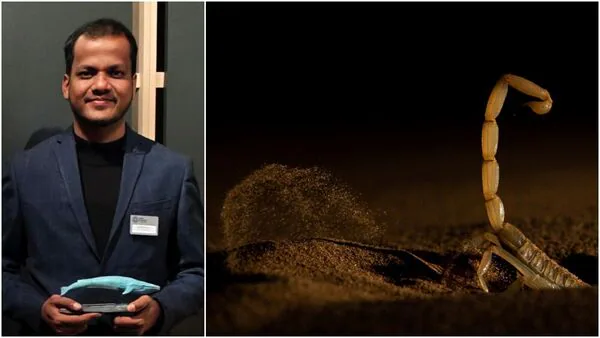
Wildlife Photographer Of The Year 2026: Meet India's Sitaram Raul Who Won The Award For Scorpion Image In Rajasthan


Sitaram Dinkar Raul won the Behaviour: Invertebrates category at the 2026 Wildlife Photographer of the Year competition, organised by London's Natural History Museum. His photograph, titled Shifting Sand, was selected from more than 65,000 entries submitted from around the world.
Also Read | Inside Thomas Cook's new Tadoba wildlife retreat: Luxury villas, Saoji cuisineOften described as the Oscars of wildlife photography, the competition recognises images that document the natural world through technical skill, originality and compelling storytelling. Raul's winning entry stands out for focusing not on a large predator or an iconic mammal, but on the survival behaviour of a small desert-dwelling creature.
Who Is Sitaram Raul?Raul is an Indian photographer and fine artist whose work focuses on wildlife, macro photography and unconventional ways of presenting nature. Based in Badlapur, Maharashtra, he has spent around 14 years developing his photographic practice, experimenting with lighting, composition and perspective to reveal details that might otherwise escape attention.
His recognition at the 2026 competition builds on an earlier achievement. In 2025, his photograph Nature Reclaims its Space, featuring fruit bats emerging from a historic monument in Maharashtra, received a Highly Commended distinction in the Urban Wildlife category at the same competition.
Raul's approach reflects a wider interest in subjects that are often overlooked. Rather than simply recording an animal's appearance, he experiments with light and framing to tell a story about its behaviour and surroundings.
The Story Behind The Award-Winning PhotographAccording to the Natural History Museum, Raul was exploring the sand dunes near the village of Sam in Rajasthan 's Thar Desert at night when he noticed scorpions searching for prey. As sunrise approached, the creatures began burrowing into the sand to escape the intense heat.
The behaviour offered a brief opportunity to capture something unusual. Raul timed his exposure to freeze the grains of sand thrown into the air as the scorpion excavated its burrow, creating the striking effect seen in Shifting Sand.
The photograph was taken using a Nikon D750 camera, a 105mm macro lens and a Godox flash. The technical details matter because the subject was small, the movement fleeting and the surrounding landscape challenging to photograph.
Also Read | Nikon Coolpix P1100: For serious shutterbugsAccording to The Better India's account on X, Raul had initially travelled to Rajasthan to photograph the stars. The unexpected encounter redirected his attention to the scorpion, and capturing the moment required three to four days of observation and repeated attempts. The decisive opportunity lasted only about 90 seconds.
The image also highlights an intriguing adaptation. The Natural History Museum notes that the Indian Buthacus scorpion uses its pincers to dig into sand, while stiff, elongated bristles known as sand combs help prevent it from sinking into the dunes.
Raul's win places the spotlight on wildlife that rarely receives the attention given to larger animals. In the shifting sands of Rajasthan, a brief act of survival has become an internationally recognised photograph.

Legal Disclaimer:
MENAFN provides the
information “as is” without warranty of any kind. We do not accept
any responsibility or liability for the accuracy, content, images,
videos, licenses, completeness, legality, or reliability of the information
contained in this article. If you have any complaints or copyright
issues related to this article, kindly contact the provider above.


Comments
No comment