


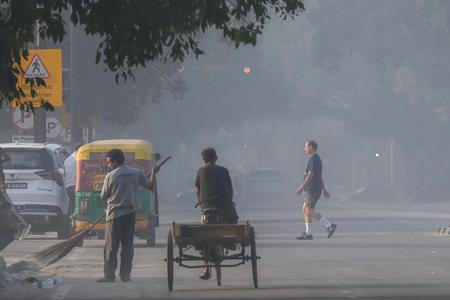
Delhi's Air Quality Remains Poor For Third Consecutive Day Authorities Step Up Anti-Pollution Measures


Several monitoring stations across the national Capital reported elevated pollution levels. Burari (180), Jharoda Kalan (148), Vasundhara Enclave (146), Karala (165), Uttam Nagar (170), NIH Narela (241), Mandir Marg (186), Aya Nagar (168), Punjabi Bagh (247), Pusa (209), Sirifort (209), NSIT Dwarka (182), Chandni Chowk (211), Commonwealth Sports Complex (198), Burari Crossing (217), Alipur (254), R.K. Puram (240), IIT Delhi (221), Dwarka-Sector 8 (206), DTU (245), Mundka (264), Jahangirpuri (270), and Vivek Vihar (261).
The Commission for Air Quality Management (CAQM) invoked Stage I of the Graded Response Action Plan (GRAP) across Delhi-NCR earlier this week after the AQI slipped into the poor category.
Amid growing concerns over pollution, Delhi Environment Minister Manjinder Singh Sirsa has directed officials to formulate targeted action plans for identified pollution hotspots. The plans will focus on identifying local pollution sources, assigning responsibilities to the agencies concerned and establishing deadlines for corrective action.
During a review meeting, Sirsa instructed officials to analyse AQI monitoring data to pinpoint major contributors to pollution in different areas. These include road dust, vehicular congestion, construction activities, unauthorised parking and the burning of waste.
On Friday, three monitoring stations recorded AQI levels in the 'very poor' category. Punjabi Bagh registered an AQI of 302, Pusa recorded 319, and R.K. Puram reported 307. Of the 56 monitoring stations that reported data, 36 recorded poor air quality, while the remaining stations fell in the moderate category.
Government data indicates that transport is the largest contributor among the listed sources of Delhi's air pollution, accounting for 20.3 per cent. Residential sources contributed 5.2 per cent, followed by industries at 4.2 per cent and construction activities at 2.6 per cent. Energy accounted for 2 per cent, waste burning for 1.8 per cent, road dust for 1.4 per cent and other sources for 1.3 per cent.
Stage I of GRAP continues to remain in force across Delhi-NCR. The measures emphasise dust suppression, compliance with construction and demolition norms, improved waste management and efforts to control vehicular emissions as authorities seek to contain pollution levels.

Legal Disclaimer:
MENAFN provides the
information “as is” without warranty of any kind. We do not accept
any responsibility or liability for the accuracy, content, images,
videos, licenses, completeness, legality, or reliability of the information
contained in this article. If you have any complaints or copyright
issues related to this article, kindly contact the provider above.


Comments
No comment