


Azerbaijan Made World's First Carpet-Motif Banknote - People's Artist (Interview)


“Following the collapse of the USSR, an unspoken race unfolded among the newly independent republics: who would be the first to print and put their own currency into circulation? After all, the issuance of a national currency serves as the seal of independence, a definitive sign of its irreversibility. The hallmarks of this irreversible independence are a nation's flag, its coat of arms, and its national currency. In this regard, Azerbaijan was among the frontrunners,” he said.
According to Mikayilzade, work was carried out simultaneously on the designs for banknotes of several different denominations during the initial stage, specifically, the 1, 10, 50, 100, 250, 500, and 1,000 manat notes.
He explained that his decision to prioritize carpet motifs in the design of the first national banknotes stemmed from a search for unique modes of expression within Azerbaijani art. He noted that he considers carpet compositions to be a form of art that constitutes the foundation of the nation's culture.
"In Europe, orchestras are tuned based on a reference instrument, such as a grand piano or piano, to which the other instruments align. In our national orchestra, the tar serves as this foundational reference. I believed that a similar 'anchor' was necessary in the realm of visual art. The carpet is the 'mother tongue' of Azerbaijan. I frequently express this idea, and I truly believe in it," he remarked.
Mikayılzade mentioned that the Maiden Tower was one of the central design elements featured on the first banknotes. This choice was not solely the artist's personal decision; the state's perspective regarding which symbol should serve as the primary emblem was also taken into account. The artist noted that there were other alternatives considered for the central design element.
"There were other options as well. Sketches featuring patterns, as well as designs depicting the Government House and the Presidential Administration, had been prepared. However, Baku is known for the Maiden Tower. In terms of history, beauty, and logic, this was a very sound choice," the People's Artist emphasized.
Mikayılzade donated the entire honorarium he was due to receive for the design of the banknotes to the Karabakh Defense Fund.
According to him, Galib Aghayev, the then-chairman of the National Bank, invited him in and asked him to sign the necessary paperwork to process the payment. Mikayılzade, however, declined the money and submitted a formal written statement to that effect.
"He told me that an honorarium had been allocated for me and asked me to sign for it. Right there on the spot, I said that I was declining it. He replied that it couldn't be done that way; I had to submit a formal written request. So, I wrote a request. At that time, the Karabakh Defense Fund had been established, and I requested that the funds be transferred there. To be honest, I never even asked about the amount. I knew, of course, that being the creator of the currency was an honorable and prestigious distinction, and that the honorarium would likely be substantial, but I never even inquired as to how much it actually was," he said.
Mikayılzade noted that he personally brought the "specimen" banknotes, the initial samples, from France. These were unnumbered samples, ranging from 1 to 250 manat, all bearing a "zero" series designation. Subsequently, a state commission was established to oversee the delivery of the entire batch of banknotes, which were then transported to Azerbaijan via a special aircraft.
According to the People's Artist, the final banknote he designed was the 1,000-manat note. He later observed that his earlier sketches had also been utilized for the 10,000-manat banknote. Nevertheless, not all of the sketches prepared during the initial phase were put into circulation.
The People's Artist also reacted positively to the nicknames given to the banknotes by the public. He noted that referring to certain notes as "Mammad," "Nizami," and "Shirvan" serves as an indication that these currency notes had become integrated into people's daily lives.
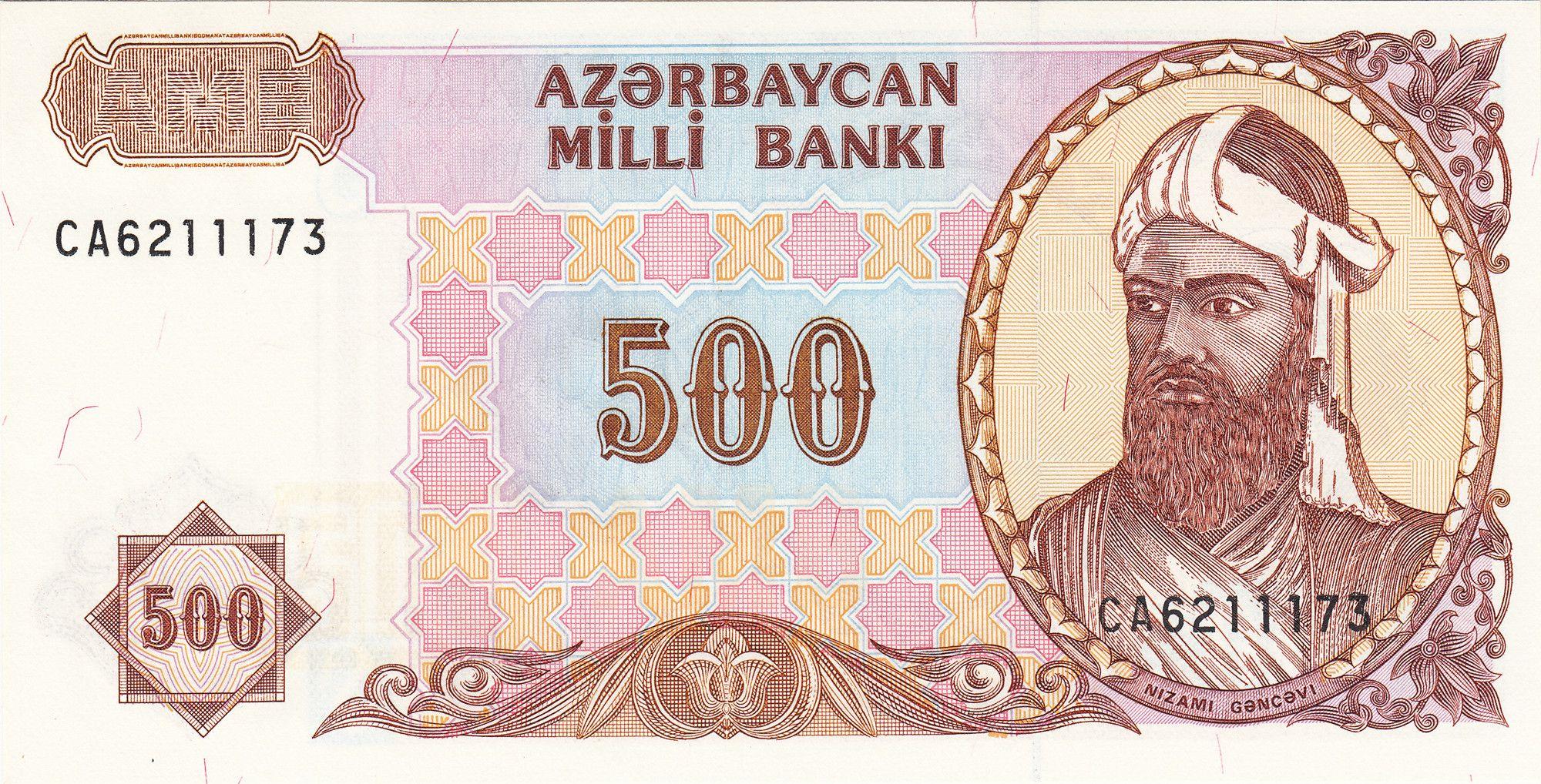
"It's customary among us to give nicknames. When people feel affection for someone or come to regard them as close, they alter their name to create an endearing form. Since money has become an integral part of the people's lives, it is only natural that it has been given a name. To me, this is a welcome development; it signifies that the banknote has become familiar and close to the people; it has effectively become a part of our folklore," he emphasized.
Addressing the question of whether the first national banknotes contained hidden symbols, Mikayılzade explained that the primary distinguishing feature of this currency was that its design was rooted in traditional national decorative arts and carpet motifs.
"There are established conventions in the global art of currency design, which most nations follow. The currency issued during the era of Tsarist Russia, as well as that of the Azerbaijan Democratic Republic, was produced in accordance with these very design principles," he noted.
According to Mikayilzade, the decision to center the design of Azerbaijan's first national banknotes on traditional national ornaments represented a novel approach. He added that the extent to which this choice would be appreciated on an international scale remains to be seen over time.
"Of course, this is my subjective opinion, but I believe that by basing the design of our paper currency on the art of national ornamentation, we introduced a unique approach. At the time, many didn't notice this or understand why it looked the way it did. Other countries, such as Turkmenistan or Uzbekistan, might adopt this style in the future, but this approach originated specifically in Azerbaijan. As Charlie Chaplin once said, one cannot be first if one is following in someone else's footsteps. They may well follow in our footsteps, but the 'first' instance occurred in Azerbaijan," the People's Artist added.

Legal Disclaimer:
MENAFN provides the
information “as is” without warranty of any kind. We do not accept
any responsibility or liability for the accuracy, content, images,
videos, licenses, completeness, legality, or reliability of the information
contained in this article. If you have any complaints or copyright
issues related to this article, kindly contact the provider above.


Comments
No comment