


Azerbaijan Reduces Greenhouse Gas Emissions Despite Global Rise


Every extra fraction of a degree in average global temperature is a direct contributor to the intensifying climate risks that humanity is now grappling with. The headlines we see all too often about the apocalyptic intensity of wildfires, sudden, paralyzing floods, and record-breaking heat are not isolated cases. These are the symptoms that the planet is going beyond its limits.
The scientific consensus, echoing through countless international summits, is stark: if we exceed the 1.5°C threshold of global warming, the consequences become exponentially more severe. Yet, the current global trajectory is sobering. Based on present climate policies, we are drifting toward a 2.8°C increase by the end of this century. Even if every nation managed to fully implement the climate commitments they have already made, the expected rise would still hover around 2.6°C. While these figures are intimidating, the situation is far from hopeless. There is a perceptible shift in the global energy landscape because the reliance on fossil fuels is gradually softening, and the footprint of renewable energy sources is expanding. This transition is essential to slowing the rate of warming and mitigating the increasingly destructive weather patterns that have been plaguing countries around the world.
One of the reasons for climate change is the spread of greenhouse gases in the atmosphere. These gases trap heat and prevent some of it from escaping into space, causing the Earth's average temperature to rise.
In the middle of this challenging transition sits Azerbaijan. While it is a nation with a deep, long-standing energy heritage, it is also actively demonstrating a commitment to change. According to the European Commission's Emissions Database for Global Atmospheric Research (EDGAR), the country that hosted COP29 has made significant progress in reducing greenhouse gas emissions. Azerbaijan's total emissions fell from 58.52 million tons in 2024 to 57.72 million tons of CO2 equivalent in 2025. This may sound like a modest step, representing a decrease of about 0.8 million tons, or roughly 1.4%. However, when placed in the context of a 0.7% increase in global emissions over the same period, which pushed the global total to an staggering 54.15 billion tons, Azerbaijan's performance is notable. It serves as tangible evidence of the country's commitment to its voluntarily undertaken environmental obligations, proving that it is possible to buck the global trend even while transitioning an established industrial base.
Azerbaijan has one of the world's longest histories of oil and gas production. The industry has played a central role in the country's economic development, but decades of extraction have also left behind infrastructure that presents challenges for modern emissions management. Some onshore facilities and pipelines date back to the Soviet period. Ageing equipment, worn seals, outdated compressors and sections of deteriorating pipeline infrastructure can increase the risk of methane leaks. In some cases, older operating practices have also contributed to the release of natural gas into the atmosphere. Methane is particularly important in the climate debate because it is a powerful greenhouse gas, especially over shorter periods. Reducing methane emissions can therefore deliver significant climate benefits without requiring an immediate end to oil and gas production.
But from the general background of all these obstacles, Azerbaijan has begun taking measurable, proactive steps toward methane reduction. In 2024, the State Oil Company of the Republic of Azerbaijan (SOCAR) launched an ambitious program designed to drastically reduce methane emissions within the next decade. Rather than relying on traditional, slow-moving manual inspections, the company is embracing the future by integrating cutting-edge technology. The initiative employs a sophisticated mix of satellite monitoring, drone-based detection, and specialized gas-imaging cameras. Most importantly, artificial intelligence systems are now analyzing operational data to pinpoint potential leaks with unprecedented accuracy.
This approach reflects a broader, necessary evolution in the global energy industry toward data-driven emissions management. SOCAR's plan to expand this drone monitoring across 80 facilities paired with granular, ground-level detection systems, signals that they are taking the issue seriously.
The impact of these efforts is already showing on the balance sheet of environmental impact. In 2025 alone, SOCAR succeeded in cutting approximately 1 million tons of greenhouse gas emissions. This achievement was driven in large part by applying the Leak Detection and Repair (LDAR) program at its "Azneft" production enterprise. Beyond this specific project, the past year also saw the adoption of a comprehensive "Decarbonization Roadmap." This document defines the main areas of action like reducing carbon and methane emissions, promoting large-scale electrification, exploring carbon capture technologies, drastically improving energy efficiency, and expanding the portfolio of renewable energy sources.
Ultimately, the path toward a cleaner, greener future is a complex, long-term marathon. President Ilham Aliyev has clearly stated that the goal of achieving a clean environment and transforming Azerbaijan into a "green growth" country is now one of the five key national priorities for the nation's socio-economic development through 2030. For a country with such a deep-rooted history in fossil fuels, this is a profound pivot - one that acknowledges the realities of the past while aggressively reaching for a more sustainable future.
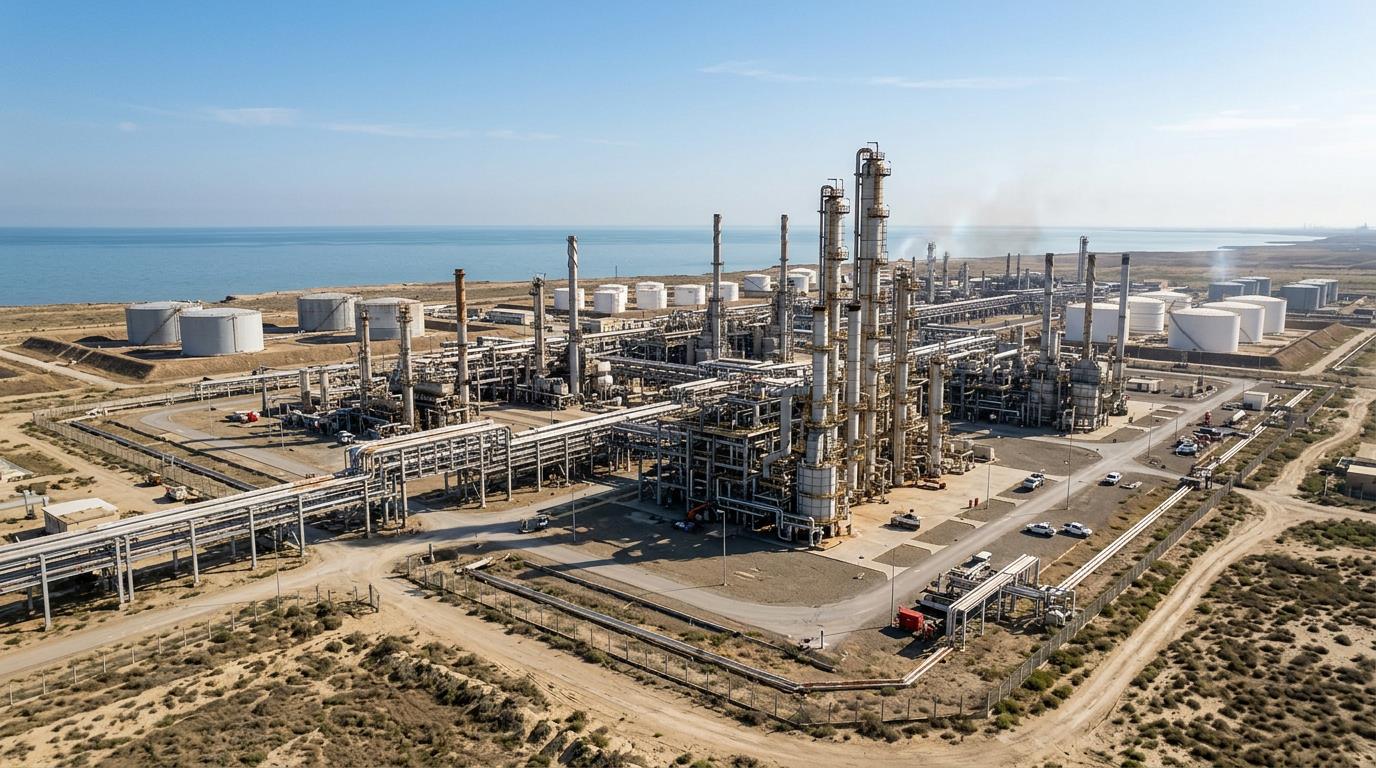
Image generated by AI

Legal Disclaimer:
MENAFN provides the
information “as is” without warranty of any kind. We do not accept
any responsibility or liability for the accuracy, content, images,
videos, licenses, completeness, legality, or reliability of the information
contained in this article. If you have any complaints or copyright
issues related to this article, kindly contact the provider above.


Comments
No comment