


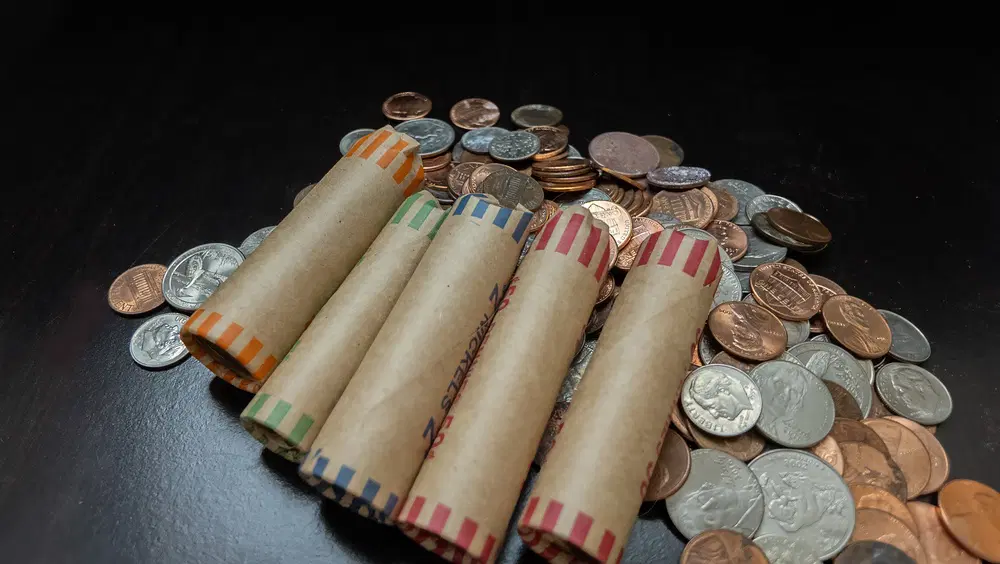
Banks Are Turning Away Coin Rolls? What To Do With Thousands In Change


Now, the end of U.S. penny production is creating even more questions about what happens to the coins Americans have accumulated over the years.
According to the U.S. Department of the Treasury, pennies remain legal tender despite the government's decision to stop manufacturing new ones. Consumers can still deposit them at financial institutions, although banks may establish specific requirements for handling large quantities.
If you've been saving coins for years, understanding your options could help you turn that forgotten change into extra money without surrendering a portion of it to unnecessary fees.
Why the Penny Phaseout Is Changing the ConversationThe federal government stopped producing new pennies in 2025 after determining that manufacturing each one cost approximately 3.69 cents, substantially more than its face value. According to the Federal Reserve Bank of St. Louis, roughly 114 billion pennies remain in circulation, and financial institutions will continue recirculating existing coins as long as possible. The decision doesn't eliminate the penny's value or prevent consumers from depositing coins they already own. However, some banks and businesses have adjusted their coin-handling procedures as the supply of newly minted pennies has ended. For consumers with jars of accumulated change, the important distinction is that banks may impose deposit requirements without making the coins themselves worthless.
Why Some Banks Require Coin Rolls or Charge FeesHandling large quantities of coins requires counting equipment, employee time, storage space, and transportation, which can make the service expensive for financial institutions. Some banks require customers to sort and roll coins before depositing them, while others offer counting machines or accept loose change under specific conditions. Banks may also restrict certain services to account holders or impose fees depending on the quantity and type of transaction. Consumers should contact their banks before attempting to deposit large quantities of pennies. Rather than assuming every bank follows the same rules, consumers should verify their institution's current requirements before transporting heavy containers of change.
1. Call Your Bank Before Bringing in Hundreds of Dollars in CoinsThe easiest way to avoid frustration is to ask your bank exactly how it handles coin deposits before visiting a branch. Find out whether coins must be rolled, whether loose change is accepted, and whether there are daily deposit limits or processing fees. For example, someone with $600 in mixed coins might discover that their bank accepts rolled quarters and dimes but requires a different procedure for loose pennies. Some branches may also need advance notice before processing unusually large deposits, particularly when counting equipment or staff availability is limited. A quick phone call can save you time, transportation expenses, and the inconvenience of carrying heavy coin containers back home.
2. Look for Coin-Counting Machines That Deposit Directly Into Your AccountCoin-counting machines can eliminate the tedious process of sorting and rolling hundreds or thousands of coins by hand. Although many consumers associate these machines with grocery stores, some financial institutions have introduced partnerships that allow customers to deposit coins directly into checking accounts. For example, U.S. Bank expanded its partnership with Coinstar, providing eligible customers access to direct coin deposits at more than 10,000 participating retail kiosks and over 100 bank branches. The service allows customers to use a linked U.S. Bank debit card to transfer counted coins into their checking accounts without a coin-counting fee. Availability depends on the participating financial institution and kiosk, so confirm that the machine supports direct deposits before using it.
3. Watch Out for Coin-Counting Fees That Eat Into Your SavingsConvenience can become expensive when a machine charges a percentage of the total amount counted. According to Coinstar's official fee information, cash conversions may include a service fee of up to 15.9% plus a transaction fee of up to 99 cents, depending on the location. At that maximum rate, converting $500 in coins could cost $80.49, leaving just $419.51 in cash. Someone converting $1,000 could lose as much as $159.99 under the same fee structure, making it worthwhile to investigate less expensive alternatives. Before pouring your change into any machine, review the displayed fees and compare the cost against what your bank or credit union would charge.
4. Consider Fee-Free Gift Cards if You Already Shop at the RetailerSome coin-counting kiosks offer electronic gift cards that allow consumers to avoid the fees associated with converting coins into cash. Coinstar says many U.S. locations provide participating eGift card options with no conversion fee, although availability and terms vary by retailer and location. For example, someone with $200 in coins could potentially receive a $200 gift card rather than paying a percentage of that money for a cash voucher. However, this strategy only makes financial sense if the gift card can be used for purchases you were already planning to make. Turning spare change into a gift card for an unfamiliar store could encourage unnecessary spending and defeat the purpose of protecting your savings.
5. Spend Your Coins Gradually Instead of Paying to Convert ThemYou don't necessarily have to exchange every coin for paper currency to benefit from the money you've saved. Pennies, nickels, dimes, and quarters remain valid U.S. currency, although individual retailers may establish reasonable payment policies and some may limit how much loose change they'll accept. Consumers should try to spend existing pennies to help keep them circulating as the country adjusts to the end of new penny production. Using a few dollars in coins for small purchases or at participating self-checkout machines can gradually reduce your collection without paying conversion fees. Just avoid overwhelming a cashier with hundreds of loose coins, and check whether a store accepts cash or coins before relying on that payment method.
6. Check Older Coins Before Feeding Them Into a MachineNot every coin in your collection is necessarily worth only the amount stamped on its face. Certain older coins, minting errors, and collectible varieties may carry premiums among collectors, depending on rarity, condition, and demand. The U.S. Mint explains that circulating dimes and quarters contained 90% silver before the composition changed in 1965, making those earlier coins worth checking before depositing them. Many pennies produced before 1982 also contain substantially more copper than newer versions, although copper content alone doesn't guarantee significant collectible value, and melting pennies for their metal remains restricted by federal law. Before converting a large collection, separate potentially collectible coins and consult a reputable coin dealer or established numismatic price guide rather than assuming every old coin is valuable.
7. Ask Credit Unions and Community Banks About Their PoliciesIf your current bank doesn't offer a convenient way to deposit coins, another financial institution may have better options. Credit unions and community banks sometimes provide coin-counting equipment, rolled-coin deposits, or reduced fees for eligible account holders, although these services aren't guaranteed. Before opening an account solely to access coin services, ask about membership requirements, monthly maintenance charges, minimum balances, and any restrictions on coin deposits. A free counting service might be useful for someone who regularly accumulates hundreds of dollars in change, but paying ongoing account fees could eliminate those savings. Comparing the total cost of banking services is more important than choosing an institution based on one convenient feature.
Don't Overlook the Money Sitting Around Your HouseA container filled with loose change may not look like a meaningful financial asset, but the total can add up faster than expected. For example, 2,000 quarters are worth $500, while 5,000 dimes represent another $500 that could be used for groceries, utilities, debt payments, or emergency savings. Before cashing in your collection, separate potentially valuable coins, compare conversion fees, and decide whether depositing, spending, or exchanging the money offers the best return. Retirees and other households managing tight budgets may find that avoiding unnecessary counting fees is just as important as discovering how much change they've accumulated. The goal isn't simply to get rid of your coins, but to keep as much of their value as possible.
Your Spare Change Still Has Value - Don't Give It Away in FeesThe end of penny production doesn't mean Americans have lost the ability to spend or deposit the coins they've saved. While some financial institutions have restrictions on coin deposits, consumers still have several options for converting change into usable funds. Calling your bank, comparing coin-counting fees, exploring direct-deposit kiosks, and checking for collectible coins can help protect the money you've accumulated. Even small decisions matter when a convenience fee could consume $50, $100, or more from a substantial coin collection. Before carrying your jars of change to the nearest machine, take a few minutes to make sure you're getting the full value of your money.
Have you ever been turned away when trying to deposit coins at a bank, or have you found a fee-free way to turn spare change into cash? Share your experience in the comments.

Legal Disclaimer:
MENAFN provides the
information “as is” without warranty of any kind. We do not accept
any responsibility or liability for the accuracy, content, images,
videos, licenses, completeness, legality, or reliability of the information
contained in this article. If you have any complaints or copyright
issues related to this article, kindly contact the provider above.


Comments
No comment