


How Lula Turned Four Lessons From The Presidential Elections In Colombia Into A Comeback In Brazil's Sunday Runoff


The script was, in many ways, borrowed from Colombia. On 21 June, Abelardo de la Espriella won that country's presidency by roughly 250,000 votes out of more than 25 million cast - 49.7 percent against Iván Cepeda's 48.7 - in one of the highest-turnout elections in its history. The right has since sold that result as the opening act of a renewed regional tide that Brazil was bound to follow.
The narrative of inevitability was always wrong, but the Colombian diagnosis was not. Cepeda's defeat isolated four variables the Latin American left has consistently mismanaged. What is striking about the last three weeks is that Lula's campaign, after stumbling into them, appears to have learned the lessons. Three days before the vote, the race is a dead heat, and the momentum is on the president's side.
Reframing the incumbency curseThe first lesson concerns the arithmetic of contemporary incumbency. Cepeda lost while gaining the largest absolute vote the Colombian left has ever obtained. His defeat was not a collapse of the progressive coalition but the discovery of its ceiling, set by the outgoing Gustavo Petro administration.
No sitting president in South America enjoys majority support today. Low economic growth, fiscal constraint and the routinization of anti-establishment sentiment have made governing itself electorally costly. Lula, whose approval has trailed his disapproval for much of his third term, is no exception. The first round showed that a lead built on a fragmented, scandal-weakened opposition is not the same thing as governmental popularity, and that it evaporates once a challenger consolidates.
The campaign's answer has been to stop running a referendum and start running a choice. Instead of focusing on the legacy of his earlier governments, Lula is now trying to showcase his unparalleled experience, setting it against a challenger with no executive record of his own. The effect is visible in the one number incumbents most need to move: in a survey released on 21 October, the share of voters who say they would never vote for Lula fell from 53% to 47% percent in a single week, while Flávio's rejection eased only from 54% to 52%.
From overconfidence to shock therapyThe second lesson is about complacency and its distributive roots. Cepeda's Pacto Histórico party entered Colombia's first round convinced it could win outright. A conviction that licensed minimal media exposure, refusal to debate, and mobilization rather than persuasion. Lula's first round looked uncomfortably similar: a candidate coasting on favourable polls, investing little in reaching beyond a base that proved insufficient.
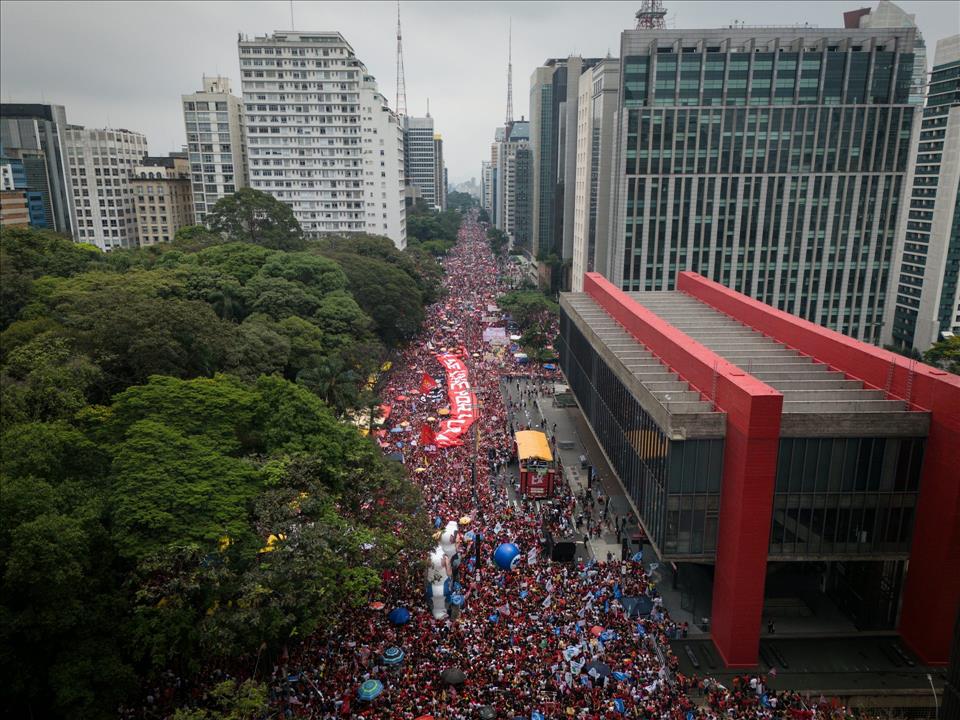
The difference is what happened next. In less than a week, the campaign reinvented itself, both on social media and on the streets. A combination of aggressive digital content and grassroots mobilization, from neighborhood canvassing to large rallies in states where the left had gone quiet, changed the mood of the runoff. A campaign that had been talking to the converted started looking for the persuadable – a mass of 33 million voters who did not show up for the first round.
More importantly, it began speaking to the constituency Cepeda lost. Poverty reduction remains the left's strongest policy claim and its weakest electoral instrument, because its beneficiaries are already committed and its non-beneficiaries increasingly see themselves as its funders. Brazil's version of that problem is an urban periphery whose aspirations are organized around work, credit and informal entrepreneurship rather than redistribution. In the middle of the runoff, Lula secured Senate approval for ending the six-day work week and renegotiated the debts of small businesses and self-employed workers. These measures speak to exactly the lower-middle-class voters who decided Colombia, and they allow Lula to talk about the future with something already delivered.
Contesting the right's ownership of the security agendaThird, public security has displaced the economy as the organizing issue of Latin American electorates, and the right has captured it almost without a fight. De la Espriella campaigned against the negotiated demobilization of armed groups, while Cepeda, personally identified with Petro's Paz Total (Total Peace) strategy, spent the runoff qualifying a policy that had become indefensible. His concession came across as opportunism rather than learning.
Brazil's federal structure makes the terrain even harder for Lula: security is constitutionally a matter for the local states, which lets opposition governors claim credit for successful operations while blaming the federal government for any failures.
The left's standard reply - that crime is downstream of poverty and inequality - is defensible in theory and weak at the ballot box. Lula's campaign has chosen a different route. Rather than retreating, it has turned the question of organized crime toward his opponent, intensifying attacks on Flávio's record, from corruption allegations to alleged ties to criminal groups in Rio de Janeiro.
The decisive moment came in last Sunday's TV debate, when Lula challenged both candidates to disclose their bank statements. It was a simple but powerful gesture that converted an abstract integrity argument into a test Flávio had to answer on camera. Surely, Lula's campaign has not yet matched the right's Mano Dura with an institutional security agenda of its own, and that remains a gap for a possible fourth term. But it has stopped conceding the issue.
Foreign leaders as an internal variableFourth, De la Espriella borrowed heavily from El Salvador's President Nayib Bukele, from his security strategy to his public image. For a substantial middle-class electorate, the images of the CECOT megaprison offered a practical-looking blueprint, and 53.8 percent of Colombians held a favorable view of the Salvadoran president.
Brazil differs in degree and, arguably, in kind, because its longstanding tensions with the United States sit at the center of the story. Sovereignty runs deep in Brazilian political culture, and Lula drew real advantage from confronting Washington's tariff pressure in 2025.
But the rally-around-the-flag effect has diminishing returns: a tariff is felt in employment before it is felt in dignity, and earlier surveys found fewer than half of voters accepting Lula's claim that these measures were the product of his opponent's lobbying. The runoff campaign appears to have understood this, shifting its weight from sovereignty rhetoric toward kitchen-table delivery and leaving foreign policy as background rather than headline.
What the comparison now tells usColombia's runoff was decided by one percentage point. Brazil's will likely be just as close. Datafolha's 15 October survey had Flávio at 51% of valid votes against Lula's 49%, down from 52% to 48% a week earlier. Quaest's survey released on 21 October puts the race at Flávio 45% to Lula 44% in total voting intentions, inside the margin of error, with the two candidates tied at 40% percent when voters are asked without being shown names. Every trend line in these numbers runs toward the president.
Colombia was never evidence of an ideological tide. It was a narrow and specific failure: the inability to speak to voters who are neither poor enough to be beneficiaries nor wealthy enough to be adversaries, compounded by a campaign that realized too late that it was losing. Brazil's left got its warning on 4 October, with three weeks still on the clock. The good news for the Workers' Party is that it seems to have listened. Whether that is enough will be decided on Sunday.


Legal Disclaimer:
MENAFN provides the
information “as is” without warranty of any kind. We do not accept
any responsibility or liability for the accuracy, content, images,
videos, licenses, completeness, legality, or reliability of the information
contained in this article. If you have any complaints or copyright
issues related to this article, kindly contact the provider above.


Comments
No comment