


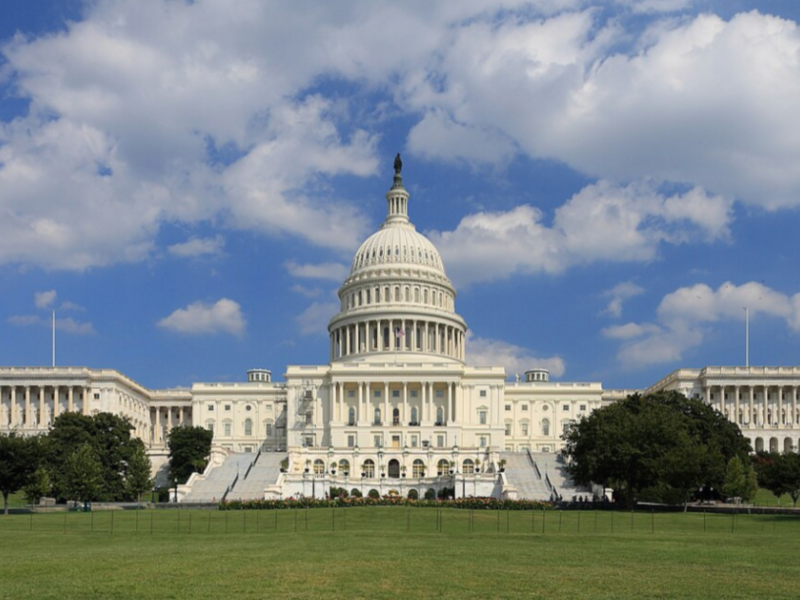
Midterms Could Bring More Scrutiny For Business, Even Without New Rules


Yet for all the noise and nastiness, Corporate America - particularly companies in highly regulated industries - may see surprisingly little change in the federal rules governing their businesses.
"It's unlikely that a Democratic sweep of one or both houses of Congress would materially impact the regulatory environment over the remainder of President Trump's term," said Ryan Kuresman, managing director and global public affairs and health policy lead at GCI Health.
Between Trump's veto power and the lack of appetite for bipartisan cooperation, Kuresman expects even fewer bills to become law.
Which doesn't, however, mean business as usual - whatever qualifies as usual in politics today.
"If Democrats win the House, 2027 is going to feel like a different government,” said Bill Burton, founding partner and CEO of Bryson Gillette and a former Obama administration communications official.“Trump will still have his veto pen, but Democrats will have gavels, investigative staff and the power to demand answers from both the administration and companies.”
If Democrats take control of one or both chambers of Congress, companies could face congressional investigations, demands for documents and scrutiny of decisions made during Trump's second term.
Dan Scandling, a senior director who leads APCO's government relations practice, expects Democratic governors and state attorneys general to play a greater role in challenging the administration's policies. That could leave companies navigating conflicting regulations across states, adding complexity and costs to doing business nationwide.
The debate comes against the backdrop of Trump's push to reduce federal regulation since the start of his second term, an effort affecting industries across the economy while creating uncertainty for companies trying to keep up with the changes. Shortly after returning to office in January 2025, he directed agencies to identify at least 10 existing regulations for elimination for every new one proposed. His administration has also sought to remove barriers to AI development and reduce regulatory burdens across the federal government.
Kuresman also expects regulators to face greater congressional pressure to publicly defend their decisions.
Burton, who ran communications at the Democratic Congressional Campaign Committee when Democrats won back the House in 2006, said companies shouldn't measure political change simply by how many laws Congress passes.
"Who sets the agenda, demands documents and calls executives to testify matters enormously," he said.
Democratic-controlled committees could examine corporate decisions made in 2025 and 2026, including those encouraged or tolerated by the administration. Burton cautioned that companies may have to defend actions that were lawful but nevertheless attract congressional scrutiny.
"Legal isn't the same as defensible," Burton said.
Justin Goodman, executive VP at SKDK who specializes in oversight and investigations, also expects substantial consequences. "A swing in Congress would have massive implications for the business community over the next two years," he said.
Goodman expects Democratic lawmakers to focus on affordability and perceived corruption, scrutinizing both the administration and corporations. That could leave companies defending business decisions that previously attracted little attention.
The implications will vary by industry. Healthcare companies could face renewed scrutiny of drug pricing, insurance coverage and access to care. Kuresman expects Democrats to investigate drug pricing agreements, the lapse of enhanced Affordable Care Act subsidies and Republican policies reducing coverage for low-income Americans.
That scrutiny would come after nearly two years of changes to federal healthcare policy under Trump, including executive orders affecting healthcare programs and funding.
Healthcare also presents a potential opening for legislation. The FDA's prescription drug user-fee authorization expires in September 2027, creating an opportunity for negotiations in which Democrats could seek policy concessions.
AI companies face a different set of pressures. The Trump administration has sought to encourage development of the technology, but concerns about safety, privacy, employment and the resources required to operate data centers are drawing growing attention.
Tim Biba, founder of Talisman, SourceCode Communications' public affairs partner, believes a Democratic majority could spend the next two years developing AI legislation that might not pass immediately but could shape the party's agenda heading into 2028. He also sees potential for bipartisan action as lawmakers respond to public concerns.
Those concerns are substantial. A September survey of 1,000 registered voters by Bryson Gillette found that 58% opposed construction of a new AI data center in their community. While 66% said technology and AI companies have influence in Washington, only 38% said they trust them. The findings are part of the firm's Power Shift Omnibus.
Katie Huang Shin, global president of technology at Allison Worldwide, said companies need to do more than promise responsible AI.
"People are not just asking whether AI is transformative. They are asking whether it will leave them with more control over their work and lives or less," she said.
Food safety could also attract bipartisan scrutiny, Burton said, particularly if an outbreak raises questions about corporate practices or regulators' ability to protect consumers.
But even if Congress remains deadlocked, companies face another challenge:differing regulations across states.
AI is a particularly clear example, with states pursuing their own safeguards while the administration seeks a less restrictive national approach. Despite Trump's efforts to limit state AI regulation, lawmakers have continued pursuing protections involving children, employment and other uses of the technology.
For companies, the challenge, Scandling said, is knowing which political developments demand action and which are better left alone.
It's a lesson businesses have had plenty of opportunities to learn since Trump returned to office. From tariff announcements and reversals to executive orders and political pressure surrounding DEI, companies have had to sort through a steady stream of developments, deciding which require a response and which may amount to little more than political noise.
Scandling believes companies need to distinguish political theater from developments that genuinely affect their operations. His advice is to keep doing their jobs rather than getting caught up in every controversy coming out of Washington. He also warned that companies perceived as closely tied to the administration could become targets of congressional investigations.
But holding steady doesn't mean being unprepared.
Burton recommends that companies consider what their internal records might reveal in a congressional investigation, substantiate their safety and performance claims, and build relationships with lawmakers in both parties before control changes.
Goodman advises bringing communications, government relations and legal teams together now to identify potential vulnerabilities and prepare a response before an investigation begins. Kuresman cautions against shifting public positions with the political balance of power, warning that doing so could undermine long-term credibility.
For companies in highly regulated industries, the next two years may be less about adjusting to sweeping new federal rules than navigating greater scrutiny, conflicting state requirements and a political environment in which even longstanding business decisions can become controversial.
As Burton put it: "Trump can veto legislation, but he can't veto a congressional hearing. Companies that prepare only for new regulations will miss much of what this election could change."
As Burton put it: "Trump can veto legislation, but he can't veto a congressional hearing. Companies that prepare only for new regulations will miss much of what this election could change."

Legal Disclaimer:
MENAFN provides the
information “as is” without warranty of any kind. We do not accept
any responsibility or liability for the accuracy, content, images,
videos, licenses, completeness, legality, or reliability of the information
contained in this article. If you have any complaints or copyright
issues related to this article, kindly contact the provider above.


Comments
No comment