


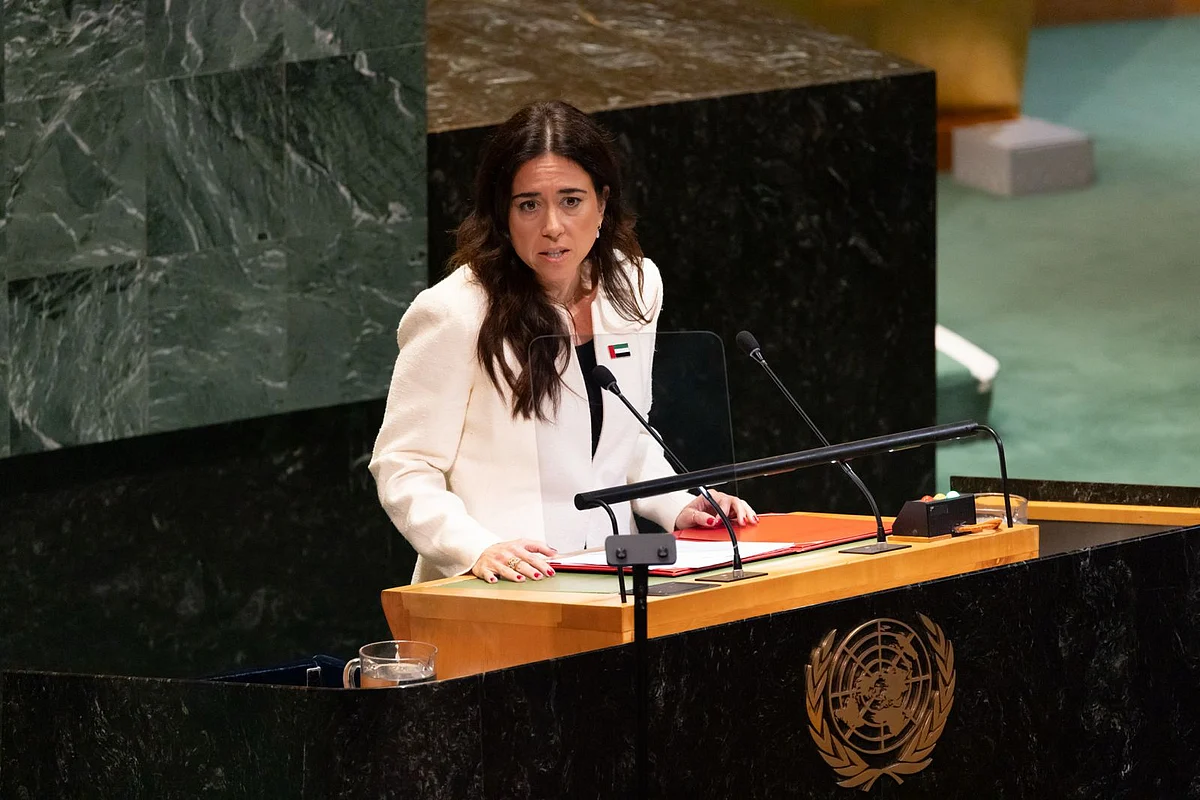
UAE Diplomat Lana Nusseibeh's UN Vision: 8 Priorities, From Peace And Jobs To AI


These are some of the diplomatic breakthroughs Lana Nusseibeh says she has witnessed during her decades of public service. But she has also seen how unfulfilled promises can erode trust and make countries increasingly reluctant to compromise.
Recommended For YouThe UAE diplomat, who announced her candidacy to become the next UN Secretary-General on Wednesday, October 21, reflects on these experiences in an eight-page vision statement outlining how she would lead the world body if appointed.
"When the rewards of agreement can no longer be seen, agreement is no longer sought," she writes in the document, arguing that international cooperation must produce tangible results rather than promises that are never fulfilled.
On a more personal note, Nusseibeh says her two young boys have taught her more about patience and urgency than any negotiation, drawing parallels between a parent's responsibility to meet their children's immediate needs and secure their long-term future, and the challenges facing the UN.
Her vision statement covers eight areas, from preventing conflicts and reforming peacekeeping operations to creating jobs, protecting human rights, addressing emerging technologies and making the UN more accountable for its spending:
1. The price of compromiseNusseibeh argues that international cooperation has delivered major achievements, from containing smallpox to protecting the ozone layer and limiting the spread of nuclear weapons. But countries are increasingly reluctant to compromise when the benefits are uncertain or take years to materialise.
Rebuilding that trust, with faster, more certain, and more realistic results, is the work of the UN. Promises made must be kept.2. What the Secretary-General is for
Nusseibeh argues that while the UN Secretary-General has neither an army nor a vote, the position carries the power to bring countries together through independence and trust. She has taken leave from her UAE Government role to underline that independence and pledges to speak out when necessary, pursue quiet diplomacy when needed and spend more time near conflict zones.
I wish to offer myself to this office as I would serve it: speaking frankly with every government and answering to none. There will be no exemptions for friends and no grudges against critics.3. Peace: First agreements and first actors
Nusseibeh wants the UN to use quiet diplomacy to prevent conflicts from escalating and pursue smaller agreements, such as local truces, prisoner exchanges and humanitarian access, as steps towards lasting peace.
She also wants peace efforts to involve "first actors", those closest to conflicts, including regional organisations and mediators trusted by the parties involved.
The UN need not lead every process, but it should be ready to be in every room where its presence has value.4. Development: Results a country can point to
Nusseibeh argues that the UN development system needs to be recalibrated. While more than a billion people have climbed out of poverty since 1990, progress towards the 2030 Sustainable Development Goals remains uneven, particularly in countries affected by conflict and fragility.
With development assistance declining, she wants the UN to demonstrate what each contribution delivers, country by country and community by community, while ensuring that aid remains available where it is essential.
She outlines six priorities:
-
National priorities:
Focus UN development cooperation on nationally determined priorities rather than fragmented, agency-driven programmes.
Jobs: Put employment at the centre of development as more than a billion young people enter the workforce in developing countries over the next 15 years.
Fragile settings: Expand development opportunities in communities affected by conflict, fragility and disasters, with closer cooperation between development and humanitarian actors.Investment risks: Work with development banks and private sector partners to improve risk assessments and bring down the cost of capital where risks are overstated.
Fairer debt solutions: Build agreement around practical proposals to address debt distress and reform international debt mechanisms.New partnerships: Work with philanthropic foundations and businesses to develop blended financing models, mobilise capital and create jobs.
Nusseibeh also wants to help member states negotiate a successor to the 2030 Sustainable Development Goals, with commitments that governments can explain to their citizens and deliver on.
5. Human rights: A shared foundation for agreementNusseibeh argues that human rights are universal principles that must be promoted and protected without double standards. She says protecting human rights creates the conditions for peace and sustainable development, with all three pillars of the UN reinforcing one another.
The UN's credibility on human rights depends on consistency in application.She pledges to defend international law, the UN Charter and the Universal Declaration of Human Rights, and to make the case for funding the UN's human rights work at a level that matches its mandate.
6. What tomorrow needsNusseibeh sees emerging technologies such as artificial intelligence and biotechnology as opportunities to build international cooperation. She argues that AI should help reduce inequalities rather than deepen them, particularly by ensuring countries that stand to benefit are not left behind.
Her proposals include:
-
AI incident reporting:
Introduce voluntary mechanisms for real-time information sharing.
AI testing: Encourage voluntary, shared testing of the most powerful systems.
Wider access: Give countries that use but do not develop these technologies greater access and participation.Climate change: Help countries anticipate its effects, build resilience where fragility is greatest and deliver on existing commitments.
Young people: Give younger generations a greater say in decisions affecting their future, noting that nearly half the world's population is under 30.Nusseibeh wants a more focused UN that demonstrates the results of its work and makes better use of its resources. She argues that member states will be more willing to invest in an organisation that can show what their contributions have achieved.
Her proposals include:
-
Report results against costs:
Require every major UN Secretariat programme to report what it has achieved against what it cost, and invite funds and agencies to do the same.
Tackle duplication: Consolidate overlapping work within the Secretariat and help member states identify duplication across the wider UN system.
Address unpaid contributions: Be direct with governments about outstanding payments and which activities depend on their funding.Nusseibeh draws on her experience as a mother of two boys, saying they have taught her more about patience and urgency than any negotiation. Just as parents must balance their children's immediate needs with their long-term future, she argues that the UN must address today's challenges while working towards a better tomorrow.
The UN was never meant to agree with the world. It was built to help the world find agreement. That is why I offer myself for this office: to do the work I know best to make agreement worthwhile.
Legal Disclaimer:
MENAFN provides the
information “as is” without warranty of any kind. We do not accept
any responsibility or liability for the accuracy, content, images,
videos, licenses, completeness, legality, or reliability of the information
contained in this article. If you have any complaints or copyright
issues related to this article, kindly contact the provider above.


Comments
No comment