


Uzbekistan, Tajikistan, Kyrgyzstan Step Up Investment In Child Healthcare


From Hasnah Jusid
SAMARKAND (Uzbekistan), Oct 22 (NNN) – Uzbekistan, Tajikistan and Kyrgyzstan are stepping up investments in child healthcare to close gaps in access to quality treatment, particularly for children in rural and remote areas.
The three Central Asian nations are focusing on stronger primary healthcare, early disease detection and expanded specialised services, supported by improvements in medical infrastructure, workforce training and digital technologies.
Uzbekistan's Health Minister Eldor Adilov said his country regarded maternal and child healthcare as a national priority, with approximately 13.5 million children making up more than one-third of its population.
He said healthcare investments should translate into measurable improvements in children's health and quality of life.
“Reduction in mortality, early detection of diseases, full development of children and equal access to medical assistance, these are the indicators by which we must assess the success of our reforms,” he said.
He was speaking at Health Plenary Session 4, titled“Investing in Equitable & Resilient Child Health Systems That Deliver Measurable Outcomes Across the Life Course”, at the World Summit on Investing in Children's Wellbeing here.
The two-day summit, held from Oct 21 to 22, brings together government representatives, international organisations and experts to advance cooperation in children's health, social protection, education and sustainable development.
To strengthen maternal and newborn care, Adilov said Uzbekistan had established 46 regional perinatal centres, alongside improvements in prenatal monitoring, neonatal screening and early detection of developmental conditions.
He said preventive care was also being strengthened through a national immunisation programme covering 13 infectious diseases and efforts to improve child nutrition and prevent micronutrient deficiencies.
Beyond preventive care, about 5,000 children were receiving comprehensive treatment through specialised rehabilitation centres, with plans to expand similar services nationwide.
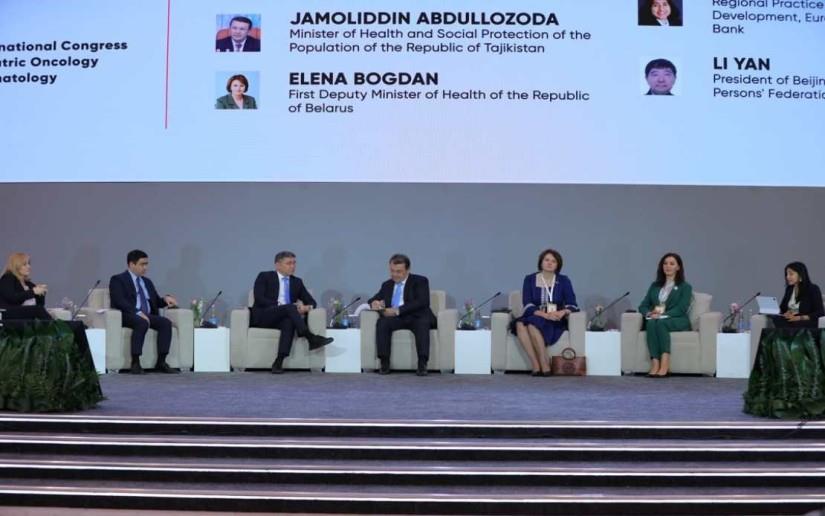
Meanwhile, Tajikistan's Health and Social Protection of the Population Minister Jamoliddin Abdullozoda said his country was strengthening childhood cancer care through a national cancer prevention and control programme covering 2025 to 2029.
He said the programme focused on early detection, timely diagnosis, access to medicines, psychological support for families and palliative care for children.
To support these efforts, Abdullozoda said Tajikistan was seeking stronger international cooperation in four priority areas: medical training, telemedicine consultations with leading healthcare institutions, laboratory diagnostics, and improvements in cancer case registration and treatment assessment.
On cancer prevention, he said the country had incorporated human papillomavirus (HPV) vaccination into its national immunisation programme in 2025, achieving 95.5 per cent coverage among girls aged 10 to 14.
Beyond cancer care, Tajikistan was implementing a World Bank-supported healthcare project to strengthen medical infrastructure, train healthcare professionals and improve primary healthcare services, particularly in rural areas.
Tajikistan currently operates 13 rehabilitation and parent-training centres for children with disabilities and developmental challenges, with plans to expand the facilities.
In Kyrgyzstan, Health Minister Damirbek Osmonov highlighted the growing use of telemedicine to reach families in remote and mountainous areas, particularly during winter.
He said Kyrgyzstan had introduced 23 clinical protocols and recommendations on neonatology, while more than 5,000 primary healthcare doctors had undergone training in early disease diagnosis.
The country had also expanded specialised paediatric treatment, performing its first bone marrow transplant for a child with cancer without the involvement of foreign experts in 2024.
More than 200 paediatric hearing implant procedures had been carried out since 2018 to help children with hearing impairments.
Osmonov said more than 37,000 children with disabilities had been identified in Kyrgyzstan, underscoring the need to expand accessible rehabilitation and support services.
– BERNAMA

Legal Disclaimer:
MENAFN provides the
information “as is” without warranty of any kind. We do not accept
any responsibility or liability for the accuracy, content, images,
videos, licenses, completeness, legality, or reliability of the information
contained in this article. If you have any complaints or copyright
issues related to this article, kindly contact the provider above.


Comments
No comment