


Qatar Highlights Global Police Cooperation As Key To Tackling Cross-Border Crime


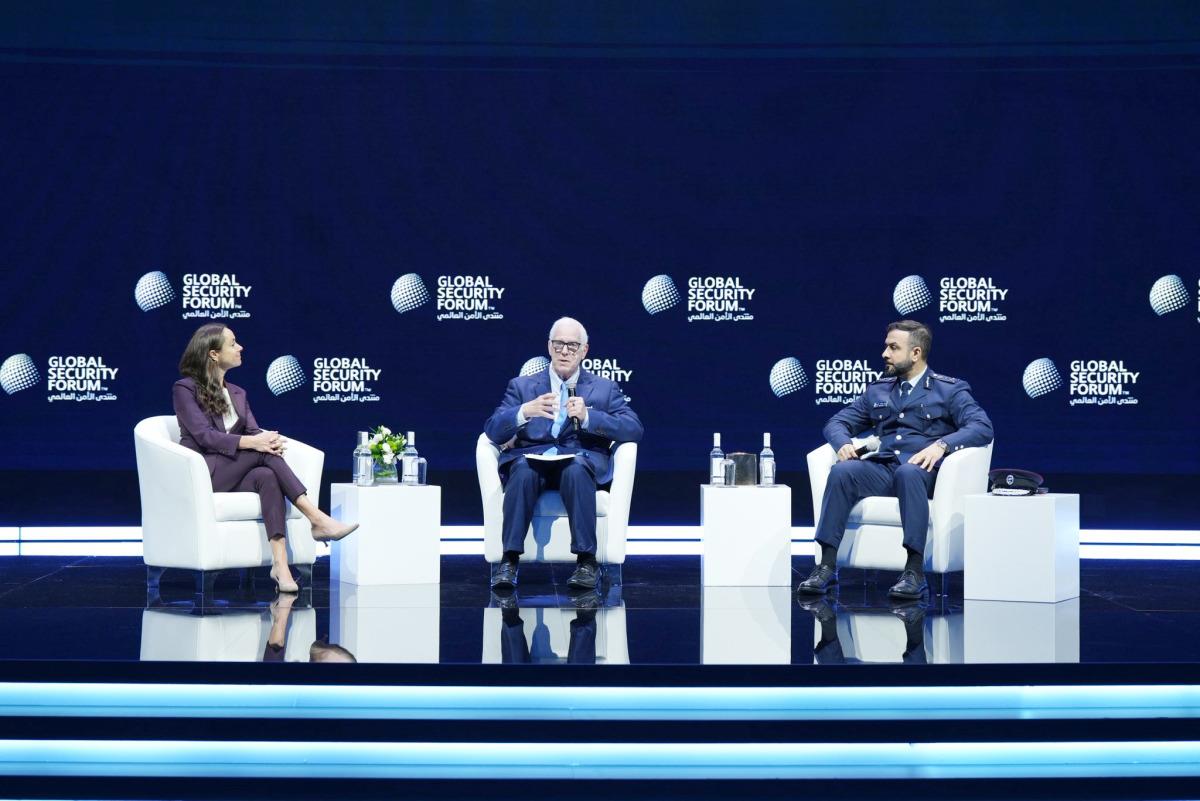
Doha, Qatar: Qatar is strengthening international police partnerships and sharing its expertise in major-event security to help law enforcement agencies tackle criminal networks that operate across borders, with trust, timely intelligence-sharing and technology central to effective cooperation, Director of the Arab and International Police Liaison Department and INTERPOL Executive Committee Delegate at Qatar's Ministry of Interior Brig. Gen. Ali Mohammed Al-Ali said at the Global Security Forum 2026 in Doha.
“International policing required sustained cooperation between countries and agencies to keep pace with criminal organisations that increasingly exploit global connectivity.”
Addressing a session titled“Cross-jurisdictional Cooperation in Policing”, Al-Ali said international organisations provided important frameworks for cooperation, but their effectiveness ultimately depended on the relationships between the people working within them.
Al-Ali highlighted Qatar's experience hosting major international sporting events, saying the country had expanded its international security partnerships and developed mechanisms to coordinate with law enforcement agencies from around the world.
“Prior to COVID-19, Qatar was hosting over 90 events per year. And after the World Cup, we are hosting triple of this number,” he said.
Al-Ali said the experience gained through these events had helped Qatar develop its approach to international police cooperation, particularly through the International Police Cooperation Center (IPCC), which was established and developed in Qatar.
He said that the centre supports security planning before major events, operational coordination during them and assessments afterwards, allowing authorities to identify lessons and improve their approach for future operations.
“So, what we have is we take the security concept and we develop it and we share it. That's how we see police cooperation, not only sharing intel,” he said.
Read Also-
Belgian minister praises Qatar's role in dialogue, urges stronger ties
Qatar strengthens emergency response as Civil Defence expands centre network
Hungary marks 70th anniversary of 1956 revolution, highlights Qatar ties
He also pointed to the agreements established ahead of the 2022 FIFA World Cup as an important foundation for international cooperation.“Qatar signed more than 70 agreements before the tournament, he said, providing a legal basis for information-sharing between partners.”
Al-Ali stressed that intelligence exchange had to operate within the framework of international law, human rights and the national legislation of participating countries.
He said the question was not simply whether information could be shared, but whether sharing it was necessary and urgent enough to help protect lives. The need for cooperation, he added, had become more pressing as criminal networks moved money and people across borders at increasing speed, while law enforcement agencies remained subject to national jurisdictions and legal requirements.
“I guess all of us agree that crime has no borders, but unfortunately, policing still has,” he said. He said countries needed to strengthen their capabilities together, including through technology-sharing and support for agencies that lacked the resources or systems available to their international partners.
The importance of those relationships was illustrated by Deputy Commissioner Rebecca Weiner of the New York City Police Department's Intelligence and Counterterrorism Bureau, who described how international police liaison officers had helped turn shared intelligence into concrete law enforcement action.
Weiner recounted a case involving a man suspected of killing, was attempting to flee New York. Cooperation between INTERPOL and liaison officers in three countries enabled authorities to arrest him when he landed at Bangkok airport, before he entered Thailand.
Weiner said the NYPD's international liaison programme placed officers in cities around the world, including Doha, Amman and Abu Dhabi. By working within local policing environments, the officers develop relationships that help them understand emerging threats at their source and exchange information with local counterparts.
For Al-Ali, such partnerships are essential to ensuring that countries can respond collectively to evolving criminal threats. He said Qatar regarded international police cooperation as more than the exchange of intelligence, emphasising the importance of sharing expertise, developing capabilities and ensuring that agencies were not left behind.

Legal Disclaimer:
MENAFN provides the
information “as is” without warranty of any kind. We do not accept
any responsibility or liability for the accuracy, content, images,
videos, licenses, completeness, legality, or reliability of the information
contained in this article. If you have any complaints or copyright
issues related to this article, kindly contact the provider above.


Comments
No comment