


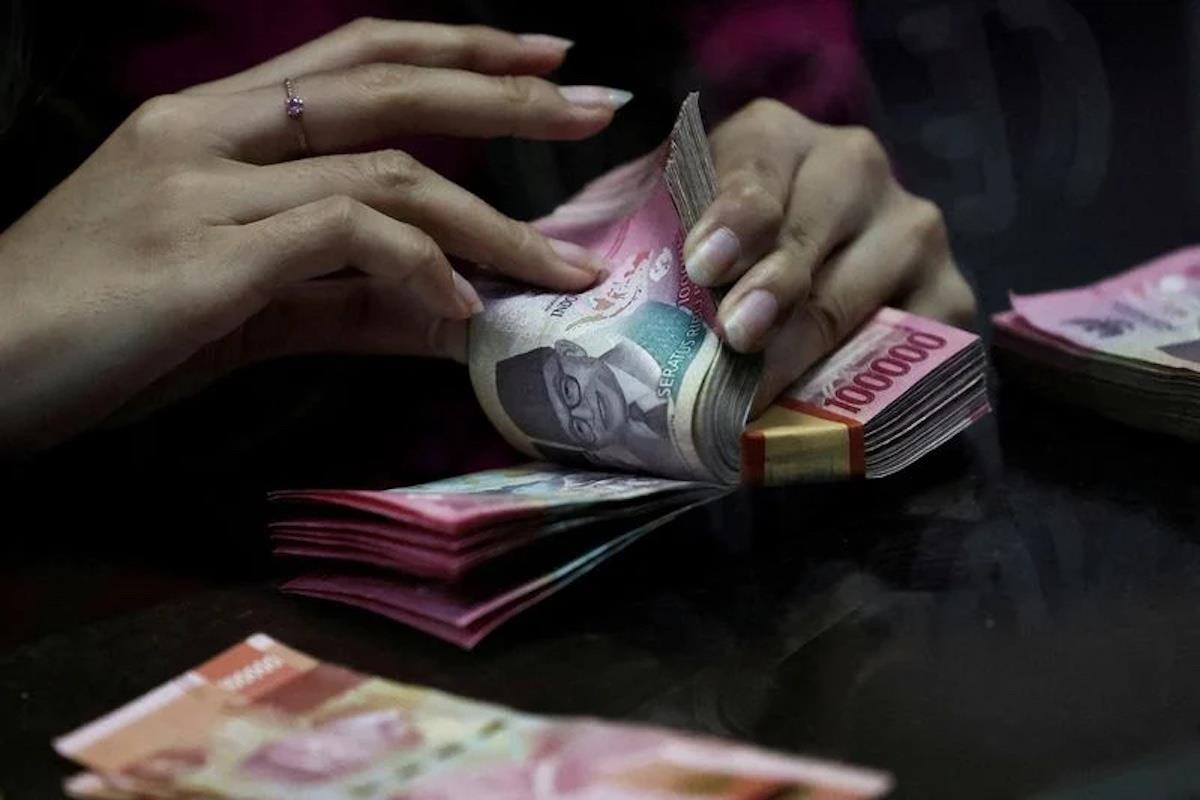
Don't Mistake Indonesia's MSCI Scare For Economic Weakness


Yet, treating this stock market tremor as a proxy for Indonesia's overall economic health represents a fundamental analytical misdiagnosis. The market friction currently surrounding the Indonesia Stock Exchange (IDX) is not a sign of macroeconomic decay. Rather, it is a localized governance and technical issue.
Passive index funds may be bound by rigid algorithms, but Indonesia's broader economy operates on far more solid ground - backed by a steady technocratic hand and accommodative policy stance at Bank Indonesia.
Market governance, not economic collapseTo navigate the current noise, one must separate valid capital market critiques from macroeconomic reality. MSCI's scrutiny centers primarily on structural market mechanics: concentrated stock ownership, free-float transparency and concerns over coordinated trading activities.
These are legitimate grievances regarding the maturity and transparency of Indonesia's equity market infrastructure. Yet index rules are notoriously black-and-white. Passive funds simply follow set formulas - when a metric falls short, money pulls out automatically, paying little mind to solid GDP figures, fiscal discipline or even healthy corporate earnings.
Crucially, Indonesian officials are already stepping up. Indonesia's Financial Services Authority (OJK) and the stock exchange have started rolling out much-needed reforms, from stricter disclosure rules to sharper trading guardrails like asymmetric auto-rejection limits.
Latest stories Takaichi's next vote is in the bond market The return of the CPU Pentagon insiders will 'spill their guts' to see Hegseth impeachedIn that sense, the MSCI threat is hardly a death sentence; it is the push Jakarta needed to modernize its capital market, as reflected in Indonesia's capital market reform initiatives.
Bank Indonesia holds the lineWhile stock markets obsess over index labels, Indonesia's real economic engine continues to move smoothly ahead. Bank Indonesia reaffirmed this stance during its latest policy meeting, choosing to keep the benchmark rate steady at 5.75%, as confirmed in its October 2026 monetary policy decision.
It is a pragmatic move: protecting the rupiah against global spillovers while keeping inflation firmly under control. By holding a clear line, the central bank prevents temporary stock market noise from spilling into broader financial instability or eroding confidence in the currency.
Key indicators tell a very consistent story. Bank Indonesia's Prompt Manufacturing Index for Q3 2026 came in at 52.28%, well within expansion territory. Meanwhile, Bank Indonesia's Q3 2026 Business Survey points to continued business activity, alongside signs of healthy domestic demand and active factory floors.
At the same time, targeted macroprudential measures are keeping liquidity flowing directly to key industries, infrastructure, and small businesses-buffering the real economy from stock market mood swings. Simply put, while portfolio managers agonize over index weights, local businesses are busy producing, hiring and expanding.
The long-term investor's advantageFor international investors, it pays to look past index tracking and draw a clear line between short-term portfolio flows and long-term strategic investment.
Hot money tracked to passive indices moves on benchmark rebalancings; strategic foreign direct investment (FDI) moves on demographic dividends, supply chain integration and resource processing.
Indonesia's appeal for long-term capital - driven by its critical mineral ecosystem, digital economy expansion, and stable fiscal framework - remains undiminished by index technicalities. For active investors and multinational corporations, the current disconnect creates an attractive entry point rather than a reason to exit.
Supporting evidence appears in Indonesia's investment realization in the first half of 2026. Furthermore, domestic market dynamics have matured significantly over the past decade.
The growth of domestic retail investors and local institutional funds, paired with Bank Indonesia's monetary instruments (such as SRBI) to absorb excess liquidity, provides a vital buffer against external capital outflows.
MSCI blessing in disguiseThe ongoing MSCI consultation should be viewed for what it truly is: a sharp but necessary wake-up call for Jakarta's equity regulators, not a crisis of sovereign solvency or macroeconomic stability.
If OJK and the IDX successfully leverage this pressure to eliminate opaque trading practices and enforce true free-float transparency, Indonesia's capital markets will emerge stronger, fairer and more mature.
Meanwhile, Bank Indonesia's policy mix combines rupiah stabilization with accommodative macroprudential measures to support the country's real economy.
Sign up for one of our free newsletters-
The Daily Report
Start your day right with Asia Times' top stories
AT Weekly Report
A weekly roundup of Asia Times' most-read stories
Global investors who flee Jakarta based purely on passive index algorithms risk mistaking market governance friction for macroeconomic weakness - and in doing so, they will miss out on one of Asia's most resilient economic growth stories.
Ultimately, index providers like MSCI measure structural compliance rather than economic vitality, meaning short-term algorithmic churn cannot derail Southeast Asia's largest economy.
As long as Bank Indonesia anchors the macroeconomy through a calibrated policy mix - balancing rupiah defense with targeted liquidity support - the broader financial system remains well-fortified while Jakarta executes long-overdue market reforms.
For global investors willing to look past index mechanics, the current divergence between stock market sentiment and macroeconomic fundamentals offers a rare strategic opening, marking not a story of capital flight, but the evolution toward a more mature and transparent market structure.
Rabiul Misa is a junior analyst at Bank Indonesia. His work focuses on monetary economics, payment systems, financial inclusion, MSME development,and public policy. His commentary has appeared in Asia Times, Modern Diplomacy, Eurasia Review, Kompas, Kompas, Tribun News, ANTARA News and Kumparan. The views expressed here are solely his own and do not represent Bank Indonesia's official position.
Thank you for registering!
-
Share on X (Opens in new window)
Share on LinkedIn (Opens in new window)
LinkedI
Share on Facebook (Opens in new window)
Faceboo
Share on WhatsApp (Opens in new window)
WhatsAp
Share on Reddit (Opens in new window)
Reddi
Email a link to a friend (Opens in new window)
Emai
Print (Opens in new window)
Prin

Legal Disclaimer:
MENAFN provides the
information “as is” without warranty of any kind. We do not accept
any responsibility or liability for the accuracy, content, images,
videos, licenses, completeness, legality, or reliability of the information
contained in this article. If you have any complaints or copyright
issues related to this article, kindly contact the provider above.


Comments
No comment