


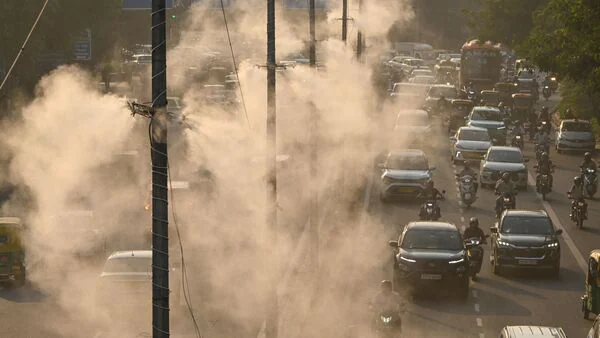
GRAP 1 In Delhi: Impact On NCR Schools? Open Or Closed? Know About Restrictions And Bans - Allowed Vs Not Allowed Today


Revised by the Commission for Air Quality Management in the National Capital Region and Adjoining Areas (CAQM), GRAP classified deteriorating air quality into four distinct stages, with Stage I automatically invoked when the Delhi Air Quality Index (AQI) hovers between 201 and 300.
As citizens grapple with the onset of winter smog, here are some common questions surrounding the operational status of schools, what remains permissible and what faces outright bans across Delhi.
Quick answers to key questions
.5 QUESTIONS1Are schools in Delhi-NCR open under GRAP Stage I?⌵Yes. Schools remain open for regular in-person classes under Stage I; it does not require closures or hybrid learning.
2What AQI level triggers GRAP Stage I in Delhi?⌵Stage I comes into force when Delhi's AQI is between 201 and 300, the 'poor' category.
3Is work from home mandatory for Delhi-NCR offices under GRAP Stage I?⌵No. Stage I does not require work from home, reduced office attendance or changed office timings. Employers are encouraged to support shared commuting.
4Are private cars banned in Delhi under GRAP Stage I?⌵No general ban on private cars is imposed under Stage I. Authorities must enforce restrictions on overaged vehicles and take action against visibly polluting vehicles.
5Can construction work continue in Delhi-NCR under GRAP Stage I?⌵Yes, if dust-control measures are followed, including covering materials and waste and using water sprinklers or anti-smog guns as required. Projects of 500 square metres or more must meet registration and monitoring requirements.
Also Read | GRAP 1 in Delhi: Office rules, WFH and pollution restrictions explained Impact on NCR schools: Are schools open or closed?Under Stage I of GRAP, schools across Delhi and the NCR remain fully open and operational. The official GRAP schedule clearly indicates that no school closures, hybrid classes, or restrictions on educational institutions are mandated under Stage I.
Restrictions affecting educational institutions only kick in during higher pollution thresholds:
Under Stage III ('Severe' AQI 401–450): Governments are directed to mandatorily conduct classes for children up to Class V in a "Hybrid" mode (both physical and online, where feasible) in Delhi and the districts of Gurugram, Faridabad, Ghaziabad, and Gautam Buddha Nagar, with the choice of online mode vesting with guardians.
Under Stage IV ('Severe +' AQI > 450): The hybrid mode expands to higher classes (Classes VI to IX and Class XI). State governments may also consider emergency measures, such as the complete closure of colleges and other educational institutions, only under Stage IV.
Therefore, under Stage I, standard physical schooling continues uninterrupted across NCR.
Also Read | GRAP 1 restrictions, bans in Delhi: Impact on cars, trucks, hotels, construction Allowed vs Not Allowed today under GRAP Stage IStage I of GRAP focuses primarily on proactive dust control, strict emissions enforcement, vehicle regulation, and waste management.
What is NOT allowed?-
Open burning: There is a strict ban on the open burning of biomass and municipal solid waste, with authorities directed to impose maximum environmental compensation on violations. Burning incidents at landfill and dump sites are strictly prohibited.
Tandoors using coal or firewood: The extant ban on using coal or firewood as fuel in tandoors across hotels, restaurants, and open eateries is strictly enforced. Establishments are barred from using unapproved dirty fuels.
Overaged and polluting vehicles: Plying of end-of-life and overaged diesel or petrol vehicles-in accordance with orders from the Supreme Court and National Green Tribunal (NGT)-is completely prohibited. Visibly polluting vehicles are to be impounded or heavily penalised.
Non-destined diesel truck traffic: Non-destined truck traffic cannot enter Delhi and must be diverted via the Eastern and Western Peripheral Expressways.
Non-compliant inter-state buses: Inter-city and inter-state buses from cities and towns of Haryana, Uttar Pradesh, Rajasthan, Punjab, Himachal Pradesh, Madhya Pradesh, Uttarakhand, and Jammu & Kashmir are prohibited from plying in Delhi-NCR unless they run on Electric (EV), CNG, or BS-VI Diesel.
Illegal and unregistered construction: Construction and Demolition (C&D) projects on plots of land equal to or exceeding 500 square meters that are not registered on statutory state/GNCTD web portals for remote dust monitoring are not permitted to operate.
Unregulated DG sets: Diesel generator sets are strictly prohibited from being used as a regular power supply. Furthermore, portable DG sets below 19 kW (23 kVA) are generally not permitted, except for designated emergency services.
-
Construction and demolition: C&D activities are permitted, provided they strictly adhere to dust mitigation measures-including properly storing and covering C&D materials and waste, transporting them in covered vehicles, and deploying anti-smog guns and water sprinklers.
Compliant generator sets: Power-generating sets running on clean fuels (LPG, Natural Gas, Bio-gas, Propane, Butane) face no restrictions regardless of capacity. DG sets up to 800 kW meeting MoEFCC standards (GSR 804 (E)), as well as older capacity DG sets retrofitted with dual-fuel modes or certified emission control devices (ECDs), are allowed to operate.
Clean eatery appliances: Commercial kitchens and eateries may operate using electricity, piped natural gas, or approved clean-fuel appliances.
Public and private transport: Public transit-including augmented CNG/electric buses, the Delhi Metro, and RRTS services-operates freely, with offices encouraged to adopt unified commute options to curb vehicular density.

Legal Disclaimer:
MENAFN provides the
information “as is” without warranty of any kind. We do not accept
any responsibility or liability for the accuracy, content, images,
videos, licenses, completeness, legality, or reliability of the information
contained in this article. If you have any complaints or copyright
issues related to this article, kindly contact the provider above.


Comments
No comment