


Commentary: Young Voices Can Change The Way We Think About Neurodiversity And Inclusion


- By: Syrah Anand
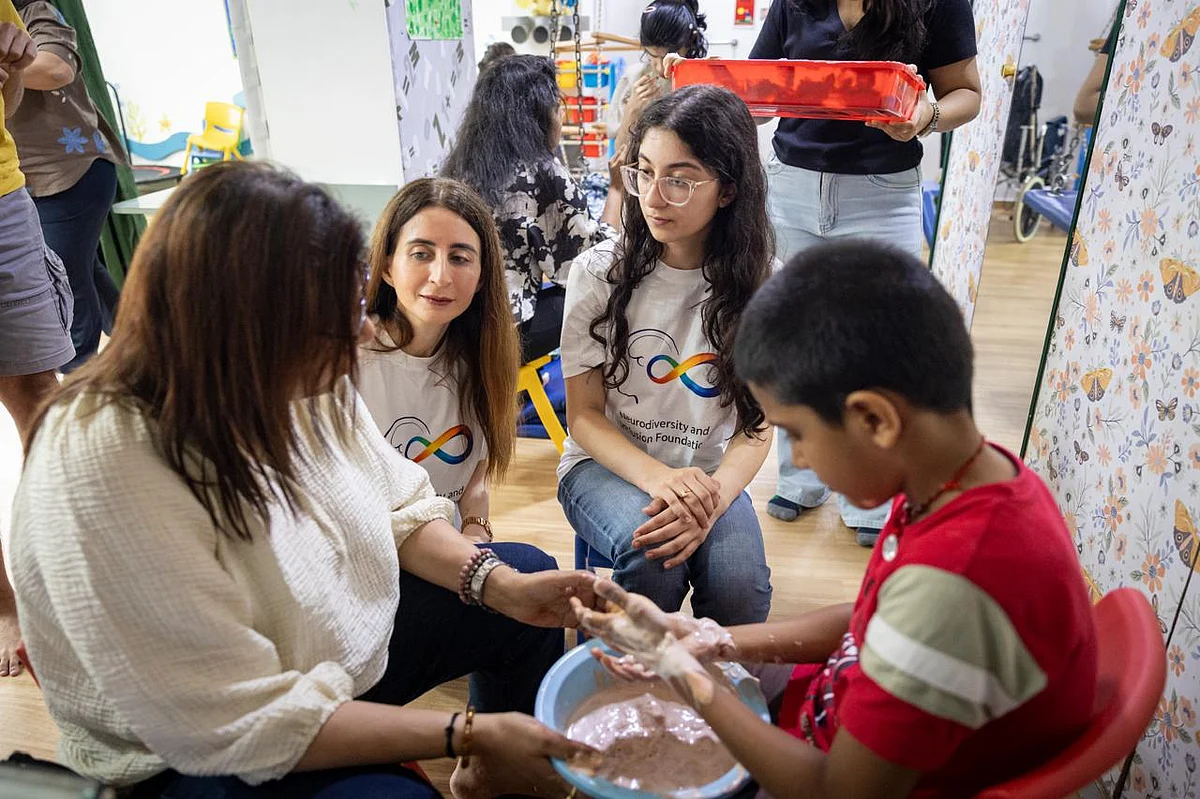
The author is a student with an interest in neurodiversity, inclusion and education. Having lived and studied in Dubai and the United States, with strong roots in India, she is involved with the India Neurodiversity and Inclusion Foundation and is particularly interested in the role young people can play in shaping conversations around inclusion.
Some of my earliest conversations about inclusion happened before I even knew that was the word for it. Growing up in Dubai, I would hear my mom talk about a teacher she had met, a family looking for support, or something that had happened in a classroom in India. She had spent years working with children with autism, ADHD and dyslexia, as well as their families and teachers.
Recommended For YouAt first, I mostly listened. As I got older, I started asking a different question: what could I do? Those conversations eventually grew into something we decided to build together: the India Neurodiversity and Inclusion Foundation. What interested me most was the role young people could play.
So much of the conversation around neurodiversity happens between adults: parents, teachers, therapists, specialists and policymakers. Of course, all of those voices matter. But I also think students need to be part of the conversation. We are the ones sitting next to one another in classrooms. We are the ones working together on projects, playing sport, eating lunch together and deciding, sometimes without even realising it, who gets included and who does not.
Inclusion can sound like a very big idea. But at school, it often comes down to very small moments. Who gets invited into a conversation. Whether someone is given a little more time to answer. Whether we make fun of somebody for behaving differently, or stop to wonder why they may be struggling. Whether a student feels they have to hide the way they learn or communicate just to fit in. Working on the foundation has made me notice those moments more.
My mom approaches inclusion through years of experience working with families, teachers and children. I approach it as someone who is still a student. We do not always see things in exactly the same way, and I think that is useful. I tell her what I notice among people my age: how quickly students can label somebody as“weird”,“awkward” or“different”, sometimes without understanding what may be behind that behaviour. She tells me what she hears from parents and teachers, and how difficult it can be for families when a child is misunderstood. Together, those perspectives have made me realise that inclusion cannot only be something adults design for young people. Young people have to help create it too.
Living between the United States, Dubai and India has made that even clearer to me. In some communities, families have access to specialists, school support and a growing awareness of neurodiversity. In others, parents and teachers are still trying to find basic information about autism, ADHD or learning differences.
The resources may be different, but attitudes matter everywhere. A school can have excellent programmes and policies, but real inclusion also depends on what happens between students when no adult is watching. That is why I care about making conversations about neurodiversity easier for young people to have. We do not need to become experts. We just need to become more curious about one another, less quick to judge and more willing to understand that people can think, learn and communicate differently. My mom and I still talk about the foundation across time zones. I call from New Hampshire; she answers from Dubai. We talk about what we should do next, what needs to change and what we are learning. The difference is that I am no longer simply listening to her tell me about her work. I have a voice in the conversation now. And if we want the next generation to build more inclusive schools and communities, I think more young people need to realise that they have one too.
ALSO READ- Neurodivergent adults in Dubai find safe spaces to socialise, 'unmask' Dubai student builds AI learning platform for 5,000 children in India's schools At 17, Dubai teen has helped 8,750 underprivileged children in India learn STEM

Legal Disclaimer:
MENAFN provides the
information “as is” without warranty of any kind. We do not accept
any responsibility or liability for the accuracy, content, images,
videos, licenses, completeness, legality, or reliability of the information
contained in this article. If you have any complaints or copyright
issues related to this article, kindly contact the provider above.


Comments
No comment