


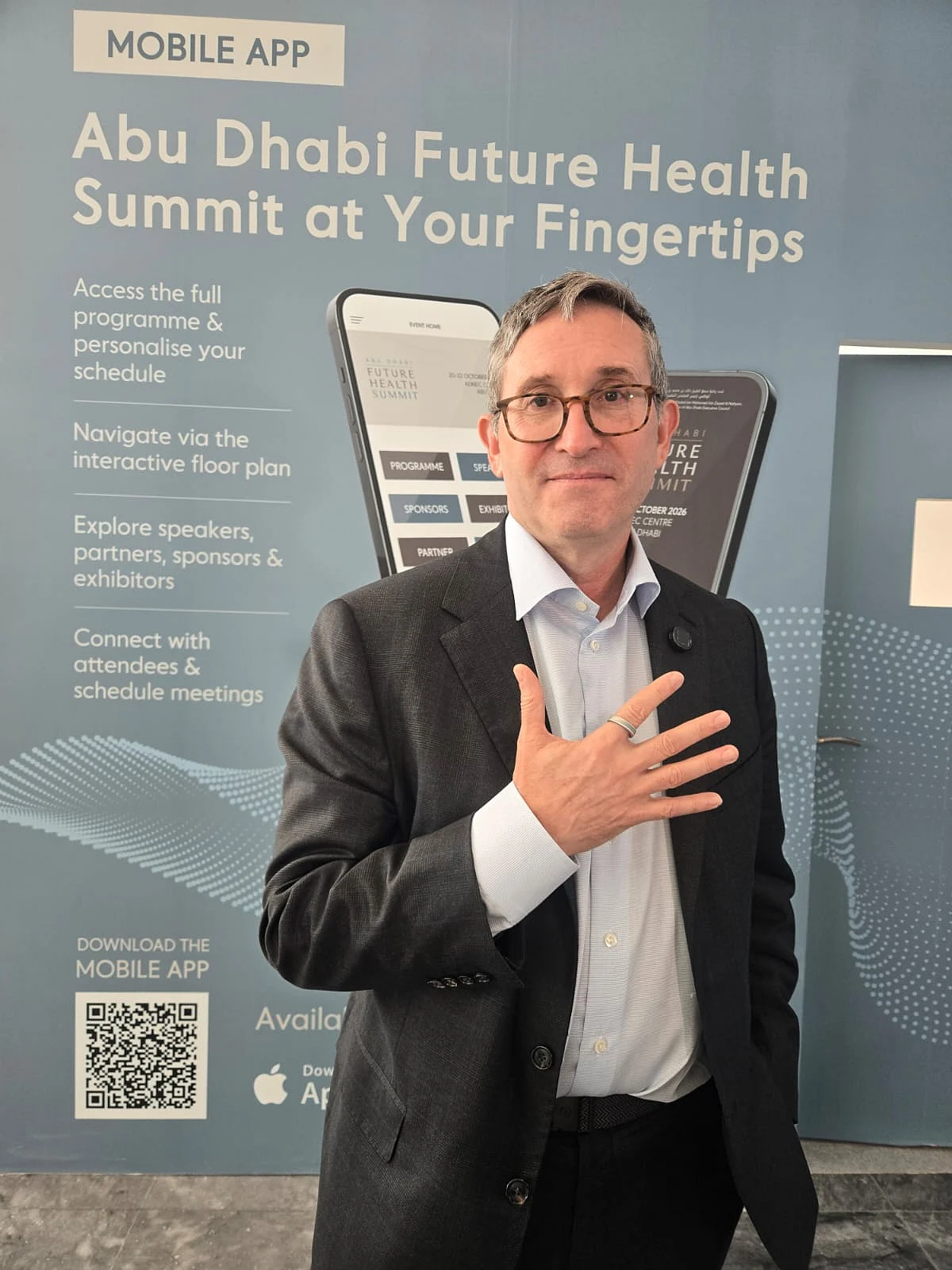
How Oura Rings Could Help Identify Pregnancies At Risk Of Premature Labour


- By: Haneen Dajani
Small changes in heart rate, body temperature and breathing can reveal that something is changing inside the body, sometimes before a person notices symptoms. Oura is using such patterns to develop health-warning features, and its latest research partnership in Abu Dhabi will examine whether they could help identify pregnancies at risk of premature labour.
The company, which makes the Oura Ring, says its research has helped develop tools that flag potential signs of illness, high blood pressure and sleep apnoea. Its latest project, launched with the Department of Health – Abu Dhabi, will test whether similar physiological signals can help identify the risk of spontaneous preterm birth.
Recommended For You“We can see the reaction of the body,” Oura chief executive Tom Hale said, explaining how the technology identifies changes in physiological measurements rather than directly detecting a disease.
Stay up to date with the latest news. Follow KT on WhatsApp Channels.
The approach relies on continuously collecting biometric data and using machine learning to identify patterns that may indicate a change in health.
During the Covid-19 pandemic, Oura studied data from 65,000 ring users, about 9,000 of whom reported contracting the virus, Hale said. Researchers traced their biometric readings backwards from diagnosis and identified subtle changes in temperature, respiration, heart rate and heart rate variability that appeared before users developed symptoms.
The work informed the company's Symptom Radar feature, which flags deviations from a person's usual physiological patterns that may indicate the body is responding to a potential illness or other stressor.
Hale said the company had also used a large-scale research effort to develop its blood pressure signals feature. About 400,000 people signed up for the blood pressure profile study, contributing data that researchers used to develop an algorithm to identify patterns associated with potential blood pressure problems.
The company is also developing tools to identify patterns associated with sleep apnoea, a condition in which breathing repeatedly stops and starts during sleep.
From illness detection to pregnancy risksThe latest application being investigated is whether the same approach could help identify women at risk of premature labour.
Project CRADLE, a 24-month pilot study announced on October 21, will combine continuous data from Oura Ring with clinical and genomic information in Abu Dhabi to investigate whether physiological changes can provide an early warning of spontaneous preterm birth.
Researchers will follow women with elevated-risk pregnancies from early pregnancy through delivery. The ring tracks measurements including heart rate, heart rate variability, sleep and activity, which will be compared with clinical outcomes.
Shyamal Patel, Oura's global senior vice-president of science, said the company had already published research involving more than 10,000 pregnancies that identified changes in physiological patterns across pregnancy, including changes around two weeks before labour.
The new study will investigate whether those signals can specifically identify pregnancies at risk of premature birth, and whether they appear early enough to help clinicians make decisions about care.
“We always start with science and research. We want to make sure that we do rigorous research, validate it, and make sure that it matches the clinical standards,” Patel said.
The team hopes to capture several hundred preterm births during the research, although the final sample size is still being worked out, he said.
The study will initially involve Corniche Hospital and Mediclinic Airport Road. Researchers will examine whether a reliable physiological signal emerges before spontaneous preterm labour and whether it could eventually be used to establish a threshold for clinical action.
Premature birth is defined as delivery before 37 completed weeks of pregnancy and affects roughly one in 10 births worldwide.
Patel said the study itself would focus on research, with no intervention triggered by its findings during the pilot. If researchers establish that particular signals are reliably associated with preterm labour, the longer-term goal would be to translate those findings into clinical practice.
Depending on the cause and circumstances, earlier identification could allow doctors to monitor a pregnancy more closely, consider treatments to support a baby's development or arrange a transfer to specialist neonatal care.
The challenge of getting predictions rightDetecting a potential health problem is not the same as diagnosing it, and wearable-generated warnings must be reliable enough to be useful without causing unnecessary alarm.
Hale said the company needed to validate its algorithms against clinical evidence before presenting predictions to users.
He explained that medical prediction involves balancing sensitivity, or the ability to identify genuine cases, with specificity, which measures how well a system avoids false positives.
For a pregnancy-related warning, that balance is particularly important. A false alarm could cause unnecessary anxiety and medical assessments, while a missed warning could mean losing an opportunity for timely care.
Patel said clinicians would need to remain central to decisions about any future use of the information.
The company hopes Abu Dhabi's healthcare infrastructure and emphasis on preventive medicine will help researchers move from scientific findings to practical applications more quickly. However, wider clinical use would depend on the evidence generated and the necessary regulatory approvals.
Project CRADLE is the first of three planned research pilots under the partnership between Oura and the Department of Health – Abu Dhabi, which was announced in May 2026. The wider programme initially focuses on women's health and cardiometabolic health, with results from the premature-birth study expected to be published in 2028.
For Oura, the ambition extends beyond fitness tracking. Hale said the company's approach was designed to help people understand changes in their health over time, including those who use wearables to manage chronic conditions rather than monitor exercise performance.
The longer-term goal, he said, is to use continuous health data to help people and clinicians recognise potential problems earlier, when there may still be time to act.
ALSO READ- Can a smart ring warn doctors of premature birth? Abu Dhabi launches new study WHOOP membership in Gulf surges 85% in 1 year as UAE clinical research deal deepens M42 begins wearable health pilot in Abu Dhabi for kidney disease, diabetes patients

Legal Disclaimer:
MENAFN provides the
information “as is” without warranty of any kind. We do not accept
any responsibility or liability for the accuracy, content, images,
videos, licenses, completeness, legality, or reliability of the information
contained in this article. If you have any complaints or copyright
issues related to this article, kindly contact the provider above.


Comments
No comment