


Drug Smuggling Into Jordan: Israel Takes Over Syria's Role As A Smuggling Hub


Habashneh said reports that these methods were being used to transport drugs into Jordan, if confirmed, warranted serious attention and a firm response from the relevant authorities. Referring to the role played by the opium trade in China, he warned of the potential consequences of drug proliferation for Jordanian youth and society.
The warnings come amid media reports of smuggling networks operating in the Negev region and using airborne means to transport drugs across the border, alongside Jordanian allegations that certain Israeli actors are facilitating these operations.
The challenge facing Jordan goes beyond the methods used to transport the shipments. The shift from traditional overland routes to drones and guided balloons creates opportunities for networks to circumvent some border surveillance measures. The successful delivery of these shipments, however, still depends on contacts inside the kingdom who receive and distribute the drugs.
Figures Reveal the Scale of the Challenge
Jordanian Interior Minister Mazen Fraya confirmed to Al Jazeera Net that drug smuggling from Israel into Jordan using drones was increasing, stressing that security forces continued their efforts to prevent the drugs from entering the kingdom.
Fraya disclosed that authorities recorded 15,342 drug-related cases in 2026, with trafficking accounting for around 28 per cent and drug use for the remaining 72 per cent.
During the first half of the year, a preliminary review of Jordanian military data recorded 17 interception operations involving drones. The Jordanian Armed Forces also announced that they had dealt with 231 smuggling and infiltration attempts and brought down 56 drones along Jordan's various borders during the same period.
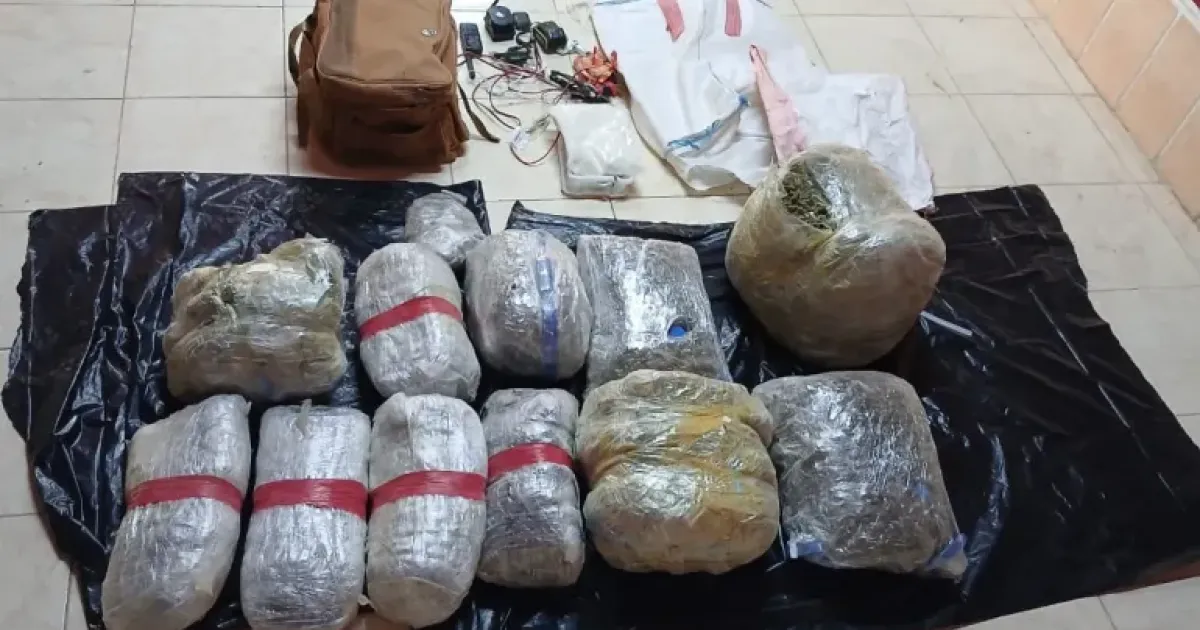
On 1 April 2026, the armed forces announced that they had foiled ten smuggling attempts along the northern and western border fronts using guided balloons and a drone. The operation resulted in the seizure of more than 1.5 million drug pills and 100 blocks of hashish.
These incidents indicate that airborne methods have become part of the smuggling landscape confronting Jordanian authorities. However, the aggregate figures alone do not establish what proportion of the operations originated along the western border, nor do they justify attributing all the seizures to a single source.
The British newspaper The Daily Telegraph reported figures it said were drawn from official Jordanian data, indicating that authorities had seized more than 15,000 Captagon pills, approximately 20,000 kilograms of crystal methamphetamine, 6,000 blocks of hashish and other narcotic substances since the beginning of the year.
The Negev and the Price Gap
Israeli media reports have identified the Negev region as a focal point of suspected smuggling activity, pointing to criminal gangs seeking to exploit price differences between the Israeli and Jordanian markets.
According to The Daily Telegraph, citing Israeli estimates, a kilogram of hashish can fetch around £7,500 in Jordan, with its price in the Jordanian market estimated to be approximately 15 times higher than in Israel.
If accurate, these estimates suggest that the price gap provides smugglers with a substantial financial incentive, even as the risks of interception and prosecution increase. Potential profits alone, however, do not explain how these networks operate, nor do they establish which parties may be providing protection or logistical assistance.
Israeli media have also reported the foiling of a smuggling operation in which around 70 kilograms of hashish were seized. The reports referred to six other thwarted operations and the confiscation of more than 200 kilograms.
These reports point to activity that security authorities are confronting on both sides of the border. They do not, on their own, provide a complete picture of the networks' scale, funding sources or command structures.
Allegations of Israeli Involvement
Jordanian Senator and retired Major General Ammar Qudah has accused members of Israeli military and security agencies, including border guard units, of facilitating drug smuggling and supporting some of the criminal gangs operating in the Negev.
Qudah said that, according to the information he cited, the alleged involvement went beyond turning a blind eye to smugglers' movements and included providing resources to help them carry out their operations. He also accused Israeli security agencies of pursuing a policy aimed at smuggling weapons and drugs into Palestinian communities inside Israel, commonly known as Arab Israelis, in a way that he said contributed to addiction and fuelled organised crime.
Qudah further claimed that gangs in the Negev had obtained more than 1,000 drones originally used for agricultural and security purposes before transferring them to criminal groups.
Retired Brigadier General Daifallah Daboubi, a strategic and military affairs expert, described the situation as a form of“reverse migration of drugs” into Jordan, referring to shipments travelling from Egypt's Sinai Peninsula through the Negev and into Jordanian territory.
Daboubi said groups operating in Beersheba and the Negev were using drones to smuggle drugs. He added that, according to information available to him, some members of Israeli border guard units and military trackers had family and social ties to smugglers.
He specifically referred to Unit 300, which specialises in tracking, and Israeli border guard units known in Hebrew as Mishmar HaGvul. He argued that such connections could help explain why some operations were facilitated or allowed to proceed without intervention.
Aerial Shipments and Networks Inside Jordan
According to Qudah, smuggling networks extend across Jordan, Sinai and the Negev, using routes that include Wadi Araba, as well as other corridors running through the Israeli-Lebanese border and the Galilee towards Syria.
He said smugglers use helium-filled balloons equipped with GPS devices, alongside drones capable of carrying shipments weighing up to approximately 50 kilograms of narcotics, particularly black hashish and methamphetamine, commonly known as crystal meth.
The success of these operations does not depend solely on crossing the border. Shipments also require recipients inside Jordan who can identify delivery locations and coordinate their arrival.
Qudah said individuals inside the kingdom provided smugglers with geographical coordinates, adding that drones had landed at houses to deliver shipments. He said Jordan's Anti-Narcotics Department, working in coordination with the armed forces, had investigated cases of this kind and arrested people suspected of receiving the drugs.
This means the response cannot be limited to shooting down drones or intercepting balloons. It must also involve pursuing those who provide coordinates, receive and distribute the substances, and tracing the financial flows and connections between different links in the smuggling chain.
Qudah warned of the spread of black hashish and crystal meth in the domestic market, saying some shipments were intended for consumption inside Jordan rather than merely passing through the country en route to other destinations.
He also referred to the downing of approximately 350 drones during a period in 2025 and cited a smuggling case involving, according to his account, 400 tonnes of material over a single year. These figures require clarification regarding the period covered, the type of substances involved and the sources of the information before they can be used to assess the actual scale of the trade.
Borders with Changing Security Priorities
Daboubi linked the activities of smuggling networks to changes in military deployments across the region following the wars in Gaza, Lebanon and the Golan Heights. He argued that these developments had created greater room for smugglers to operate.
Growing attention to Jordan's western border has coincided with changes in regional drug trafficking following the fall of Bashar al-Assad's government in late 2024.
Daboubi also referred to the Jordanian-Israeli peace treaty signed in 1994 and its provisions governing security arrangements and mutual obligations. He argued that any confirmed official Israeli involvement in the smuggling activities would raise serious questions about compliance with those arrangements.
Israel, meanwhile, says it has strengthened security measures along its eastern border, including the establishment of Division 96, tasked with border protection, and plans to construct a new security barrier.
In April 2025, The Times of Israel reported that Israel intended to build a new border fence at an estimated cost of $1.4 billion.
Israeli announcements have framed border security primarily in terms of preventing weapons and illicit goods from entering Israel from Jordan, while Jordan's focus is on stopping drugs from entering its territory.
The Daily Telegraph quoted a Jordanian military source criticising what the source described as Israel's disregard for attempts to smuggle drugs into the kingdom, in contrast to its emphasis on smuggling incidents in the opposite direction.
The use of guided balloons and drones presents Jordan with a security challenge that differs from conventional smuggling. Technology reduces the need to transport shipments through official crossings or along traditional land routes, but it does not eliminate the networks' dependence on people inside the kingdom to receive, store and distribute the drugs.
Habashneh's warning about the potential social consequences of drug proliferation forms part of this wider picture. The risks do not end at the border. A second phase begins inside society, where the spread of narcotics places additional pressure on families, healthcare services and security agencies. Addressing the threat requires action against distribution networks alongside prevention, treatment and efforts to limit the harm caused by addiction.

Legal Disclaimer:
MENAFN provides the
information “as is” without warranty of any kind. We do not accept
any responsibility or liability for the accuracy, content, images,
videos, licenses, completeness, legality, or reliability of the information
contained in this article. If you have any complaints or copyright
issues related to this article, kindly contact the provider above.


Comments
No comment