


Why Britain's Boring Budget Points To An Early Election


Click here to read our main preview of the UK's Autumn Budget on 28 October
Why is Britain's Autumn Budget looking so... boring?
A bit of extra spending, some modest tax hikes, a small increase in borrowing, but nothing that really moves the needle for the UK's fiscal position.
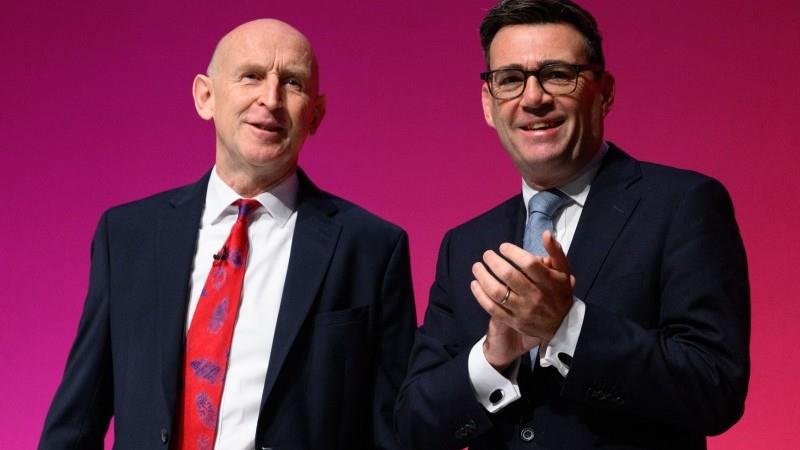
If that is indeed what happens, then it'll be hard to square against Prime Minister Andy Burnham's bold agenda covering everything from nationalisation to social care.
Unless, that is, the government is quietly laying the groundwork for an early election in 2027. I think all roads increasingly lead in that direction. And it suggests prediction markets, which put the probability of a vote by mid next year at just 25%, are underpricing that risk.
It goes back to what Burnham said on the steps of Downing Street in July. He pitched a 10-year plan for Britain. But on the current timetable, he has less than three years before facing voters. The next election must happen by August 2029.
Many of his policies, from curtailing the 'triple lock' to funding a huge social care expansion, are not things you try to push through that close to a vote. They're the sort of reforms you'd rather enact at the beginning of a five-year term, buying time for the political pain to fade and the policies to bear fruit.
Burnham is also hemmed in by Labour's 2024 manifesto pledge not to raise any of the three major taxes. And history tells us that leaders who enter Downing Street mid-parliament often have a yearning for their own mandate. Just look at Theresa May in 2017 or Boris Johnson in 2019.
Yes, an election would almost certainly see Labour's majority shrink dramatically – and maybe even vanish entirely. But then, big majorities are no guarantee of political power, as Keir Starmer discovered to his cost.
Recent polls also show the political right becoming increasingly divided. Kemi Badenoch's Conservatives have overtaken Nigel Farage's Reform UK in the polls. That matters in Britain's First Past the Post system, where elections are won or lost depending on which side of the political divide is least split.
When you start looking at the budget through the lens of an election, its apparent timidity begins to make more sense.
Labour is pulling ahead in the polls as the right gets more divided Solid line shows one-month rolling average. Individual dots show specific poll resultsSource: YouGov
"> Britain's short mortgage fixes make its politics especially sensitive to interest ratesOne of the central problems for Burnham and his Chancellor John Healey is that interest rates are painfully high. This is a problem that extends far beyond Britain; higher borrowing costs speak to global rather than domestic factors. Yet British politics is especially sensitive to higher rates because of the UK's habit of fixing mortgages for comparatively short time periods. Loans are refinanced far more frequently than in the likes of the US or much of Europe. Only 3% of outstanding mortgages were initially fixed for more than five years.
This is why the political scars from the infamous 2022 mini budget debacle are still so deeply and visibly etched in Westminster's institutional memory.
Healey therefore has good reason not to add fuel to the inflation fire, particularly with the Bank of England poised to raise rates just days after his Autumn Budget.
That's why the measures announced so far to ease the cost of living have been purposefully both politically eye-catching and relatively low-cost. The VAT cut on household energy bills and the lower cap on bus fares are both good examples. The former has the added benefit of lowering headline inflation, albeit modestly.
Frequent mortgage re-fixing makes British politics more sensitive to interest rates Source: Macrobond, ING">But perhaps the biggest sign that Downing Street is gearing up for an early election is reports that it's pushing back its next Spending Review, the process that allocates departmental budgets, until next autumn.
This is a task fraught with political risk, with top-line spending plans currently baking in big real-terms cuts for a number of public services.
In delaying this process for 12 more months, the Treasury no doubt hopes lower borrowing costs will buy it some extra spending room. But if you're also thinking of an early election, then a Spending Review is something you'd almost certainly want to do afterwards.
Then there's Brexit.
Burnham has publicly said that Brexit has done "more harm than good" and has floated the possibility of everything from a customs union to going“all the way” and considering full EU membership again.
That's politically significant, but the truth is that economically meaningful change would take a very long time. It's also not at all clear that a majority exists to rejoin, particularly when the public is asked about some of the likely trade-offs involved.
Migration remains the single biggest issue, alongside the economy, for voters, according to YouGov. The UK's EU relationship, however, is now a top three issue for just 1 in 10 UK voters. Does the government really want to let Brexit suck up all the political oxygen again, just as it did in the late 2010s? I'm not so sure.
That's without talking about the appetite in Brussels to seriously entertain closer ties, given the volatility of UK politics and political opinion.
Migration is still a top issue for UK voters. The EU relationship isn't... Source: YouGov">This is why Burnham's EU push should be seen more as positioning for the next election. It serves the dual purpose of drawing votes away from the Green Party and the Liberal Democrats, while making a coalition deal with the latter easier if Labour falls short of a majority.
None of this makes an early election a certainty. It would be a huge gamble. Just ask Theresa May, who went to a surprise election on strong poll ratings only to lose her party's majority.
Markets probably wouldn't welcome it, either.
A big Labour majority would resurface concerns about a big increase in borrowing. Would the fiscal rules be loosened? And would Labour really be willing to raise taxes on ordinary workers, which, according to the OECD, are among the lowest in Europe?
On the flip side, a failure to get a majority would risk policy paralysis and higher uncertainty.
It comes back to an argument I've been making for more than a year. Britain gets a bad rap on its public finances, but they're in better shape than many other developed economies right now. The UK is the only G7 economy currently doing fiscal consolidation.
But longer term, the UK is no more immune than its peers to rising defence costs, an ageing population and mounting demands on public services. Eventually, politicians will have to decide whether that means higher taxes or less spending elsewhere.
The prime minister will have to confront these trade-offs at some point. The question is whether he asks the voters for five more years before he does.

Legal Disclaimer:
MENAFN provides the
information “as is” without warranty of any kind. We do not accept
any responsibility or liability for the accuracy, content, images,
videos, licenses, completeness, legality, or reliability of the information
contained in this article. If you have any complaints or copyright
issues related to this article, kindly contact the provider above.


Comments
No comment