


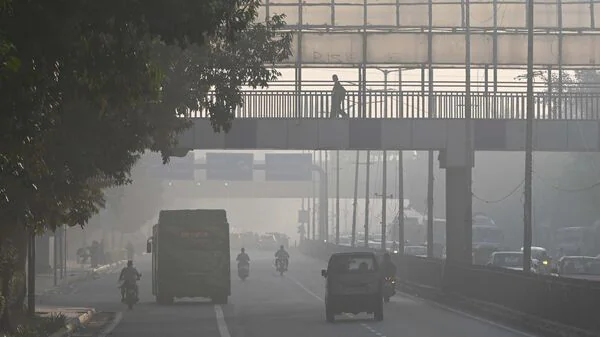
Delhi's Worsening Air Quality Triggers Stage-I GRAP Across NCR


Delhi's Air Quality Index (AQI) rose from 179 (moderate) on 20 October to 244 (poor) at 2pm on 21 October, according to the CAQM.
The sub-committee on GRAP took the decision after reviewing the prevailing air quality situation and weather forecasts issued by the India Meteorological Department (IMD ) and the Indian Institute of Tropical Meteorology (IITM). The forecasts indicate that Delhi's AQI is likely to remain 'poor' over the coming days.
Quick answers to key questions
.5 QUESTIONS1What does Stage-I GRAP mean for Delhi-NCR?⌵Stage-I is the first set of pollution-control measures under the Graded Response Action Plan. It applies when the AQI is in the 'poor' range of 201–300.
2Why was Stage-I GRAP imposed across Delhi-NCR?⌵Delhi's AQI rose from 179 on 20 October to 244 on 21 October, entering the 'poor' category. Forecasts indicated that poor air quality was likely to continue over the coming days.
3What measures are required under Stage-I GRAP?⌵Measures include mechanized road sweeping, water sprinkling to control dust, regular waste collection, and monitoring construction and demolition activities. Open waste burning is prohibited, and construction sites must follow dust-control guidelines.
4Which buses can operate in Delhi-NCR under the Stage-I restrictions?⌵Buses from specified neighbouring states and towns will not be permitted to ply in the NCR unless they are electric, run on CNG, or meet BS-VI diesel emission standards.
5Can hotels and restaurants use coal or firewood in tandoors during Stage-I GRAP?⌵No. Hotels, restaurants and open eateries must use electricity, gas or other approved clean-fuel appliances instead of coal- or firewood-fired tandoors.
The panel directed all concerned agencies across the NCR to implement, monitor and review Stage-I measures strictly to prevent any further deterioration in air quality. Agencies have also been instructed to maintain close vigilance and intensify the implementation of prescribed pollution-control measures.
Also Read | Mint Quick Edit | Delhi's air quality experiment: proactive policy or hazy plan? Pollution mitigationThe GRAP is implemented in four stages based on the severity of air pollution. Stage-I comes into effect when the AQI is between 201 and 300, falling under the 'poor' category.
The revised schedule, approved on 29 September 2026, contains 25 actions under Stage-I, which applies when the Air Quality Index (AQI) falls in the“poor” category of 201–300.
The key actions under GRAP-I include mechanized road sweeping, water sprinkling to control road dust, regular collection and disposal of municipal solid waste, and strict monitoring of construction and demolition activities. Open burning of waste will be prohibited, while construction sites must follow prescribed dust-control guidelines.
The revised plan also shifts certain measures concerning diesel generator sets and the entry of overaged diesel and petrol vehicles from Stage-II to Stage-I. These steps aim to address pollution at an early stage and prevent further deterioration in air quality.
Also, under the proposed measure, buses operating from cities and towns in Haryana, Uttar Pradesh and Rajasthan, as well as adjoining states such as Punjab, Himachal Pradesh, Madhya Pradesh, Uttarakhand and Jammu and Kashmir, will not be permitted to ply in the NCR unless they are electric, run on compressed natural gas (CNG), or comply with BS-VI diesel emission standards.
The measure aims to reduce vehicular emissions, a significant contributor to air pollution in the NCR. Its effective implementation will require coordination among the concerned state governments and Delhi authorities.
In a parallel step to control pollution from commercial establishments under STAGE-I, authorities have been directed to strictly enforce the existing ban on the use of coal and firewood in tandoors at hotels, restaurants and open eateries. These establishments will be required to use electricity, gas, or other approved clean-fuel-based appliances instead of coal- or firewood-fired tandoors. The measure is intended to reduce smoke and particulate emissions generated by cooking activities, particularly in densely populated urban areas.
Also Read | Delhi air pollution crisis: Does India have a health adaptation plan?
Legal Disclaimer:
MENAFN provides the
information “as is” without warranty of any kind. We do not accept
any responsibility or liability for the accuracy, content, images,
videos, licenses, completeness, legality, or reliability of the information
contained in this article. If you have any complaints or copyright
issues related to this article, kindly contact the provider above.


Comments
No comment