


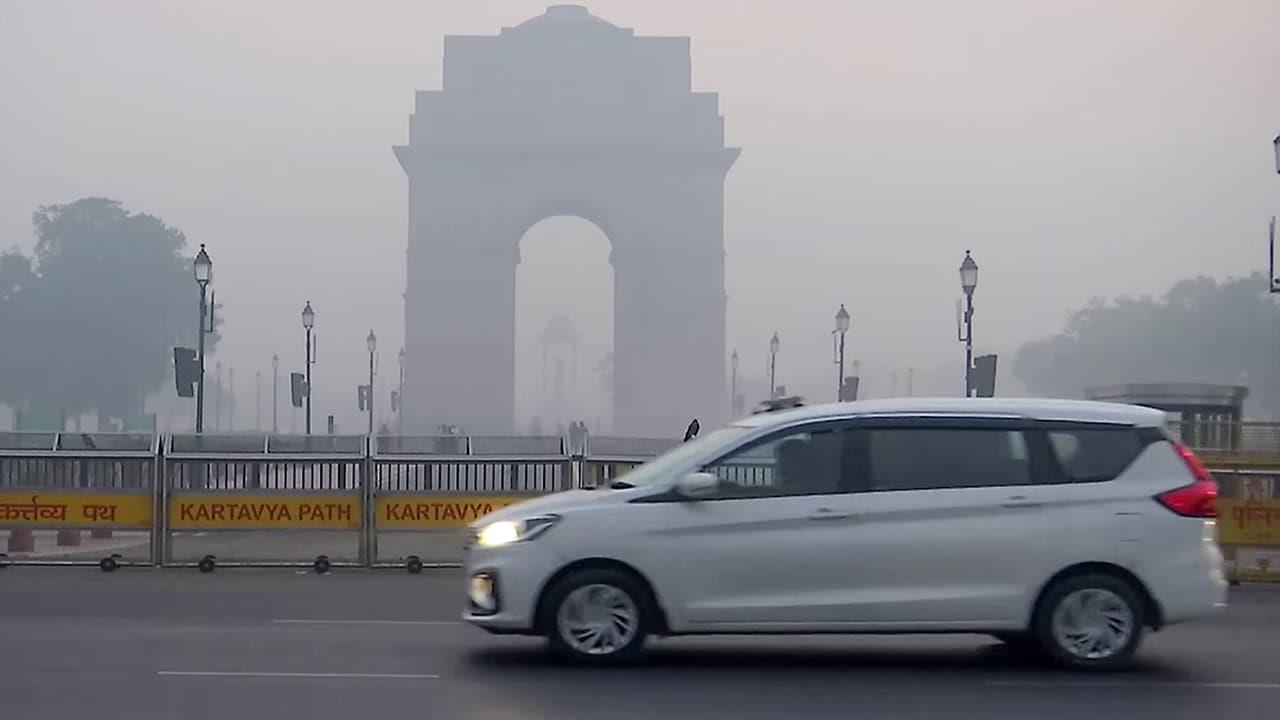
Delhi-NCR GRAP Stage I: What Restrictions Apply As Air Quality Turns Poor?


The Commission for Air Quality Management (CAQM) imposed GRAP Stage I across Delhi-NCR on October 21 after Delhi's AQI entered the poor category. The reading rose to 244 at 2 pm, compared with 179 a day earlier.
The Commission for Air Quality Management (CAQM) imposed Stage I of the Graded Response Action Plan (GRAP) across Delhi-NCR on Wednesday, October 21, after the capital's air quality slipped into the 'Poor' category. Delhi's Air Quality Index (AQI) climbed to 244 by 2 pm, up from 179 a day earlier.
The Commission for Air Quality Management (CAQM) invokes Stage 1 of the Graded Response Action Plan (GRAP) across Delhi-NCR as air quality is in "poor" quality. ANI (@ANI) October 21, 2026
Authorities have directed agencies across Delhi and neighbouring areas of Haryana, Uttar Pradesh and Rajasthan to step up pollution-control measures as forecasts point to continued poor air quality.
The CAQM's sub-committee took the decision after reviewing Delhi-NCR's pollution levels and weather forecasts. It directed authorities to implement Stage I measures immediately and maintain strict checks to prevent air quality from deteriorating further.
The commission said forecasts from the India Meteorological Department (IMD) and the Indian Institute of Tropical Meteorology (IITM) indicated that Delhi's air quality was likely to remain in the poor category over the coming days.
The directions cover Delhi and NCR areas in Haryana, Uttar Pradesh and Rajasthan. The sub-committee will continue to monitor air quality readings and forecasts before deciding whether further action is needed.
Stage I is the first level of the GRAP, a system of emergency measures introduced to tackle worsening air pollution in Delhi-NCR. Its restrictions and instructions are designed to strengthen pollution control before conditions deteriorate further.
Delhi recorded its first poor air quality day of the season on Wednesday morning, with a layer of haze covering parts of the city following overnight Dussehra celebrations.
According to the Central Pollution Control Board (CPCB), the city's AQI reached 238 at 10 am on October 21. The CAQM's order recorded an AQI of 244 at 2 pm, compared with 179 a day earlier.
The rise pushed Delhi's air quality from the moderate to the poor category. The city had largely remained in the moderate band during October, with light rain on October 12 and 16 helping improve conditions.
Delhi's AQI stood at 187 on October 18 before falling to 139 on October 19. It then rose to 179 on Tuesday afternoon, followed by Wednesday's sharp increase.
The deterioration also brought some monitoring stations into the very poor category. CPCB data from 56 of Delhi's 59 monitoring stations showed AQI readings of 308 at Jahangirpuri and 314 at Pusa. Meanwhile, 16 stations, including Anand Vihar, continued to record moderate air quality.
Environmental officials have linked the deterioration to seasonal weather changes, including falling temperatures and fluctuating wind speeds.
These conditions can limit the dispersal of pollutants, allowing them to accumulate closer to the ground. As winter approaches, weather patterns can make it harder for polluted air to clear, increasing the risk of higher AQI readings across the capital and surrounding areas.
Particulate matter has also remained a concern. On October 5, PM10 was identified as the prominent pollutant across Delhi, based on readings from 43 of the 46 active monitoring stations included in the CPCB data at the time.
The latest rise follows a period of relatively better air quality earlier in October. The return to poor conditions has prompted authorities to strengthen preventive measures across the region.
Stage I requires agencies to intensify pollution-control efforts and follow the measures prescribed under the GRAP schedule. The CAQM has urged residents to follow the citizen charter and support efforts to reduce pollution.
Under CPCB guidelines, an AQI of 0-50 is classified as good, 51-100 as satisfactory, 101-200 as moderate, 201-300 as poor, 301-400 as very poor and 401-500 as severe.
Poor air quality can cause breathing discomfort, particularly among people with lung or heart conditions and those with asthma. The CPCB also warns that moderate air quality can cause breathing discomfort to sensitive groups.
The CAQM has not announced whether stricter GRAP stages will be introduced. That decision will depend on subsequent pollution readings and weather forecasts.
For now, agencies across Delhi-NCR have been asked to enforce Stage I measures and remain alert as the capital enters a period when weather conditions can contribute to worsening air pollution.

Legal Disclaimer:
MENAFN provides the
information “as is” without warranty of any kind. We do not accept
any responsibility or liability for the accuracy, content, images,
videos, licenses, completeness, legality, or reliability of the information
contained in this article. If you have any complaints or copyright
issues related to this article, kindly contact the provider above.


Comments
No comment