


Commentary: China Is Cushioning Asia From Hormuz Oil Shock, But Not For Long


Houthi military spokesman Yahya Saree announced on Monday they struck Aramco's facilities at Yanbu, a Red Sea terminal Saudi Arabia has relied on since the Strait of Hormuz closed.
Recommended For YouBrent crude touched $110.70 a barrel, its highest level in five months. On the same day, China's statistics bureau reported third-quarter economic growth of 4.5 per cent, beating the 4.4 per cent forecast in a Reuters poll and improving on the 4.3 per cent recorded in the spring, the weakest pace in more than three years.
The war at sea has not eased. UK Maritime Trade Operations logged 18 attacks on commercial ships in and around the strait in the first 13 days of October, according to Seatrade Maritime, more than in all of September. Kpler put crude flows through the region at a seven-day average of 8.5 million barrels a day last week, down from 20 million the week before.
Stay up to date with the latest news. Follow KT on WhatsApp Channels.
China, the world's largest crude importer, should have lost a quarter to this imbroglio. It did not.
Monday's figure will be read in most capitals as a story about China alone: An export machine grinding out growth while the rest of Asia pays for the war. The record of 2026, however, points the other way. China absorbed part of the region's oil shock on its own balance sheet, and its neighbours paid less because it did.
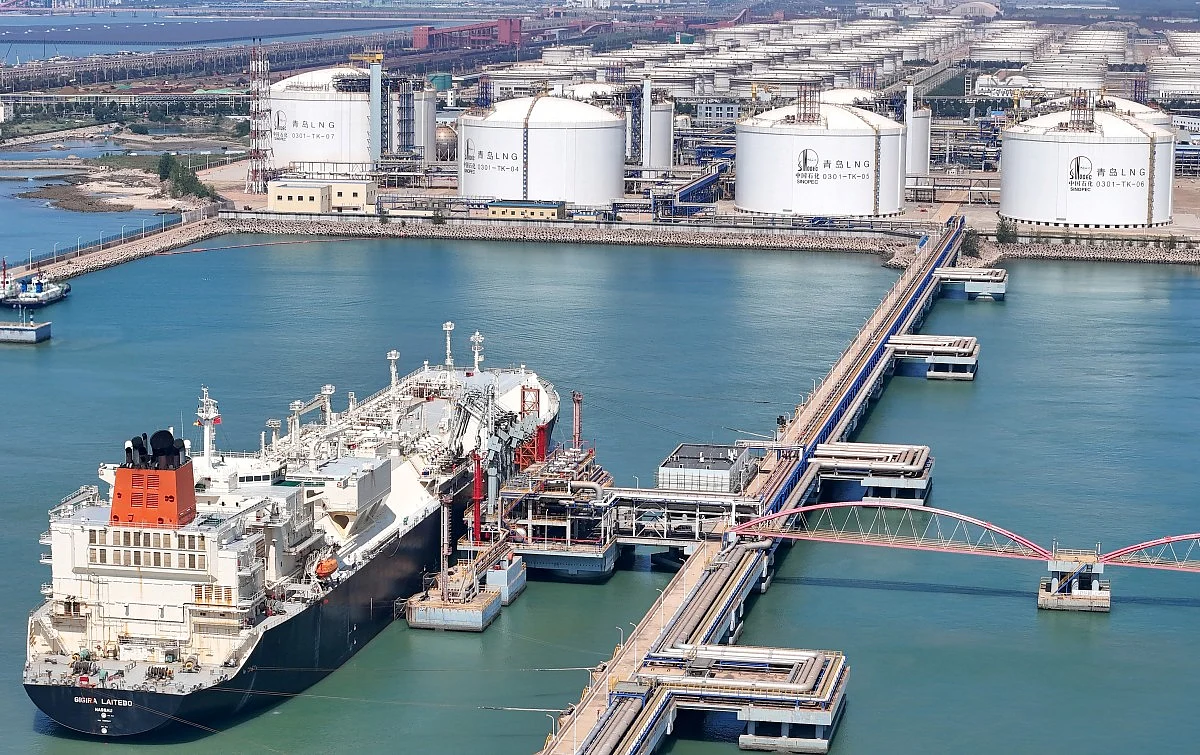
The mechanism was steel tanks. China imported a record 11.6 million barrels a day in 2025, filling storage while prices sat at their lowest since 2020, according to the US Energy Information Administration (EIA).
When the strait shut, China stopped bidding. Second-quarter imports fell 32 per cent to 8.1 million barrels a day. In September, they were 21.5 per cent below a year earlier. Vortexa logged a 57 million barrel draw on onshore stocks that month and Kpler logged 47.5 million. For both firms, it was the deepest monthly drawdown in their records.
None of this was charity. Refiners facing $100 crude had every reason to drain their tanks rather than buy. The effect travelled anyway, and three things followed from it.
First, the price. The EIA found that lower Chinese imports reduced global demand and softened the price effect of the disrupted supply. Société Générale ranked the pullback among the largest offsets to the shock, second only to Saudi rerouting and ahead of the coordinated reserve releases by the US, Europe and Japan.
J.P. Morgan put China's share of the fall in global crude imports at about 74 per cent. Brent at $110 hurts. The same war, with China bidding at full strength, would have priced it higher.
Second, the Gulf's bypass barrels found Asian buyers. Saudi Arabia and the UAE pushed 3.7 million barrels a day through Yanbu and Fujairah, and the Habshan-Fujairah pipeline has run at full capacity since the war began.
With China buying less, Aramco cut its official price for Arab Light into Asia by $4 a barrel, Kpler reported. That mattered most where buffers were thinnest.
The Philippines, which buys more than 90 per cent of its oil from the Middle East, declared a national energy emergency back in March after pump prices passed Php100 a litre. From Manila to Karachi, every importer chasing a Gulf cargo faced one fewer rival. Abu Dhabi and Riyadh kept the oil moving. Beijing kept the queue short.
Third, China kept buying everything except crude. Its September imports rose 31 per cent to $313.65 billion, on the back of global technology demand, while exports climbed 36.3 per cent. The world's largest crude importer bought less crude. Its import bill still rose by nearly a third. For Asian suppliers of chips and components, China remained a buyer, writing orders while others hesitated.
The cushion has a floor, and Beijing has reached it on fuel. Commercial gasoline stocks have fallen to their lowest since 2011 and diesel to its lowest since 2015, GL Consulting data showed. Beijing responded by suspending October exports of diesel, petrol and jet fuel. On crude, China spared its neighbours. On diesel, it has started handing part of the bill back.
Household imbalanceChina's domestic picture carries the same warning. Property investment fell 20.6 per cent in the first nine months, and consumer prices rose just 0.9 per cent in September. Factories are carrying the economy. Households are not.
That imbalance is now Beijing's real exposure. Europe's trade deficit with China hit a record $34.8 billion in September, and EU leaders met last week to discuss tougher trade defences.
A Chinese economy that leans harder on exports in the fourth quarter will meet those defences head-on, with oil above $100 and its own fuel tanks low.
The fix is old and unglamorous: Higher rural pensions, health coverage that follows migrant workers to the cities, and cheaper credit for durable goods. Each puts money into spending faster than another round of bridges and rail.
September offered the first sign that households will respond. Retail sales rose 1.1 per cent, the fastest since March, and 3.9 percent excluding cars. Industrial output rose 5.5 percent. Those two numbers measure the gap Beijing has to close.
The stronger headline makes that harder. A 4.5 per cent quarter eases pressure for stimulus just as shoppers begin to stir. The December economic work conference is where Beijing will show which way it read the number.
Watch two figures next month: One is the November fuel export quota; the other is October retail sales. If the quota stays at zero and spending stays near 1 percent, Asia loses both cushions at once.
If Beijing reopens its fuel exports and pushes household spending toward the pace of its factories, the region gets a second shock absorber, made of shoppers this time rather than steel.
ALSO READ- Commentary: How Strait of Hormuz could shape a Russia-Ukraine peace deal Commentary: From Oman to Iran, Strait of Hormuz remains central to Gulf security Commentary: US missile shortages push allies to diversify defence sources

Legal Disclaimer:
MENAFN provides the
information “as is” without warranty of any kind. We do not accept
any responsibility or liability for the accuracy, content, images,
videos, licenses, completeness, legality, or reliability of the information
contained in this article. If you have any complaints or copyright
issues related to this article, kindly contact the provider above.


Comments
No comment