


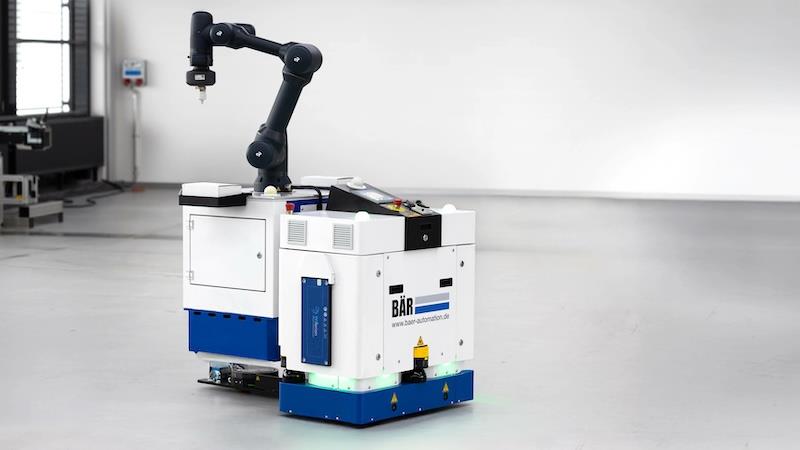
Proposed ASTM Standard To Measure Mobile Manipulator Performance In Real-World Conditions


The proposed method (WK100792 ) would measure the extent to which degradation in optical information affects a robot's task performance.
According to ASTM International member Aarati Noronha, real-world conditions can degrade the optical information that this technology relies on, requiring it to compensate for the poorer input.
That compensation can add system, latency, power use, and compute complexity, and if it fails, this can result in task failure, increased workplace safety risk, and less predictable human-robot interaction.
“I've personally observed this across warehouse palletization and autonomous strawberry harvesting: many tasks that a robot can perform reliably under ideal conditions become much harder in the real world,” says Noronha.
“Stressors such as changing light, reflective materials, interference, and high temperatures can degrade the information from optical sensors such as cameras.
“The degraded signal can act as a distractor, leaving downstream machine-learning models with poorer information to work from. This proposed test method provides a repeatable way to measure performance under controlled degradation, supporting responsible real-world deployment.”
Noronha claims the method would be useful to robot manufacturers, perception and machine-learning developers, system integrators, end users, and testing laboratories.
By measuring how optical-signal degradation affects task performance, including under edge cases that may be difficult to capture adequately in training data, the proposed standard could help developers identify system limitations before real-world deployment.
The standard will support United Nations Sustainable Development Goal #8 on decent work and economic growth.

Legal Disclaimer:
MENAFN provides the
information “as is” without warranty of any kind. We do not accept
any responsibility or liability for the accuracy, content, images,
videos, licenses, completeness, legality, or reliability of the information
contained in this article. If you have any complaints or copyright
issues related to this article, kindly contact the provider above.


Comments
No comment