


Russian Oil Finding Its Way To The West? Indian Refiners' Fuel Exports To Nations Sanctioning Moscow Jump 43%


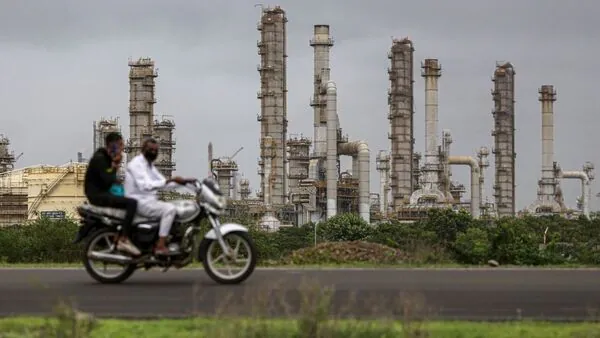
Reliance Industries Ltd's Jamnagar refinery in Gujarat accounted for six of the seven cargoes unloaded at European Union ports during the month, despite the bloc's ban on importing oil products refined from Russian crude, the report said.
The findings come as India continues to be one of the largest buyers of Russian fossil fuels following Moscow's invasion of Ukraine in February 2022, even as Western restrictions seek to limit Russia's energy revenues.
EU takes the largest share of oil product exportsThe European Union received oil products worth €667 million from the refineries covered by the CREA report in September. Australia imported €168 million worth, while the United States received €154 million and New Zealand €19 million.
CREA estimated that €295 million worth of the exported products had been refined from Russian crude.
Jamnagar also accounted for the largest share of the group's exports to the US, with shipments worth €122 million. Russian crude constituted 32% of the refinery's crude oil imports between July and September, according to the report.
Among EU destinations, Italy received three of the seven shipments, Romania received two, while Spain and Cyprus received one each.
The value of exports reported as destined for EU ports from refineries processing Russian crude rose 80% month-on-month, the report said.
This included a 104,000-tonne cargo of gasoil, or diesel, from Jamnagar that was still en route to Rotterdam.
EU ban faces scrutiny over Russian crude loopholeThe European Union prohibited imports of oil products refined from Russian crude in January 2026.
However, the rules exempt net crude oil exporters, an exception that CREA argues leaves room for Russian-origin crude to enter global supply chains through refining in third countries.
According to the report, a country's status as a net crude oil exporter does not prevent its refineries from processing Russian crude and subsequently exporting the resulting products.
CREA has recommended extending the restriction to the refinery level by prohibiting imports of products from any refinery that has processed Russian crude in the preceding six months, regardless of the declared origin of the finished product.
The proposal is a recommendation by the research organisation and does not represent an adopted EU policy.
India's Russian crude imports fall for second straight monthIndia's imports of Russian crude declined 13% in September, marking the second consecutive monthly fall and the lowest level since April, CREA said.
Intake declined at all three of India's largest importing refineries. As per the report, Reliance Industries ' Jamnagar refinery recorded a 27% drop, Indian Oil Corporation's Paradip refinery saw a 21% decline, and Nayara Energy's Vadinar refinery registered an 8% fall.
"Despite the decline, Vadinar overtook Jamnagar as India's largest importer of Russian crude," CREA said.
Imports at smaller facilities also largely declined. The HMEL Mundra Oil Terminal and the Kochi refinery recorded month-on-month reductions of 74% and 32%, respectively.
The IOC Mundra Oil Terminal was an exception, receiving 570,000 tonnes of Russian crude in September after recording no imports in August, according to CREA.
India remains Russia's second-largest fossil fuel buyerDespite the decline in crude imports, India remained the second-largest buyer of Russian fossil fuels in September 2026, spending €4.1 billion on Russian hydrocarbons, according to CREA.
Crude oil accounted for 88% of India's purchases, worth €3.6 billion. Coal imports amounted to €309 million, while oil products accounted for €161 million. China remained the largest buyer of Russian fossil fuels.
Since December 2022, India has accounted for 37% of Russia's crude oil exports, compared with China's 50%, the report said.
India was a relatively marginal buyer of Russian oil before Moscow launched its full-scale invasion of Ukraine in 2022. Its purchases subsequently increased as Western buyers reduced imports and Russia offered crude at substantial discounts to attract alternative customers.
Russian Urals crude averaged $90.70 a barrel in September, but continued to trade at a $23-per-barrel discount to Brent, unchanged from August.
Tighter supply and Chinese competition weigh on importsThe decline in India's Russian crude purchases may reflect factors beyond pressure from the United States, including tighter supply and increased competition from Chinese buyers, according to PTI citing analysts at Kpler.
The analysts expect India's Russian crude imports to remain at around 1.8 million to 1.9 million barrels per day in October.

Legal Disclaimer:
MENAFN provides the
information “as is” without warranty of any kind. We do not accept
any responsibility or liability for the accuracy, content, images,
videos, licenses, completeness, legality, or reliability of the information
contained in this article. If you have any complaints or copyright
issues related to this article, kindly contact the provider above.


Comments
No comment