


New Report: More Companies Prefer To Stay Silent On Divisive Issues


-
84% of Reputation Council members told Ipsos that their organisation takes political factors into consideration when deciding whether to speak up about an issue;
61% said that even if their organisation could authentically speak up, they preferred to stay quiet on potentially divisive issues;
35% admitted that in the last 12 months, their organisation had stayed quiet on issues that it previously would have spoken out about;
Only 17% of Council members agree that their“strategic silence” is a sign of corporate cowardice;
22% of members said they had consciously under-communicated credible ESG progress in the past year;
“Meaningful” AI use among Council members has risen from 43% in 2025 to 76% in 2026;
Only 12% believe their organisation's existing ethical policies are sufficient for AI adoption;
Nearly half (46%) say populism represents a material risk to their organisation
Communications and corporate affairs leaders at many of the world's largest and most influential organizations have adopted“strategic silence” as their default strategy and are staying quiet on potentially divisive issues-even those they could legitimately speak out on-after taking“political factors” into consideration.
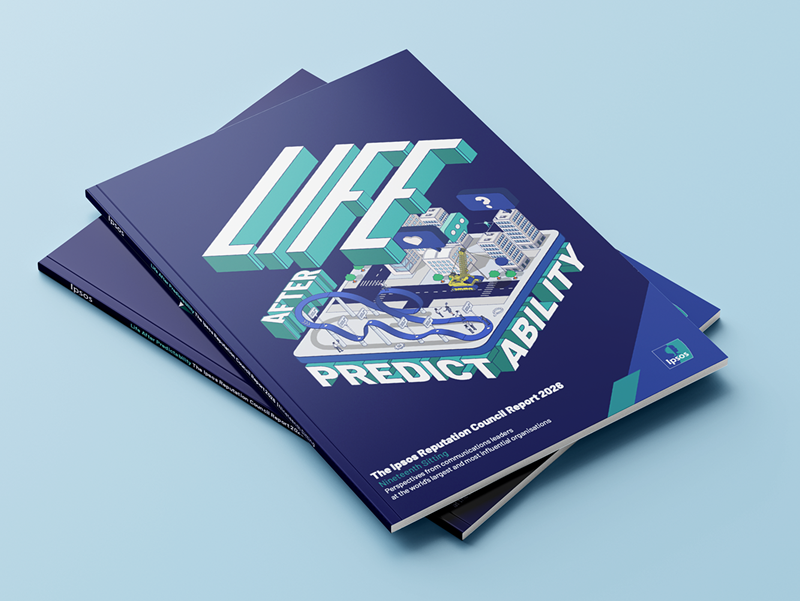
That's the headline finding of the latest Ipsos Reputation Council report,“Life After Predictability,” informed by 200 one-to-one conversations with senior communications and corporate affairs leaders, members of the Council that was created in 2009 to bring together senior communicators leaders based in 21 global markets.
The vast majority (84%) of Reputation Council members told Ipsos that their organisation takes political factors into consideration when deciding whether to speak up about an issue, which makes sense-and potentially raises questions about the 16% who apparently do not.
But 61% said that even if their organisation could authentically speak up, they preferred to stay quiet on potentially divisive issues, compared to last year, when just 32% said that they preferred to stay quiet on contentious topics and 21% said they still preferred their organisation to speak up on potentially divisive issues.
More than a third (35%) of respondents this year admitted that in the last 12 months, their organisation had stayed quiet on issues that it previously would have spoken out about.
Interestingly-but not perhaps surprisingly-only 17% of Council members agree that their“strategic silence” is a sign of corporate cowardice. However, the report does not clarify what-other than concerns about the potential backlash-might be motivating corporate hesitancy when it comes to speaking out.
The impact of this new attitude can be seen most prominently in ESG communications: almost a quarter (22%) of members said they had consciously under-communicated credible ESG progress in the past year, while those continuing to communicate about achievements are doing so in a much more targeted way: 61% admitted that their ESG communications are more targeted than ever.
Council members tell Ipsos that commitments to more polarizing topics like DEI remain, but organizations are less likely to communicate when goals are achieved or“shout loudly” about DEI and ESG topics when they might have done in the past.
According Milorad Ajder, global service line leader, corporate reputation at Ipsos, said,“For many organisations, strategic silence has become a deliberate response to a more fragmented, polarised and unpredictable environment. The challenge for communicators today is exercising judgement: knowing which issues to engage with, which battles to fight, and how to help organisations make sound decisions when certainty is unavailable.”
The other defining theme of this year's research is the growing importance of artificial intelligence.“Meaningful” AI use among Council members has risen from 43% in 2025 to 76% in 2026.
Yet while respondents say AI has made content cheaper, faster and easier to produce, it is also placing a new premium on human judgement. Only 12% believe their organisation's existing ethical policies are sufficient for AI adoption, highlighting growing concerns around trust, accountability and governance.
Council members also consistently described LLMs becoming an "intermediary" between organisations and their audiences, influencing what stakeholders learn, believe and share, renewing the importance of earned media and reinforcing the role of reputation in organisational decision-making.
Communications leaders also describe a more fragmented stakeholder environment, where consensus is becoming harder to achieve and trade-offs increasingly unavoidable. Nearly half (46%) say populism represents a material risk to their organisation, which Ipsos says reinforces“the need for communicators to help leaders navigate competing expectations, define non-negotiable principles and determine what backlash the organisation can afford to absorb.”
Future communicators, the company says,“will need to combine storytelling and relationship-building with AI fluency, data literacy, commercial awareness and resilience. Across the report's findings, judgement emerges as a growing source of competitive advantage as information becomes more abundant and machine-generated.”

Legal Disclaimer:
MENAFN provides the
information “as is” without warranty of any kind. We do not accept
any responsibility or liability for the accuracy, content, images,
videos, licenses, completeness, legality, or reliability of the information
contained in this article. If you have any complaints or copyright
issues related to this article, kindly contact the provider above.


Comments
No comment