


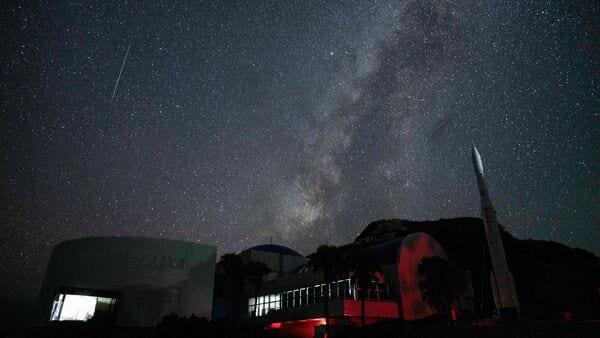
Orionid Meteor Shower: When, Where And How To Watch It From India Tips For The Best Views And More


The best viewing period comes after the moonset and before dawn. In Mumbai, this window is roughly 3:30 AM to 5:15 AM (Indian time), according to Stargazing Mumbai.
Timings vary slightly between cities, so viewers elsewhere should allow for local differences. But, roughly, the Orionid meteor shower will be visible from anywhere in India during the pre-dawn hours on 22 October.
Also Read | NASA hosts Perseid Meteor Shower watch party LIVE: When and how to join?The sky starts brightening towards dawn, reducing the chance of spotting faint meteors. Moonlight makes the hours before moonset less favourable.
Orionids are mainly a late-night shower, with fewer meteors visible during evening hours. From India, their apparent starting point rises above the horizon around 10-11 pm.
It climbs higher through the night, improving viewing conditions after midnight. Before dawn, it passes almost overhead at latitudes similar to Mumbai.
Orionid meteor shower: Tips for watchingChoose a safe, dark rural location away from bright city lights. You may also choose a high-rise building's terrace if you live in a city.
Artificial lighting can hide the shower's weaker streaks. Settle into a reclining chair or sleeping bag and let your eyes adjust. Then, watch a broad stretch of sky instead of one small patch.
Before moonset, face east or northeast and keep the Moon behind you. Once the Moon sets, lie back and look overhead and towards the east. Take in as much open sky as possible. Meteors can appear anywhere, so avoid staring only at their apparent starting point.
Also Read | Perseid meteor shower 2026: When's the best time to watch in India, US, UK?That point, called the radiant, lies in Orion's upper region near reddish Betelgeuse. It is also close to the border between Orion and Gemini. To find Orion, first locate its three bright belt stars. Then look upwards towards Betelgeuse, which marks the hunter's shoulder.
Under dark, moonless conditions, the peak can produce around 10-20 meteors per hour. With moonlight present, viewers under typical rural skies may see only a handful. These numbers are averages, and sightings can arrive in bursts. Quiet periods between meteors are normal, so stay patient.
Also Read | Southern Delta Aquariids meteor shower 2026: Where and where to watch, peak time What are the Orionids?The Orionids come from dust and debris left behind by Halley's Comet. Earth passes close to the comet's orbit every October and May. Some particles enter our atmosphere at about 66 km/s. They light up as the streaks commonly called shooting stars.
About half of Orionid meteors leave glowing trails that linger in the sky. Meteors appearing farther from the radiant can produce longer, more striking trails.
Halley's Comet last visited the inner solar system in 1986. Its next return is expected in 2061. Until then, the Orionids offer a yearly chance to watch its scattered leftovers.

Legal Disclaimer:
MENAFN provides the
information “as is” without warranty of any kind. We do not accept
any responsibility or liability for the accuracy, content, images,
videos, licenses, completeness, legality, or reliability of the information
contained in this article. If you have any complaints or copyright
issues related to this article, kindly contact the provider above.


Comments
No comment