


From France To India, Protests Spread Across Four Countries: What's Driving The Unrest?


While the protests vary in scale and nature, they reflect growing frustration over political leadership, public services, living standards and demands for change. Some demonstrations have turned violent, with clashes between protesters and police prompting the use of tear gas and water cannon to disperse crowds.
Recommended For You UAE faced sleeper-cell threats during Iranian missile and drone attacks, says officialHere's a look at the protests unfolding across four countries and the issues driving people onto the streets.
Stay up to date with the latest news. Follow KT on WhatsApp Channels. 1. India
Central New Delhi has seen a heavy security presence in recent days, with thousands of personnel deployed as young protesters demand the resignatio of Chief Election Commissioner Gyanesh Kumar and struggle to find a place to stage a sit-in.
The demonstrators are calling for sweeping electoral reforms over alleged irregularities in the country's voter rolls.
Abhijeet Dipke's youth-led Cockroach Janta Party (CJP), opposition parties and student organisations have held near-daily protests this month, alleging that a revision of the voter lists favours Prime Minister Narendra Modi's Bharatiya Janata Party (BJP).
The protests pose a fresh challenge to Modi's government, coming less than three months after the same movement helped bring about the resignation of India's education minister.
Dipke was released by a court on Saturday, a day after being detained while attempting to lead another rally in New Delhi calling for Kumar's resignation.
Ratna Singh, the CJP's head of legal affairs, said Dipke was released after agreeing to certain conditions but did not disclose the terms.
Authorities also closed Central Park in New Delhi ahead of Friday's planned rally. Thousands of security personnel were deployed across parts of the city, while yellow metal barricades were erected at key intersections.
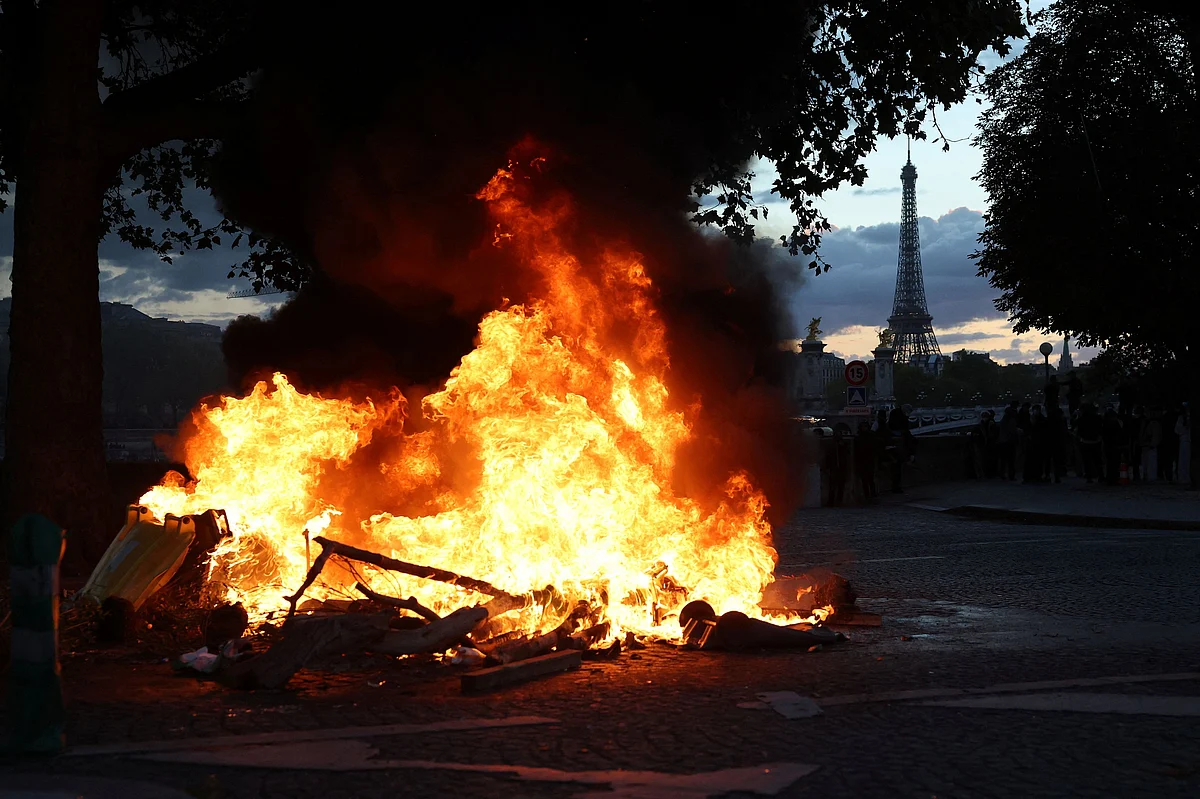
2. FranceViolent clashes broke out between police and protesters across France on Saturday as demonstrators took to the streets over rising living costs and declining public services, in some of the country's most serious unrest in years.
The Interior Ministry said at least 191 people had been arrested following violent incidents in Paris, Marseille, Toulouse, Angers and Lyon, involving groups of hooded individuals, Reuters reported.
The CGT union estimated that 800,000 people had joined the protests nationwide, although the Interior Ministry did not provide an estimate.
Prime Minister Sebastien Lecornu said the government would not be“intimidated” by violence, blaming the unrest on the“far-left” and criminals ahead of next year's presidential election.
In Paris, police fired tear gas as they faced mostly young protesters wearing black clothing, hoodies and protective goggles. Demonstrators reached central landmarks including the Champs-Elysees, Concorde and La Madeleine, areas excluded from the authorised march.
As the protests wound down on Saturday evening, objects, including at least one car, were set on fire. Shop and restaurant windows were smashed, rubbish bins burnt and nearby businesses closed as tear gas spread through parts of the capital.
In Marseille, the mayor said the town hall had been vandalised, adding that more police were being deployed following talks with the government.
The demonstrations began last month at high schools in northern Paris, where anger over teacher shortages and deteriorating facilities grew into a wider movement against inequality, public spending and falling living standards.
Police tactics have also come under scrutiny following several injuries among demonstrators. In the southern city of Saint-Etienne, a protester had his hand blown off by a police crowd-control grenade on Saturday, a police source told AFP.
The source did not specify whether the device was a stun grenade or a tear gas grenade.
3. AlbaniaPolice in Albania fired what appeared to be rubber bullets at protesters on Saturday, the fifth day of mass demonstrations led by students demanding the resignation of Prime Minister Edi Rama.
Clashes erupted outside the education ministry in the capital, Tirana, as protesters threw rocks at police and set litter bins on fire, using them as barricades to prevent officers from advancing, Reuters reported.
Police responded with water cannon, pepper spray and tear gas, leaving streets covered in thick smoke.
Reuters video footage showed police firing a shotgun towards crowds during the clashes. Reuters reporters found rubber pellets on the ground, while two journalists and several protesters were struck by pellets, leaving round marks.
The violence marks an escalation in unrest that has gripped central Tirana since Tuesday, with thousands taking to the streets over university conditions, high tuition fees and wider grievances against the government.
The demonstrations have also been fuelled by anger over perceived government corruption, a lack of job opportunities and poor education standards. Protesters have burnt government buildings and banks and hurled rocks at police.
The movement has drawn support from people who felt ignored during a summer of largely peaceful protests against a luxury coastal development backed by Jared Kushner, US President Donald Trump's son-in-law.
The unrest poses the biggest challenge yet to Rama, who won a fourth consecutive term in office last year.
4. Belguim
Belgian police fired tear gas and used water cannon to disperse hundreds of demonstrators in Brussels and Liege on Saturday, as protests over the cost of living turned violent, echoing unrest in neighbouring France.
Several hundred people gathered near Brussels' central railway station following calls on social media. Authorities later authorised a protest march, but police said they used water cannon to disperse groups that threw fireworks and flammable liquids.
In the capital's Bourse district, police fired tear gas at youths who threw bottles and other projectiles, an AFP journalist reported. Police said about 10 people were arrested.
Rubbish bins and electric scooters were set on fire, while a Socialist Party office was vandalised during the disturbances.
High school students have staged protests in recent weeks against higher university registration fees. However, Interior Minister Bernard Quintin blamed Saturday's violence on what he described as“organised violence”.
Police also used water cannons to disperse smaller groups of demonstrators in the eastern city of Liege, where clashes had broken out 10 days earlier, AFP reported.
Inputs from Reuters, AFP
ALSO READ- Actor Imran Khan asked to leave India in 2 weeks after being detained at Mumbai protests India's $87 billion river-linking project sparks protests as floods hit homes, temples

Legal Disclaimer:
MENAFN provides the
information “as is” without warranty of any kind. We do not accept
any responsibility or liability for the accuracy, content, images,
videos, licenses, completeness, legality, or reliability of the information
contained in this article. If you have any complaints or copyright
issues related to this article, kindly contact the provider above.


Comments
No comment