


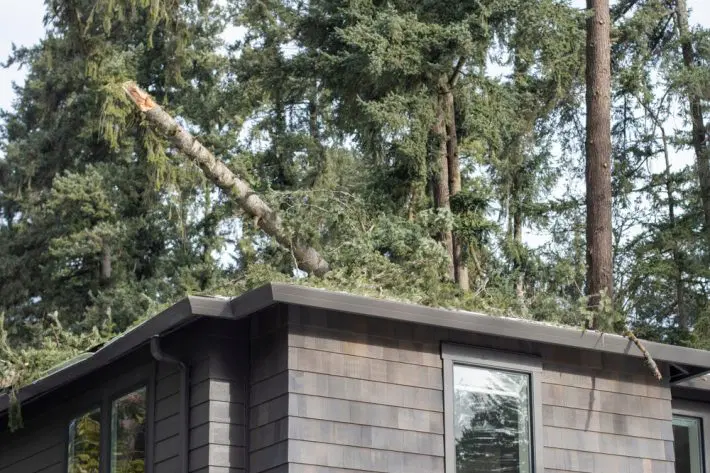
Your Neighbor's Tree Falls On Your House - Who Actually Pays For The Damage?


Not necessarily. In many cases, your own homeowners insurance is responsible for covering the damage, even when the tree belongs to someone else. The situation becomes more complicated when the tree was already dead, diseased, or visibly dangerous before it fell. So, who has to pay? Here are several things to consider...
Your Homeowners Insurance Usually Pays FirstWhen a healthy tree falls during a storm and damages your house, your homeowners insurance is generally the first place to turn for financial assistance. The Insurance Information Institute explains that homeowners insurance typically covers damage from falling trees when the loss results from a covered event, regardless of who owns the tree.
For example, if your neighbor's healthy oak falls onto your roof during a windstorm, your insurer would generally handle the covered repairs, subject to your policy's deductible and limits. This often surprises homeowners who assume property ownership automatically determines financial responsibility. The important distinction is whether the tree fell because of an unexpected covered event or because someone failed to address a known hazard.
A Negligent Neighbor Could Be Held ResponsibleThe situation changes when a neighbor's tree falls on your house after the owner ignored obvious warning signs. A tree with extensive decay, major dead limbs, or a dangerous lean might create liability concerns if the owner knew or reasonably should have known about the risk.
For example, imagine repeatedly telling your neighbor that a large dead tree threatens your garage, only to have it collapse several months later. Depending on state law and the circumstances, your neighbor could potentially be held responsible for damage resulting from negligent maintenance. However, proving negligence generally requires evidence that the danger was foreseeable and that the property owner failed to take reasonable precautions.
You May Still Have to Pay Your Insurance DeductibleEven when your homeowners insurance covers the damage, you could face an immediate out-of-pocket expense. Suppose a fallen tree causes $12,000 in covered roof repairs and your policy has a $2,000 deductible, leaving your insurer responsible for the remaining $10,000. Some policies also have separate windstorm or hurricane deductibles, which may be calculated as a percentage of the home's insured value rather than a flat dollar amount.
If your insurer determines that your neighbor was legally responsible, it may pursue reimbursement through a process called subrogation. A successful recovery might result in your deductible being reimbursed, but that outcome isn't guaranteed and depends on the circumstances and applicable insurance rules.
Removing the Fallen Tree Isn't Always Fully CoveredHomeowners sometimes discover that removing a fallen tree creates a separate financial problem after the structural damage has been addressed. Homeowners insurance generally helps pay to remove a tree that damages an insured structure, although removal coverage may have specific limits. If a tree falls harmlessly across your lawn without damaging a covered structure or blocking an insured access route, removal expenses may not be covered.
Professional tree removal can become particularly complicated when branches are tangled in electrical lines, resting on a roof, or threatening additional damage. Before hiring a contractor, ask your insurance adjuster which removal expenses qualify for reimbursement and whether documentation or authorization is required.
Photos and Written Warnings Can Make a DifferenceIf you're concerned about a dangerous tree on neighboring property, documenting the situation before a storm can help protect your interests. Take dated photographs of visible damage, dead branches, unusual leaning, or other potential hazards without entering your neighbor's property. Consider sending a polite written notice explaining your concerns and requesting that the tree be evaluated by a qualified arborist.
Keeping copies of correspondence can help establish what the neighbor knew if the tree eventually causes damage. However, photographs and warnings don't automatically establish legal liability, so an arborist's professional assessment and applicable state law may become important if a dispute develops.
Cutting Your Neighbor's Tree Yourself Could BackfireWhen branches hang over your property, trimming them might seem like the easiest way to eliminate a potential hazard. Many states allow property owners to trim encroaching branches up to the property line, but those rights often come with important restrictions. Excessive trimming that seriously damages or kills a neighbor's tree could expose you to financial liability, particularly when local tree-protection ordinances apply.
You generally shouldn't enter your neighbor's property or remove an entire tree without permission or appropriate legal authority. If a neighbor's tree falls on your house after a dispute over trimming, your own actions could become part of the investigation into responsibility.
The First Steps After a Tree Hits Your Home MatterWhen a tree damages your home, prioritize personal safety before worrying about insurance claims or assigning blame. Stay away from fallen power lines, unstable branches, damaged ceilings, and any structure that appears unsafe, and contact emergency services when necessary. Once the area is safe, photograph the damage, notify your homeowners insurer promptly, and ask about temporary repairs that could prevent additional losses.
Save receipts for emergency tarping, temporary lodging, or other necessary expenses because some costs may qualify for reimbursement under your policy. Avoid signing expensive repair contracts before understanding your coverage, and never allow an unqualified contractor to remove a tree that's resting against a damaged structure.
Protecting Your Property Before the Next StormYou don't have to wait until a neighbor's tree falls on your house to understand your financial exposure. Review your homeowners insurance policy, including deductibles, windstorm coverage, tree removal limits, and exclusions that could affect a future claim. If a neighboring tree appears dangerous, communicate your concerns respectfully and document any significant problems before they become emergencies. Remember that insurance coverage and legal responsibility aren't always the same thing, and local laws can affect who ultimately pays.
If your neighbor's tree damaged your home, would you expect them to cover the repairs, or do you think each homeowner should rely on their own insurance? Share your thoughts in the comments.

Legal Disclaimer:
MENAFN provides the
information “as is” without warranty of any kind. We do not accept
any responsibility or liability for the accuracy, content, images,
videos, licenses, completeness, legality, or reliability of the information
contained in this article. If you have any complaints or copyright
issues related to this article, kindly contact the provider above.


Comments
No comment