


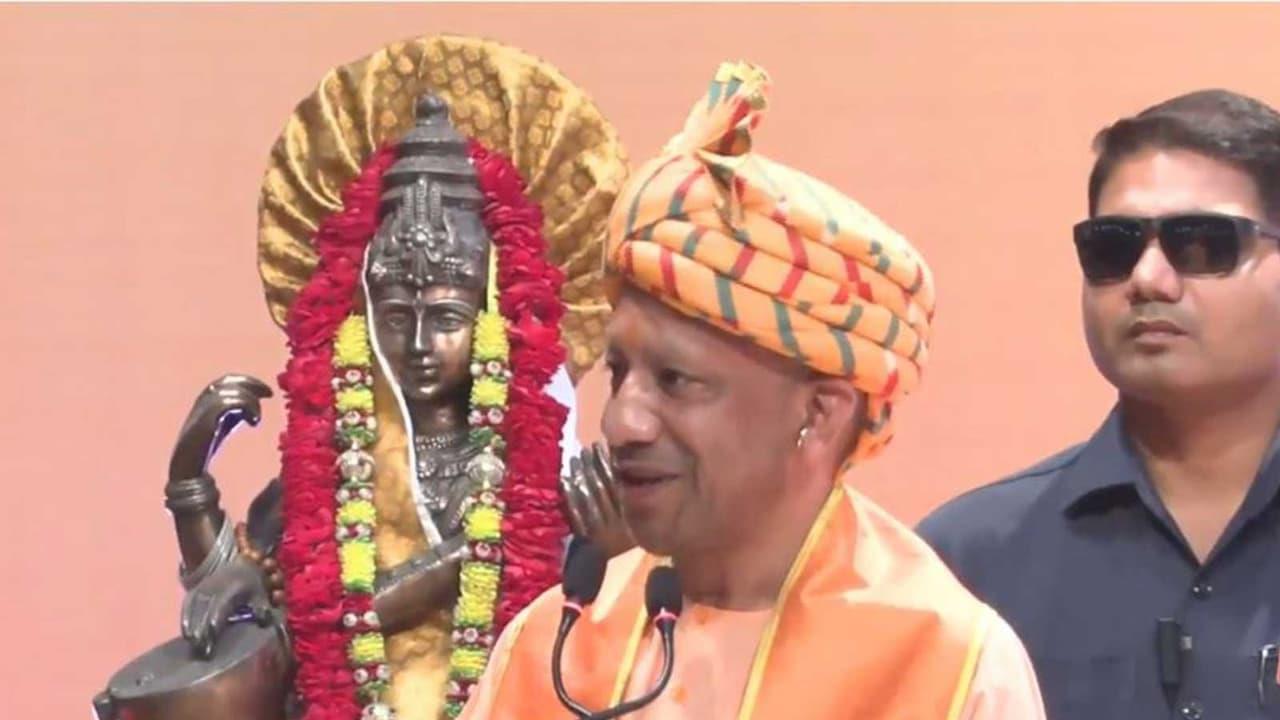
Yogi Adityanath Recalls 1975 Emergency, Justice Khanna's Dissent


CM Recalls Emergency, Dissent of Justice Khanna
Uttar Pradesh Chief Minister Yogi Adityanath on Saturday recalled key moments in India's political and constitutional history, including the imposition of the Emergency in 1975 and the abrogation of Article 370, while addressing the fifth convocation ceremony of Dr Ram Manohar Lohia National Law University in Lucknow. Addressing the graduating students, he recalled the Emergency imposed in 1975 and highlighted the dissent expressed by former Supreme Court Justice Hans Raj Khanna, saying the period taught the country the difference between the rule of law and the rule by law. "This is the same Uttar Pradesh whose High Court annulled the election of the person sitting on India's most powerful seat on June 12. Exactly 13 days later, in retaliation, Emergency was imposed in the country... At that time, Supreme Court Justice Hansraj Khanna had alone expressed dissent, and he had to pay the price for it. But history does not go to waste. Just recently, you must have seen that in 2017, the Supreme Court deemed that very single dissent to be correct. 1975 taught the country the difference between the rule of law and the rule by law. This is the lesson of 1975 for the country," the Chief Minister said.
"When we attend convocation ceremonies, the speeches tend to be long. They are lengthy, elaborate... So, moving away from that tradition, I want to speak to you differently, considering the field you are working in and the career path you wish to pursue. Over the past several years, you may have heard and seen the same things discussed here," he said.
Referring to landmark legal cases, including Kesavananda Bharati and Puttaswamy, he said these issues frequently arise in legal discourse and are debated before courts. "We also frequently find references to these issues in legal discourse, from the Kesavananda Bharati case to the Puttaswamy case. These are matters we often discuss and argue before the courts. That is why I have come here today, on the occasion of your convocation, when you are receiving your degrees, to revisit these very issues," he said.
Hails PM Modi's Reforms, Article 370 Abrogation
The Chief Minister also referred to May 16, 2014, when, after 30 years, a single party secured a full majority in the country and Narendra Modi became Prime Minister. He said that reforms involve not only introducing new laws but also removing outdated legislation, crediting Prime Minister Narendra Modi with initiating the process. "Another important date was May 16, 2014, when, after 30 years, a single party secured a full majority in the country, and Narendra Modi became the Prime Minister. He took forward the reform process... Article 370 was also abolished in Jammu and Kashmir, reinforcing the principle of one Constitution, one flag and one head for the country. The Supreme Court also upheld this decision. The Nari Shakti Vandan Adhiniyam was passed," he said.
"This means reforms are not limited to introducing new laws; removing old laws that have lost their relevance is also a reform. Prime Minister Narendra Modi initiated this process, and today, we are witnessing its results," the chief minister said. (ANI)
(Except for the headline, this story has not been edited by Asianet Newsable English staff and is published from a syndicated feed.)
Legal Disclaimer:
MENAFN provides the
information “as is” without warranty of any kind. We do not accept
any responsibility or liability for the accuracy, content, images,
videos, licenses, completeness, legality, or reliability of the information
contained in this article. If you have any complaints or copyright
issues related to this article, kindly contact the provider above.


Comments
No comment