


Ukraine Opens First Asbestos Testing Lab To Analyze Debris From Russian Shelling


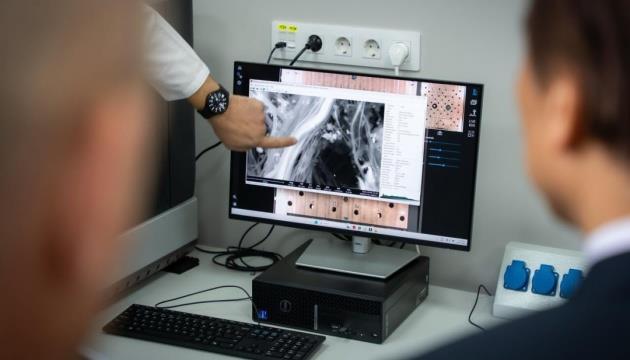
“A national laboratory equipped for transmission electron microscopy has opened in Kyiv. It enables the highly accurate detection of asbestos in materials and debris, including the finest fibers that cannot be seen with an optical microscope,” he wrote.
According to him, in the first phase, the laboratory will examine materials from UNDP projects on debris waste management. During the removal of over 1 million metric tons of debris in eight regions, UNDP has already safely separated more than 3,570 metric tons of hazardous waste, including asbestos-containing materials. The results of these analyses will determine worker safety measures, waste management protocols, and the potential for reusing materials in reconstruction efforts.
Liashko noted that this is also a step toward meeting European requirements. European Union Directive 2023/2668 reduced the permissible limit for asbestos in workplace air tenfold, to 0.01 fibers per cm3, and starting December 21, 2029, EU countries must measure it using electron microscopy.
According to the Minister of Health, Ukraine is building this capacity in advance. The next steps include accreditation under ISO/IEC 17025 and training for Ukrainian specialists.
The Health Minister also noted that, according to RDNA5 estimates, as of the end of 2025, 14% of Ukraine's housing stock had been damaged or destroyed as a result of Russian attacks. This has affected more than 3 million households.
He noted that some of these buildings were constructed before asbestos was banned in Ukraine (which occurred in October 2023) and may contain asbestos-containing materials, including asbestos cement and thermal insulation. During demolition and debris removal, asbestos fibers are released into the air. According to estimates by the WHO and the International Labor Organization, occupational exposure to asbestos claims more than 200,000 lives worldwide each year. This accounts for more than 70% of all work-related cancer deaths.
He noted that the laboratory was opened to test debris for the presence of asbestos.
The Minister of Health also expressed gratitude to the Government of Japan for its financial support, to UNDP in Ukraine for implementing the project, and to Ukrainian specialists for adopting international standards.
The Ministry of Economy and Environment noted that the National Asbestos Detection Laboratory was established by the United Nations Development Programme (UNDP) in Ukraine with financial support from the Government of Japan; it is equipped with a suite of transmission electron microscopy instruments.
“The equipment allows for the study of the morphology, structure, and elemental composition of individual fibers and ensures highly accurate identification of asbestos, particularly very fine fibers that are difficult or impossible to detect using optical microscopy,” the statement reads.
The Ministry of Economy and UNDP are working together to improve the management system for demolition waste and to implement environmentally sound approaches to reconstruction. As part of this collaboration, national standards have already been developed for sampling, asbestos detection, and monitoring its concentration in the air. Work has also begun on new standards in the field of circular construction.
Read also: Ukraine's energy minister, World Bank managing director discuss priority energy cooperation programs“A significant portion of demolition waste can be recycled and reused for reconstruction. However, this requires proper sorting and testing of materials for hazardous substances. The new laboratory will help create conditions for the safe use of recycled materials in construction, promoting the development of a circular economy while protecting human health and the environment,” said Deputy Minister of Economy Olena Kramarenko.
Following its official opening, the laboratory will prepare for accreditation under the international standard ISO/IEC 17025, and UNDP will organize training for its specialists.
Initially, the laboratory will analyze materials collected as part of UNDP projects, which will help safely separate asbestos-containing materials and identify fractions suitable for recycling.
As reported by Ukrinform, over the past month, Russia has begun to more frequently attack pharmaceutical warehouses, production facilities, and storage sites for critically important medicines in an attempt to make it more difficult for Ukrainians to access necessary medications and treatment.

Legal Disclaimer:
MENAFN provides the
information “as is” without warranty of any kind. We do not accept
any responsibility or liability for the accuracy, content, images,
videos, licenses, completeness, legality, or reliability of the information
contained in this article. If you have any complaints or copyright
issues related to this article, kindly contact the provider above.


Comments
No comment