


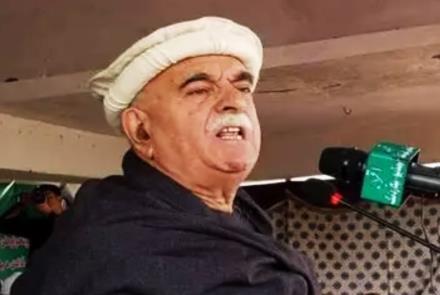
Achakzai Accuses Pakistan Of Fueling Regional Militancy, Rejects Emergency Rule In KP


Speaking at a protest gathering against the emergency measures, Achakzai said Pakistan had played a central role in organizing, training and equipping militants during the Soviet-Afghan war. He accused authorities of bringing fighters from other countries to the region and providing them with training, bomb-making instruction and resources.
“ We did not spread terrorism in Pakistan; it was you who spread it,” Achakzai said, according to the remarks provided. He argued that responsibility for the region's long-running insecurity could not be separated from Pakistan's policies during the war in Afghanistan.
Achakzai also called for Pakistan's domestic and foreign policies to be determined by elected institutions, including the National Assembly, Senate and Khyber Pakhtunkhwa Assembly, rather than by army generals. He said the military, civilian administration and judiciary should operate within the country's constitutional framework.
The opposition leader warned that Pashtun communities would resist attempts to take control of their land and natural resources, including water and mineral deposits. He said that if their complaints were not addressed through Pakistan's courts, they could seek justice through international legal institutions.
His remarks come amid a deepening political dispute following Pakistan's declaration of emergency and imposition of governor's rule in Khyber Pakhtunkhwa on October 11. The move suspended the provincial administration led by jailed former Prime Minister Imran Khan's Pakistan Tehreek-e-Insaf party. The federal government cited worsening security and alleged shortcomings in the provincial government's counterterrorism efforts, while opposition figures condemned the measures as politically motivated.
Achakzai has separately challenged the federal government's handling of the emergency, arguing that political disputes should be resolved through Parliament and constitutional procedures. Other opposition leaders have also demanded that the emergency and governor's rule be withdrawn.
Meanwhile, Maulana Fazlur Rehman, leader of Pakistan's Jamiat Ulema-e-Islam party, criticized the country's economic policies and the prolonged closure of major trade routes with Afghanistan and India. He said the restrictions had damaged trade and weakened Pakistan's economic position, while Afghanistan had sought alternative routes through Iran and Central Asia.
Fazlur Rehman also alleged that emergency measures in the former Federally Administered Tribal Areas were linked to attempts to gain control of local mineral resources and facilitate foreign investment.
The statements reflect growing criticism from opposition leaders over Pakistan's security policy, civilian-military relations and control of provincial resources, as tensions over Khyber Pakhtunkhwa's political future continue.

Legal Disclaimer:
MENAFN provides the
information “as is” without warranty of any kind. We do not accept
any responsibility or liability for the accuracy, content, images,
videos, licenses, completeness, legality, or reliability of the information
contained in this article. If you have any complaints or copyright
issues related to this article, kindly contact the provider above.


Comments
No comment