


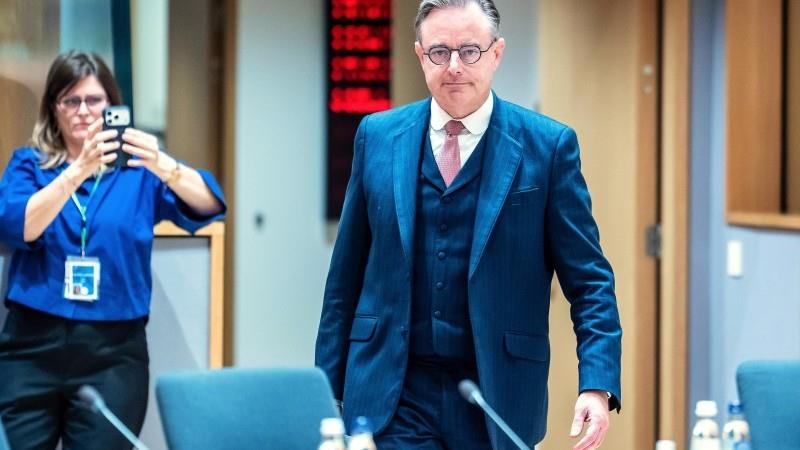
Belgium's Public Finances: A Missed Opportunity


This was supposed to be a decisive week for Belgium's public finances. The prime minister was due to deliver his general policy statement to parliament on Tuesday, outlining a budget agreement among the governing parties for the next three years, up to the 2029 elections. In addition to measures already adopted, the government is seeking €10bn in recurring savings, phased in over the next three years.
A new timetable for negotiationsFor now, however, the budget talks have failed to produce an agreement. A central element of the package was a one-percentage-point increase in the standard VAT rate, from 21% to 22%, but one coalition party firmly opposed the proposal. The general policy statement therefore had to be postponed. Under Prime Minister Bart De Wever's revised timetable, the immediate priority is to secure agreement on the 2027 budget, including €4bn in savings.
Ideally, a deal would be reached by the end of October, allowing parliament to debate and approve the legislation before year-end. This would avoid recourse to the system of provisional twelfths, under which the previous year's budget is rolled over on a monthly basis to keep public services running. The PM has made clear that he wants to avoid such an outcome at all costs. He is even prepared to push through legislation that would trigger automatic spending cuts of €3-4bn from January 2027 if no budget is agreed by year-end.
In a second phase, negotiations are expected to resume with the aim of finding a further €6bn in savings across the 2028 and 2029 budgets. This stage will be crucial for Belgium's medium-term fiscal trajectory. Postponing those discussions until next year is a risk. By then, the federal and regional elections scheduled for spring 2029 would be closer, and the wide political differences within the current coalition would make agreement on additional measures more difficult.
A chance to stand apart from FranceThere is no political crisis at this stage. With a package of measures, Belgium should still be able to adopt a 2027 budget that brings the deficit below 5% of GDP. Even so, failure to reach a swift and comprehensive agreement on the full €10bn package is a missed opportunity for the federal government to show financial markets that Belgium is not France.
On headline indicators – public deficits, debt and even economic growth – little separates the two countries. France's difficulty, however, lies in its inability to set and pass a budget, compounded by the political uncertainty surrounding the April 2027 presidential election. Belgium, by contrast, has a governing majority capable of approving a budget and pursuing structural reforms, as it has demonstrated since 2025. A three-year agreement would have sent a powerful signal that the country's public finances were being placed on a more sustainable path.
For now, that opportunity has been missed, though we still believe some less ambitious agreement is likely in the coming weeks.

Legal Disclaimer:
MENAFN provides the
information “as is” without warranty of any kind. We do not accept
any responsibility or liability for the accuracy, content, images,
videos, licenses, completeness, legality, or reliability of the information
contained in this article. If you have any complaints or copyright
issues related to this article, kindly contact the provider above.


Comments
No comment