


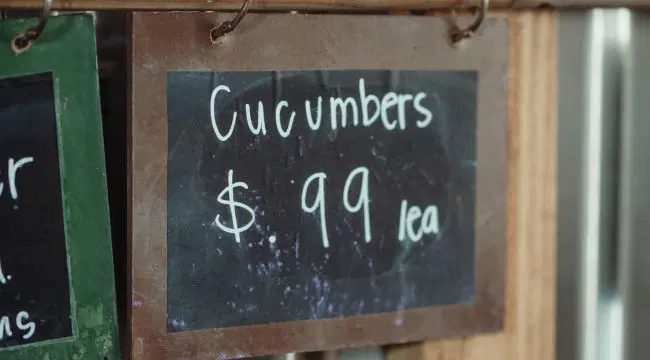
The Strange History Of Why Prices End In 99 Cents


The history mixes disputed origin stories, quirks in how people process numbers, and a pricing signal retailers still use.
The Origin Story Is Murkier Than You May ThinkOdd pricing dates back more than a century, but there is no proven inventor of 99-cent pricing. Live Science notes that historians cannot pinpoint exactly who established the practice. One theory says odd prices forced clerks to open cash registers and make change, making unrecorded cash sales harder to hide.
Other historical accounts connect odd pricing with late-19th-century merchants looking for ways to make prices appear more competitive. What is clear is that retailers used odd prices long before behavioral researchers could explain why they might work.
Your Brain Notices The Left Digit FirstThe strongest explanation today is the left-digit effect. A Journal of Consumer Research study involving five experiments found that nine-ending prices can seem smaller when the leftmost digit changes, as with $2.99 versus $3.00.
People process numbers in ways that can give disproportionate importance to that first digit. Shoppers do not literally believe $19.99 is $19, but the“1” can make the price feel meaningfully lower than $20 during a quick comparison. Importantly, the effect is not equally strong for every price or purchase.
A Higher Price Can Sometimes Sell BetterField experiments by Eric Anderson and Duncan Simester tested 9-ending prices with national mail-order clothing companies. Kellogg School of Management reports that 9-endings increased demand across three experiments, with stronger effects on newer products where shoppers had less prior information. In a famous test, a women's clothing item generated more demand at $39 than at $34, suggesting the 9 could communicate a bargain.
Earlier research cited in the paper found roughly 30% to 65% of observed prices ended in 9. That does not mean $39 always beats $34, but familiar pricing signals can sometimes outweigh a small mathematical price advantage.
The Penny Can Distort A Family BudgetImagine buying 20 grocery and household items averaging $9.99 each. The exact total is $199.80, only 20 cents below $200, but mentally treating each as $9 produces an estimate of just $180. That $19.80 gap shows why rounding prices up is more useful than celebrating the missing penny.
Research on price perception suggests consumers can misestimate prices when relying on mental shortcuts instead of careful comparisons. For a budget-conscious household, checking unit prices and keeping a rounded-up running total can reduce surprises at checkout.
Digital Pricing Has Not Killed The Old TrickPrice-tag technology is changing faster than shopper psychology. Associated Press reported in 2025 that about 5% to 10% of U.S. supermarkets used electronic shelf labels, versus about 80% in Europe, with individual tags costing roughly $5 to $20.
The same reporting described research finding virtually no surge pricing after one grocery chain adopted digital labels, challenging fears that electronic tags automatically mean constantly changing prices. Still, a separate 2025 San Francisco Chronicle investigation involving 437 Instacart shoppers found variable pricing on 74% of examined grocery items. Today, shoppers need to watch both 99-cent pricing and whether the underlying price itself changes.
How To Keep 99-Cent Pricing In PerspectiveMentally round $7.99 to $8, $49.99 to $50, and $499.99 to $500 before deciding whether something fits your budget. Compare the final price with competing products rather than assuming a 9-ending signals a genuine discount. Check unit prices for groceries, total ownership costs for major purchases, and whether a“sale” price is actually below the normal price. Online, compare the same item across retailers before treating $29.99 as a bargain. The goal is not avoiding every 99-cent price; it is preventing the final digits from making the decision for you.
One Penny Still Has Surprising PowerThe history of 99-cent pricing shows how a tiny numerical difference became one of retail's most durable conventions. Its beginnings are disputed, but modern research shows that left-digit processing and deal signals can influence choices. Even as electronic labels and variable pricing spread, the tactic remains relevant because human attention has not changed as quickly as retail technology. The practical rule is simple: round up first, then compare value, quantity, quality, and total cost.
The next time you see $19.99, will you read it as“nineteen dollars” or immediately call it $20-and has 99-cent pricing ever changed what you bought? Share your experience in the comments.

Legal Disclaimer:
MENAFN provides the
information “as is” without warranty of any kind. We do not accept
any responsibility or liability for the accuracy, content, images,
videos, licenses, completeness, legality, or reliability of the information
contained in this article. If you have any complaints or copyright
issues related to this article, kindly contact the provider above.


Comments
No comment