


How Warehouse Robots Cross Borders Without Getting Stuck


I have watched that exact scenario unfold twice, and both times the technical team was completely blameless. The robot worked. The paperwork didn't.
Here's the pattern: robotics companies perfect their hardware, then treat international shipping as an afterthought bolted on at the last minute. They hire a freight broker, hand over a packing list, and assume the rest works itself out. It rarely does.
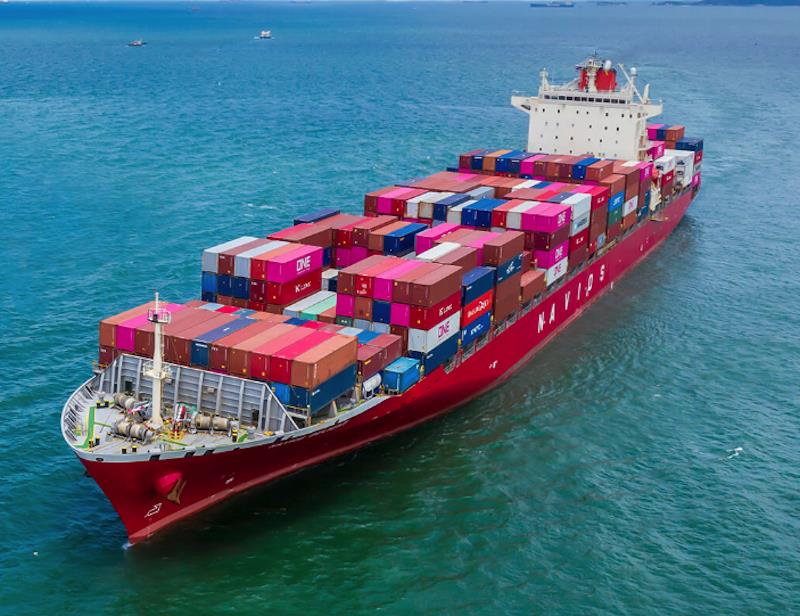
Getting a warehouse robot from a factory floor in one country to a distribution center in another involves tariff classification, bonded storage, customs bonds, and often a global supply chain partner who understands that an autonomous mobile robot is not the same as a pallet of sneakers.
The hardware is the easy part. The border is where projects stall.
If you're an automation integrator, an OEM shipping humanoids or AMRs, or a warehouse operator importing equipment, this is written for you.
We'll walk through the three choke points that kill cross-border robot deployments, the documentation that actually matters, and a decision framework you can run before you book a single container.
Why Robots Are a Customs NightmareMost people assume customs officers see a machine and classify it as a machine. That's not how it works. A robot is a bundle of components that each carry their own tariff treatment: lithium-ion battery packs, precision sensors, servo motors, printed circuit boards, wiring harnesses, and structural steel or aluminum.
When you ship a finished robot, you're declaring a product whose classification can shift depending on whether it's presented as a complete unit or as parts for assembly. Get that call wrong and your duty rate can swing by double digits.
I once reviewed a shipping manifest for a mid-size AMR fleet headed to a Southeast Asian distribution hub. The broker had classified the entire shipment as“industrial machinery,” which sounded reasonable.
It wasn't. The battery modules alone required separate documentation under dangerous goods rules, and the shipment was held for eleven days while the team scrambled to produce safety data sheets they'd never assembled. Eleven days of port storage on a fleet of robots is not a rounding error. It's real money, and it's avoidable.
According to the International Trade Administration, tariff classification errors are among the most common reasons shipments get flagged for inspection. The fix isn't complicated: classify every component family before you pack a single crate, not after.
What Actually Stops Robots at the BorderThree things, in my experience, cause most delays. Not one of them is technical.
-
Missing dangerous goods documentation. Lithium batteries in any meaningful quantity trigger UN 38.3 testing requirements and specific labeling. Skip this and your robot cools its heels on a dock.
Wrong tariff codes on components. A sensor and a servo motor almost never share a classification. Bundle them under one code and you invite a hold.
No bonded warehousing plan. If duties aren't paid or deferred correctly, your shipment sits accruing storage fees while you sort out the money side.
Here's where I'll take a side: hire a customs specialist before you hire a freight forwarder. Forwarders move boxes. Specialists keep boxes moving. Those are different skills, and conflating them is how projects lose three weeks.
The World Trade Organization publishes baseline guidance on cross-border trade facilitation that's worth reading before you finalize any shipping contract, because it frames the rules your broker is actually operating under.
Building a Cross-Border Robot Deployment ChecklistThis is the practical part. Run this before every international robot shipment, and you'll skip most of the pain I described above.
Classify every component family separately. Battery packs, sensors, motors, controllers. Each gets its own code and its own duty math. Assemble UN 38.3 test summaries and safety data sheets. Every lithium cell shipped commercially needs these. No exceptions. Confirm bonded warehouse capacity at the destination port. Verify this before booking freight, not after arrival. Name a single point of contact for customs issues. One person, one phone number, on call during transit. Document the assembly state. Is the robot shipping fully assembled or in parts? That distinction changes your classification. Pre-clear insurance and customs bonds. Both need to be in place before the container leaves origin.You can run through that checklist in an afternoon. Skipping it can add six weeks to a deployment schedule that already took a year to reach.
A Framework I Use: The Four-Gate TestChecklists cover the mechanics. But teams also need a way to decide whether a given market is even worth the shipping complexity. I call this the Four-Gate Test, and I run it before I commit to any cross-border robot deployment.
1.png" alt="" width="954" height="361" srcset="
Legal Disclaimer:
MENAFN provides the
information “as is” without warranty of any kind. We do not accept
any responsibility or liability for the accuracy, content, images,
videos, licenses, completeness, legality, or reliability of the information
contained in this article. If you have any complaints or copyright
issues related to this article, kindly contact the provider above.


Comments
No comment