


India's Nuclear Power Push: Focus On Small Reactors, Private Sector


India's plan to expand nuclear power generation through the Bharat Small Reactor (BSR) programme came into focus at the 20th India Energy Summit, with industry experts highlighting the need for stronger domestic supply chains, private-sector participation and faster project execution to scale up nuclear capacity.
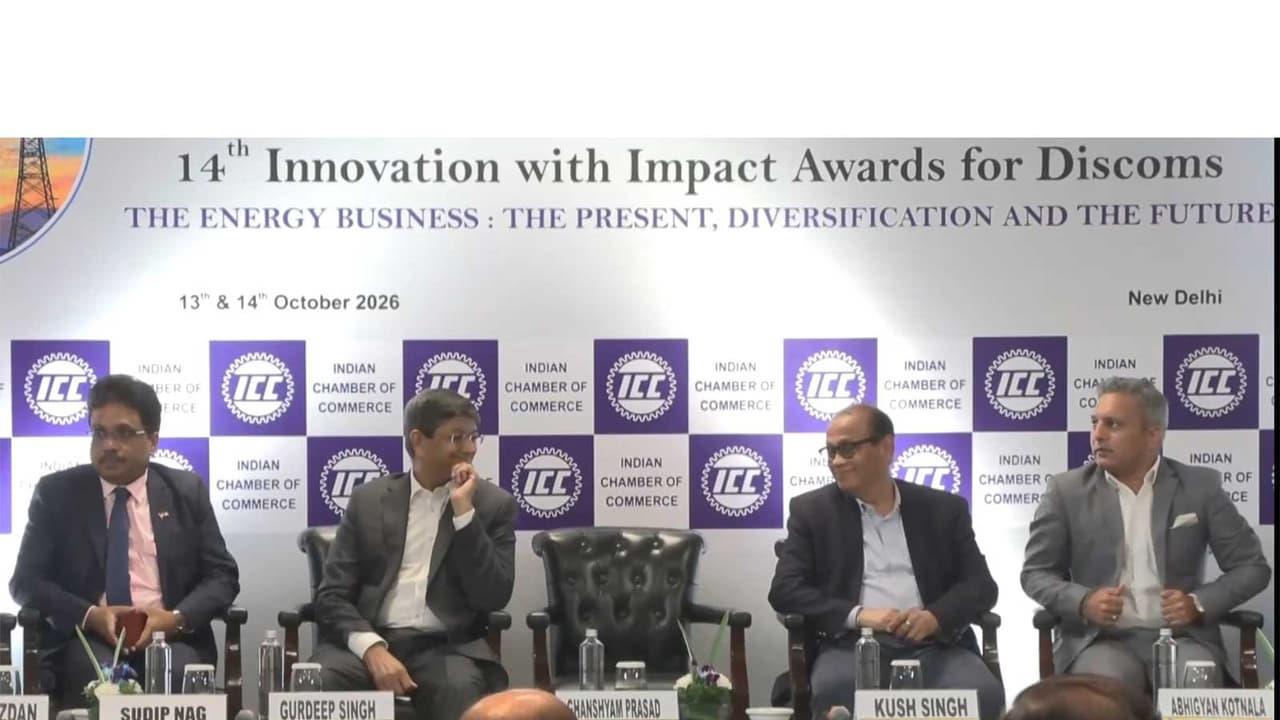
A panel discussion on the second day of the summit, organised by the Indian Chamber of Commerce (ICC) in New Delhi, examined the opportunities and challenges in expanding nuclear power, including reactor technology, site selection, regulatory approvals, specialised equipment and community engagement. India aims to increase its nuclear power capacity from approximately 8.8 GW towards 100 GW by 2047.
The Bharat Small Reactor (BSR) Programme
Experts said achieving this ambition would require a coordinated approach involving the government and industry, alongside the development of domestic manufacturing capabilities and a skilled workforce. The Bharat Small Reactor programme seeks to use India's established 220 MW pressurised heavy water reactor technology to meet the captive power requirements of industries. Captive power refers to electricity generated for a company's own use. Such reactors could provide round-the-clock, low-carbon electricity to energy-intensive industries.
Leveraging Proven Technology
Kishor U Aggarwal, who spent 36 years at the Nuclear Power Corporation of India Limited (NPCIL) before moving to Vedanta Power, said India's experience with 220 MW reactors provided a strong engineering foundation for the programme. "The 220 MW reactor is a proven technology, with the last unit built by NPCIL commencing commercial operations in 2012. Since then, these reactors have demonstrated reliable performance, with all units continuing to operate and deliver power," he said.
Aggarwal said the programme builds on decades of operating experience, while standardisation has helped address several engineering challenges. He added that the priority now was to strengthen the domestic supply chain and prepare Indian industry for wider deployment. He also said private partners could build reactors jointly with NPCIL, while NPCIL would operate the plants. The model is intended to bring private industry into nuclear power generation to meet its captive electricity requirements.
Private Participation and Manufacturing
On manufacturing, Aggarwal said two specialised components currently imported from Europe and Japan were not yet manufactured in India. He expected Indian industry to begin supplying them within a year or two. NPCIL is also setting up a separate engineering division exclusively for private industry, which is expected to be in place in three to four months. It has tied up with Engineers India Limited for design inputs, he said.
Overcoming Key Hurdles
However, experts highlighted that technology and manufacturing were only part of the challenge. Prasenjit Pal, Senior Advisor – Nuclear at Bajaj Energy and former Executive Director (Nuclear) at NTPC Parmanu Urja Nigam Ltd., said selecting suitable sites for nuclear projects required careful assessment of geological conditions, water availability and seismic risks.
Site Selection and Regulatory Approvals
"Siting a nuclear power project is totally a different cup of tea," he said, explaining that nuclear projects must meet specific safety requirements and maintain prescribed distances from seismic faults and major military or industrial establishments. Pal also highlighted the importance of regulatory approvals at every stage, from site selection and excavation to the first pour of concrete. He said accurate technical data and compliance with regulatory requirements were essential for project development.
Community Support and Local Benefits
Community support is another important factor. Referring to the Mahi Banswara project in Rajasthan, where an investment of about Rs 48,000 crore is planned, Pal said local communities needed to see tangible benefits from nuclear projects. "The local population has to be with you to enable you to establish a project," he said, pointing to initiatives such as schools, roads, solar streetlights and medical services for nearby villages.
Project Timelines and National Targets
The discussion also highlighted the long timelines and high capital requirements associated with nuclear power. Projects can take 10 to 12 years to build, while a 220 MW small reactor is estimated to require 60 to 72 months of construction after final approvals. The government aims to have at least five indigenous small modular reactors operating by 2033, as India works towards its longer-term nuclear power capacity target of 100 GW by 2047. (ANI)
(Except for the headline, this story has not been edited by Asianetnews Editorial staff and is published from a syndicated feed.)
Legal Disclaimer:
MENAFN provides the
information “as is” without warranty of any kind. We do not accept
any responsibility or liability for the accuracy, content, images,
videos, licenses, completeness, legality, or reliability of the information
contained in this article. If you have any complaints or copyright
issues related to this article, kindly contact the provider above.


Comments
No comment