


Vanotium Introduces Vanotium Titanium Cutting Board For Everyday Kitchen Food Preparation


Ogden, UT, Oct. 14, 2026 (GLOBE NEWSWIRE) -- Vanotium has introduced a Vanotium titanium cutting board intended for everyday food preparation in residential kitchens. The Vanotium cutting board brings attention to the use of titanium in kitchen equipment, with a focus on cutting-surface design, routine maintenance, and the practical considerations associated with preparing food at home. The announcement provides an opportunity to examine how material selection and food-handling practices relate to a common kitchen utensil.
Official Website:Cutting boards are used to prepare vegetables, fruits, herbs, meat, fish, and other ingredients. Their material, surface condition, dimensions, and cleaning requirements can influence how they fit into daily kitchen routines. With the introduction of its titanium cutting board, Vanotium adds another product to the range of kitchen preparation tools available for household use.
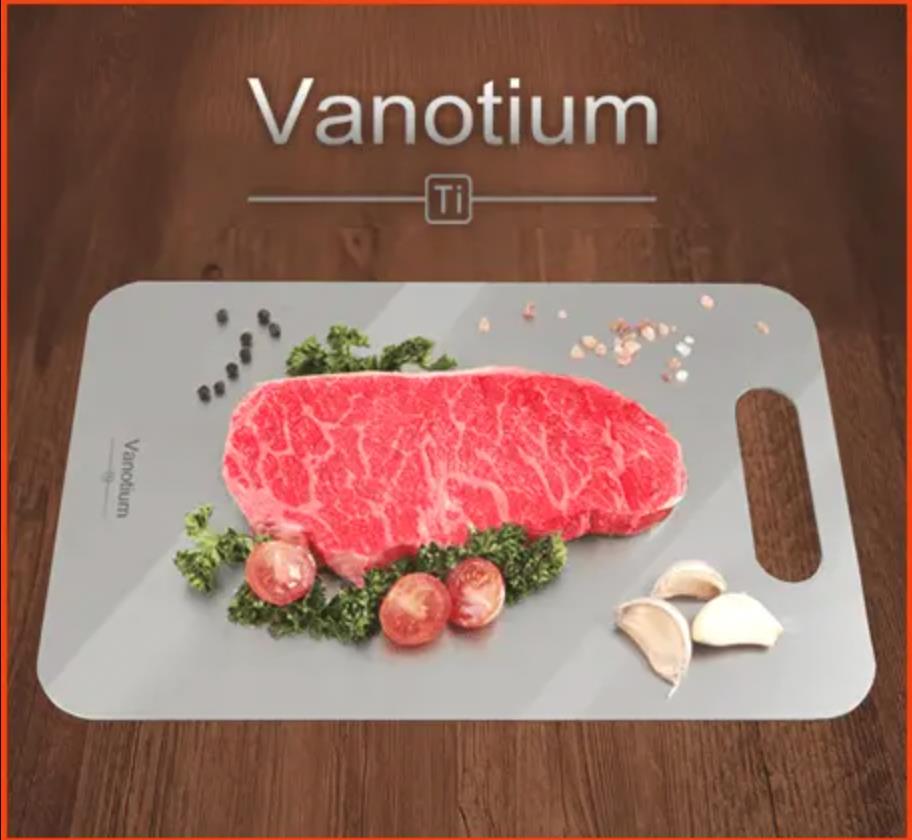
Material selection is an important consideration when evaluating a cutting board. Different materials have different characteristics, and consumers may consider durability, weight, maintenance, knife interaction, and storage when choosing kitchen equipment. Vanotium's product provides a basis for examining these practical factors alongside the manufacturer's published specifications.
Titanium as a Kitchen Material
Titanium is recognized for its strength-to-weight characteristics and its resistance to corrosion under many conditions. It is used in various industrial and consumer applications, although the suitability of titanium for a particular kitchen product depends on its composition, surface finish, construction, and intended use.
The Vanotium titanium cutting board
For example, the material's general resistance to corrosion does not establish that every finished surface is resistant to all cleaning agents or environmental conditions. Product construction and care instructions remain relevant to its long-term use.
Consumers interested in the Vanotium cutting board can consult the manufacturer's documentation for information about material composition, dimensions, surface finishing, and recommended maintenance. These details provide a more complete understanding of the product than material descriptions alone.
Cutting Boards and Everyday Food Preparation
A cutting board provides a designated surface for slicing, chopping, dicing, and preparing ingredients. It can also help protect kitchen countertops from direct contact with knives.
In household kitchens, cutting boards may be used for a variety of tasks throughout the day. Preparing breakfast may involve cutting fruit or bread, while lunch and dinner preparation may require chopping vegetables, herbs, and other ingredients. The appropriate size and shape of a board can help accommodate these different activities.
The Vanotium cutting board should be evaluated according to the preparation tasks for which it is intended. Consumers may wish to consider whether its dimensions provide sufficient working space, whether its weight suits their handling preferences, and whether its design fits the available countertop and storage area.
These considerations apply regardless of the material used. A cutting board that fits one household's cooking routine may not necessarily suit another household's needs.
Hygiene and Responsible Food Handling
Food-contact surfaces require appropriate cleaning, regardless of their construction. Cutting boards can become contaminated through contact with raw ingredients, knives, hands, and other kitchen surfaces. Proper cleaning and food-handling procedures are therefore essential components of kitchen hygiene.
Although Vanotium's product is described
Claims concerning antimicrobial performance should be supported by appropriate testing of the finished product under clearly defined conditions. Without such evidence, it is more accurate to discuss the importance of routine hygiene than to suggest that any cutting board provides complete protection from germs.
Users of the Vanotium titanium cutting board should follow the manufacturer's cleaning and care instructions. They should also apply established food-safety practices when handling raw meat, poultry, seafood, produce, and ready-to-eat foods.
Using separate cutting boards for raw animal products and ready-to-eat foods can help reduce the risk of cross-contamination. Knives, utensils, hands, and surrounding work surfaces should also be cleaned appropriately between preparation tasks.
Knife Interaction and Surface Characteristics
The interaction between a cutting board and a knife is an important consideration for people who prepare food regularly. A board's hardness, surface texture, and construction can affect how a blade contacts the cutting surface.
The Vanotium titanium cutting board should be assessed using product-specific information about its surface characteristics and intended compatibility with kitchen knives. Titanium's general strength does not, by itself, establish how a particular board will affect knife sharpness during repeated cutting.
Knife-edge maintenance depends on several factors, including blade material, geometry, sharpening condition, cutting technique, and the surface against which the blade is used. Consumers who prioritize knife maintenance may therefore wish to review the manufacturer's guidance before selecting or using a particular board.
The description“knife safe” also requires careful interpretation. It may refer to handling, surface construction, or the intended use of a product, but the precise meaning should be established through the manufacturer's specifications and any available testing.
For Vanotium, clear product information about knife interaction would help consumers understand the board's intended application and any relevant limitations.
Design, Handling, and Storage
A cutting board must work within the broader layout of a kitchen. Factors such as dimensions, thickness, weight, edge construction, and storage requirements can influence everyday usability.
A larger cutting surface may accommodate more ingredients, while a smaller board may be easier to store in a compact kitchen. The weight of a board can affect how easily it is moved, lifted, and cleaned. Its underside and countertop contact may also influence stability during preparation.
When evaluating Vanotium, consumers can consider whether the product's documented dimensions and design suit their available workspace. Manufacturer-provided information about handling and storage can help clarify how the board is intended to be incorporated into ordinary kitchen routines.
Cleaning requirements are another part of practical design. Some products may have restrictions concerning abrasive cleaning materials, temperature, or particular cleaning agents. Consumers should follow the instructions specific to the Vanotium board instead of assuming that all metal cutting surfaces have identical care requirements.
Understanding Product Claims
Descriptions of kitchen products sometimes include terms relating to durability, hygiene, safety, and maintenance. These terms are most useful when supported by specific information that explains what a product can reasonably be expected to do.
For example, corrosion resistance describes a material's ability to resist deterioration under particular conditions. It does not automatically establish resistance to every chemical or guarantee that a finished product cannot be damaged.
Similarly, a claim about reduced microbial growth requires evidence relevant to the particular product and the conditions under which it was tested. The phrase“germ-proof” makes a broader assertion than a statement describing the results of a specific antimicrobial test.
Claims about knife compatibility and long-term performance also benefit from clear definitions and supporting documentation. Material composition, surface finishing, construction methods, and testing conditions can all influence the interpretation of these claims.
Consumers considering the Vanotium cutting board can examine the manufacturer's published information for material specifications, care instructions, intended uses, and any available test documentation. This approach supports an informed assessment without assuming that a product characteristic has been demonstrated when evidence is unavailable.
Food Safety Beyond the Cutting Board
A cutting board is one part of a larger food-preparation environment. Safe handling practices also involve clean utensils, properly maintained countertops, handwashing, appropriate food storage, and separation of raw and ready-to-eat ingredients.
The introduction of Vanotium's titanium cutting board
Consumers should also inspect cutting boards periodically for damage or changes in surface condition. The appropriate response depends on the board's construction and the manufacturer's instructions. Equipment that can no longer be cleaned effectively or used as intended may need replacement.
These practices help place the Vanotium product in the context of responsible food preparation rather than treating material selection as a substitute for established hygiene procedures.
Considerations for Household Use
Consumers evaluating Vanotium may find it useful to consider several questions before incorporating a new cutting board into their kitchens.
Material composition: Does the product documentation clearly identify the material and construction?
Dimensions and weight: Is the cutting surface appropriate for the quantities and types of ingredients commonly prepared?
Knife compatibility: Does the manufacturer provide guidance on surface characteristics and blade maintenance?
Cleaning requirements: Are washing, drying, and care instructions clearly documented?
Food-contact information: Is relevant information available concerning the finished product's intended food-contact use?
Performance claims: Are statements concerning hygiene, durability, or knife safety supported by product-specific evidence?
Storage and handling: Can the board be stored conveniently and handled safely within the available kitchen space?
These considerations can help consumers determine whether the Vanotium cutting board is appropriate for their individual requirements. They also provide a consistent framework for evaluating cutting boards made from different materials.
About Vanotium
Vanotium is the company associated with the titanium cutting board described in this announcement. The product focuses on applying titanium to a common kitchen preparation tool, bringing material selection and everyday food-preparation requirements into consideration.
Additional information about Vanotium and its product specifications is available through the company's official websiteAs households consider kitchen equipment, material choice remains one element of a broader evaluation that includes usability, maintenance, food safety, and compatibility with existing kitchen tools. Vanotium's introduction of a titanium cutting board adds another option to this category, while the product's suitability for individual households depends on its documented characteristics and intended application.
CONTACT: Phone: +1 800 204 6266 Email:... Email:...

Legal Disclaimer:
MENAFN provides the
information “as is” without warranty of any kind. We do not accept
any responsibility or liability for the accuracy, content, images,
videos, licenses, completeness, legality, or reliability of the information
contained in this article. If you have any complaints or copyright
issues related to this article, kindly contact the provider above.


Comments
No comment