


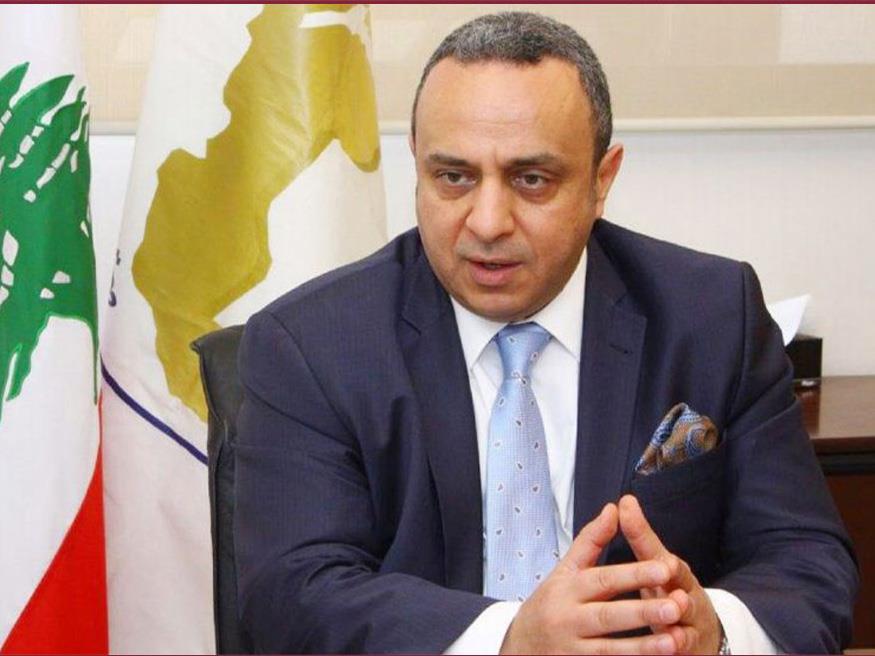
Qatar's Banking Experience Offers Model For Advancing Arab Banking


Doha, Qatar: Secretary-General of the Union of Arab Banks Dr. Wissam Fattouh (pictured) stressed the importance of Arab financial institutions drawing on the experience of Qatari banks, whose expanding regional and international presence highlights opportunities to diversify investments, strengthen cross-border cooperation and enhance competitiveness in a rapidly changing global economy.
Speaking to QNA, Fattouh highlighted the extensive international reach of Qatari banks and their investments beyond the domestic market, saying their experience could help other Arab institutions strengthen investment management, develop their banking operations and navigate diverse markets.
He stressed that Arab banks could draw broader lessons from Qatar's approach to expanding internationally, diversifying investments and capitalizing on opportunities across regional and global markets.
Fattouh said Qatari banks' extensive presence across regional and international markets offers valuable lessons for Arab institutions seeking to expand beyond their traditional markets. Exposure to diverse markets can also help banks better assess local conditions and risks, refine their business strategies and adapt to changing economic environments.
Fattouh cautioned, however, that successful banking models cannot be replicated wholesale across the region. Banks must assess each market's economic and regulatory environment and adapt proven practices to local conditions.
Fattouh said learning from Qatar's experience and other successful Gulf and Arab banking models could deepen financial cooperation, unlock investment opportunities and strengthen Arab banks' ability to adapt to global economic and technological shifts.
Turning to the Gulf banking sector, Fattouh said Qatar's experience should be viewed alongside those of other Gulf countries, whose financial institutions bring diverse expertise and maintain investments across regional and international markets.
He described Gulf banks as a key pillar of the Arab banking sector, noting that several have established a strong presence in international markets and pursued diversified investment strategies. Their cross-border operations provide a platform for deeper partnerships and knowledge-sharing in areas ranging from business management and financing to international expansion and financial services development.
Fattouh said stronger cooperation among Gulf banks could expand investment opportunities across the Arab world and deepen financial integration, enabling institutions to combine their expertise in support of regional economic growth.
He stressed that Arab banking development should draw on a range of successful experiences, citing the progress made by the banking sectors of Jordan and Morocco, as well as Egypt's substantial banking base and significant investments.
The diversity of these banking models creates opportunities to exchange proven practices, improve financial services, expand investment activities and strengthen institutional efficiency. Fattouh said closer Arab banking cooperation could help bring this expertise together, enhancing the sector's competitiveness and its ability to respond to rapid changes in global markets.
He added that differences in national markets should be seen as an opportunity for mutual learning, allowing banks to adapt successful practices to local economic and regulatory conditions. Stronger links among financial institutions could also foster new investment partnerships and advance financial integration across the Arab world.

Legal Disclaimer:
MENAFN provides the
information “as is” without warranty of any kind. We do not accept
any responsibility or liability for the accuracy, content, images,
videos, licenses, completeness, legality, or reliability of the information
contained in this article. If you have any complaints or copyright
issues related to this article, kindly contact the provider above.


Comments
No comment