


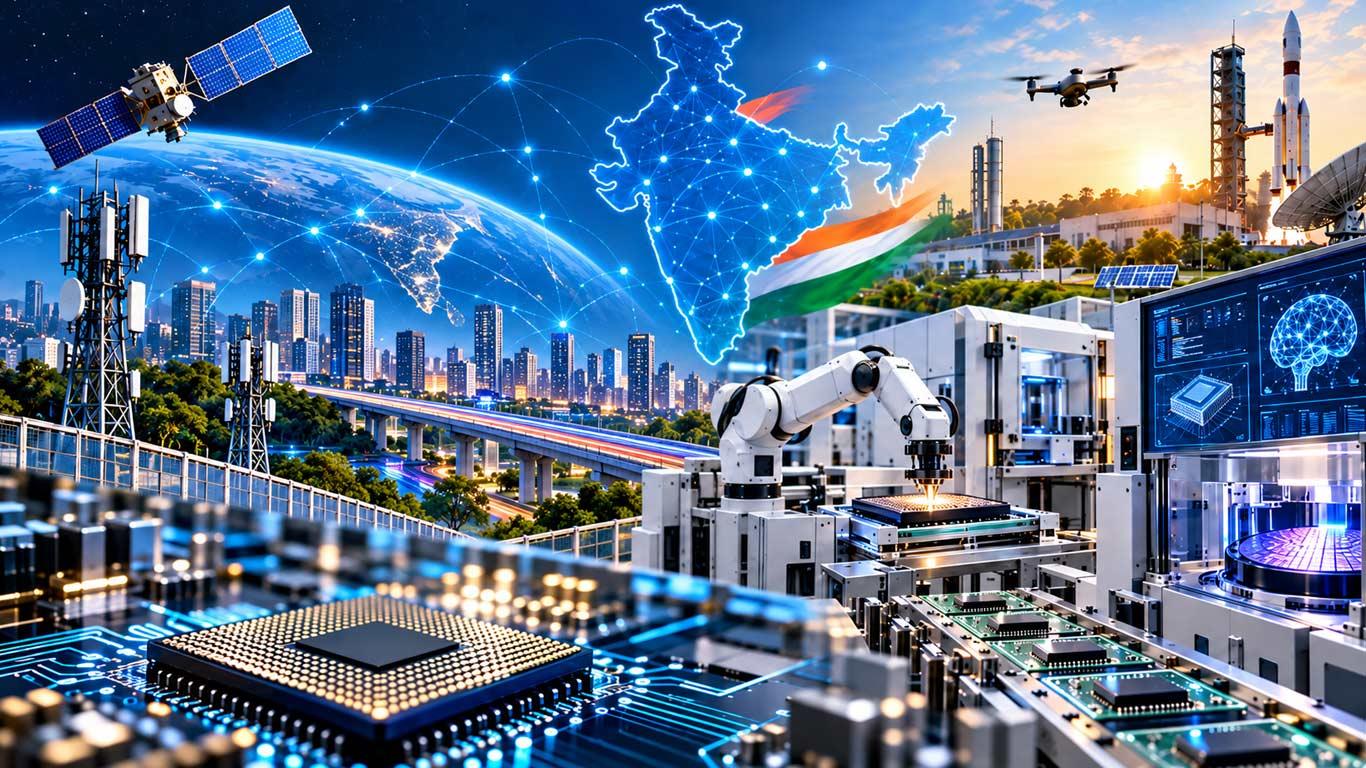
India To Build Domestic Technology Capabilities Under Long-Term Roadmap: Vaishnaw


Speaking at the Bloomberg New Economy Forum in New Delhi, Vaishnaw said India aims to become a trusted partner in global technology supply chains rather than pursue complete self-sufficiency.
India Plans Long-Term Roadmap To Reduce Technology Dependence
Vaishnaw said the government was adopting short-term targets spanning three to five years, medium-term goals of five to 15 years and long-term plans covering 20 to 25 years to build domestic capabilities in strategically important sectors.
He said changing geopolitical conditions and global policy shifts made it necessary to identify areas where dependence on other countries could expose India's economy and production systems to disruptions, reported The Mint.
Semiconductor Programme To Focus On Critical Inputs
Highlighting the semiconductor sector, Vaishnaw stressed the need to develop the entire ecosystem, including materials, chemicals, gases and substrates, alongside chip design and manufacturing.
He said the second phase of India's semiconductor programme places greater emphasis on these critical inputs, adding that manufacturing efforts would require a strong domestic ecosystem.
Citing the mobile phone industry, the minister said India had gradually moved beyond assembly to manufacturing modules and components, with some components now being exported.
Vaishnaw also called for higher research and development spending, particularly in applied research.
India Builds Domestic Capabilities In Telecom Technology
On telecommunications, he cited India's development of an end-to-end 4G technology stack through government and private sector collaboration in three-and-a-half years. The system has been deployed across more than 100,000 towers, he said.
AI Disruptions And Debt Risks Highlight Need For Resilience
The minister also flagged potential global disruptions arising from artificial intelligence-led changes in employment, particularly in services, and debt pressures in advanced economies.
He said India was working to strengthen its financial, economic and technological resilience. According to Vaishnaw, the country's public debt-to-GDP ratio declined from 61 percent to 55 percent over the past five years.
CISCO Chairman and CEO Chuck Robbins, who also participated in the Bloomberg New Economy Forum discussion, said India's approach of building strategically important capabilities while partnering with trusted companies offered a practical path towards technology sovereignty.
(KNN Bureau)

Legal Disclaimer:
MENAFN provides the
information “as is” without warranty of any kind. We do not accept
any responsibility or liability for the accuracy, content, images,
videos, licenses, completeness, legality, or reliability of the information
contained in this article. If you have any complaints or copyright
issues related to this article, kindly contact the provider above.


Comments
No comment