


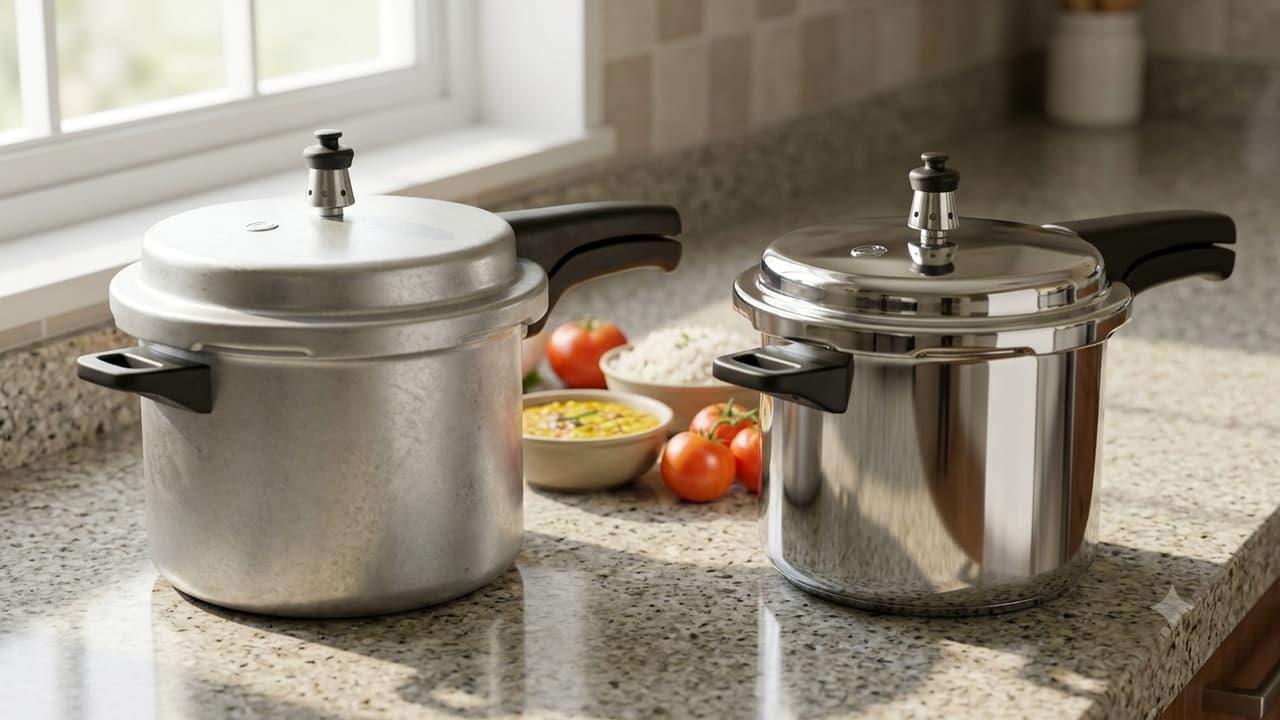
Stainless Steel Vs Aluminium Pressure Cooker: Which Is Safer For Daily Use? Which One You Should Buy?


Choosing between an aluminium and stainless steel pressure cooker depends on factors like safety, durability, budget. While aluminium offers lightweight affordability and heating, steel provides long-lasting durability and resistance to acidic foods.
A pressure cooker is a staple in many Indian kitchens, helping families prepare rice, dal, vegetables and other everyday meals quickly. However, when buying a new cooker, one common question arises: Is an aluminium pressure cooker better, or should you choose stainless steel?
Both materials have their advantages and limitations. While aluminium cookers are lightweight and generally more affordable, stainless steel models are known for their durability and resistance to corrosion. Understanding these differences can help you choose a cooker that suits your cooking habits, budget and long-term needs.
Food safety is an important consideration when choosing cookware for daily use.
Aluminium conducts heat efficiently, making it a popular choice for pressure cookers. However, the metal can react with acidic ingredients such as tomatoes, tamarind and lemon. Cooking these foods for prolonged periods in uncoated aluminium cookware may increase the amount of aluminium that transfers into food.
This does not mean that every aluminium pressure cooker is unsafe. The condition of the cookware, the food being prepared and the frequency of use all matter.
Stainless steel is generally more resistant to reactions with acidic foods and is a popular option for everyday cooking. However, some stainless steel grades contain nickel and chromium, small amounts of which may migrate into food under certain cooking conditions. People with nickel sensitivity may need to consider the material's composition.
For most households, a good-quality, properly maintained cooker that meets applicable safety standards is more important than relying on the material name alone.
Stainless steel pressure cookers are generally more resistant to corrosion, dents and everyday wear. With proper care, they can remain useful for many years, making them a practical long-term investment.
Aluminium cookers are lighter but can dent more easily. Over time, the surface may become discoloured or develop pits, particularly when exposed to unsuitable cleaning methods or certain foods.
Hard-anodised aluminium cookers have a treated surface designed to improve hardness and resistance to reactions. However, users should follow the manufacturer's care instructions and discontinue use if the cooking surface becomes significantly damaged.
Regardless of the material, a cooker should be replaced or professionally assessed if its body becomes distorted, its lid no longer fits correctly or its safety components stop functioning properly.
Cooking Performance
Aluminium is an excellent conductor of heat. It heats up quickly and transfers heat efficiently, making aluminium pressure cookers useful for routine cooking.
Stainless steel conducts heat less efficiently than aluminium. However, many stainless steel cookers feature a layered or encapsulated base that incorporates aluminium to improve heat distribution.
These designs can help reduce uneven heating while retaining the durability of stainless steel. The actual cooking performance depends on the cooker's construction, base thickness, heat source and how it is used.
Therefore, it is worth checking the base design rather than assuming that every stainless steel cooker heats slowly or that every aluminium model performs identically.
Aluminium pressure cookers are usually more affordable, making them attractive to students, smaller households and buyers working with a limited budget. Stainless steel models generally cost more upfront, although prices vary according to capacity, brand, construction and features. When comparing costs, consider how frequently you cook, how long you expect the appliance to last and whether replacement parts are readily available. A less expensive cooker may be suitable for your needs, while a more durable model could offer better long-term value.
Weight and Ease of Handling
Aluminium pressure cookers are lighter, which can make them easier to lift, move and clean. This may be particularly useful for people who regularly cook large quantities of food but prefer lighter cookware. Stainless steel cookers tend to be heavier, especially when they have a thick or layered base. Their weight can make handling a full cooker more demanding. Before buying, consider the cooker's capacity and how comfortably you can lift it when empty. Always use appropriate care when moving a hot or pressurised cooker.
Cleaning and Maintenance
Both types of pressure cookers require regular cleaning and inspection. Aluminium surfaces can discolour over time, and abrasive scrubbers or unsuitable cleaning products may damage the finish. Stainless steel is generally resistant to corrosion, although it can develop stains or burnt-on food deposits.
For either material, follow the manufacturer's cleaning instructions. Pay particular attention to the gasket, pressure regulator, steam vent and safety valve. Food residue blocking the vent or a worn sealing ring can interfere with safe operation.
Never attempt to open a pressure cooker while it is pressurised. Allow the pressure to fall according to the manufacturer's instructions before opening the lid.
A stainless steel pressure cooker is a strong choice for households looking for durability, corrosion resistance and versatility, particularly when acidic ingredients feature regularly in their meals. A well-made aluminium cooker can also be a practical option for buyers who prioritise affordability and lighter cookware.
There is no need to assume that all aluminium cookers are harmful or that every stainless steel model is automatically safe. Product quality, applicable safety certification, correct usage and regular maintenance all play important roles. Ultimately, choose a pressure cooker that suits your budget and cooking routine, meets the relevant safety requirements and can be maintained properly over time.

Legal Disclaimer:
MENAFN provides the
information “as is” without warranty of any kind. We do not accept
any responsibility or liability for the accuracy, content, images,
videos, licenses, completeness, legality, or reliability of the information
contained in this article. If you have any complaints or copyright
issues related to this article, kindly contact the provider above.


Comments
No comment