


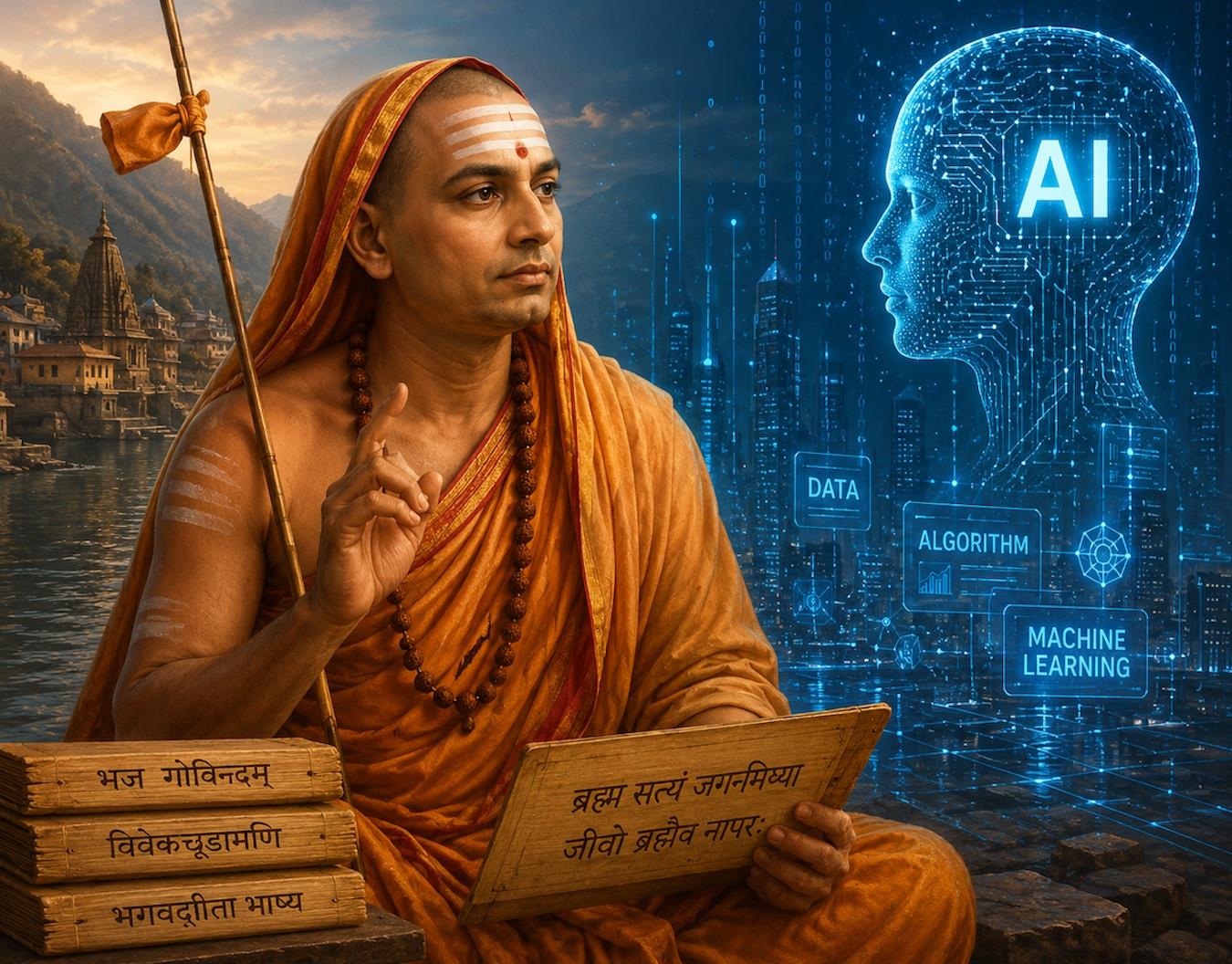
Can AI Be Conscious? Ask The Indian Sages


A 2025 survey of 582 AI researchers asked how likely it is that AI systems with subjective experience exist today. The median answer was 1%. The mean was 12%, suggesting a minority rates the possibility far higher.
While that question remains unresolved, another is becoming urgent: what happens to our judgment when machines do more of our thinking for us?
Indian philosophy offers a useful distinction between the mind as an instrument and the awareness in which its activities are known. It does not settle whether machines can be conscious. It helps us examine what happens when a capable instrument begins to speak and decide for us.
Different maps of the mindThe modern debate often treats consciousness as a single phenomenon awaiting explanation. In Europe, Descartes linked thought closely with awareness, and Locke described consciousness as“the perception of what passes in a man's own mind.” Other traditions draw the boundaries differently.
In classical Chinese thought, xin, usually translated“heart-mind,” brings thinking, feeling and intention together. Confucian thinkers tie it to moral cultivation, and Mencius saw innate moral beginnings that need care and practice to develop. These traditions do not all organize questions of mind around what researchers now call subjective experience.
Indian thought draws the line elsewhere again.
A common Vedantic account describes the Antahkarana, or inner instrument, through four interacting functions: manas, buddhi, ahamkara and chitta. Manas takes in impressions and weighs options. Buddhi discerns and decides. Ahamkara supplies the sense of“I” and“mine.” Chitta stores and recalls memories and impressions.

Legal Disclaimer:
MENAFN provides the
information “as is” without warranty of any kind. We do not accept
any responsibility or liability for the accuracy, content, images,
videos, licenses, completeness, legality, or reliability of the information
contained in this article. If you have any complaints or copyright
issues related to this article, kindly contact the provider above.


Comments
No comment