


Beyond Bali's Beaches: Why Tourists Flock To Uluwatu For A Traditional Fire Dance


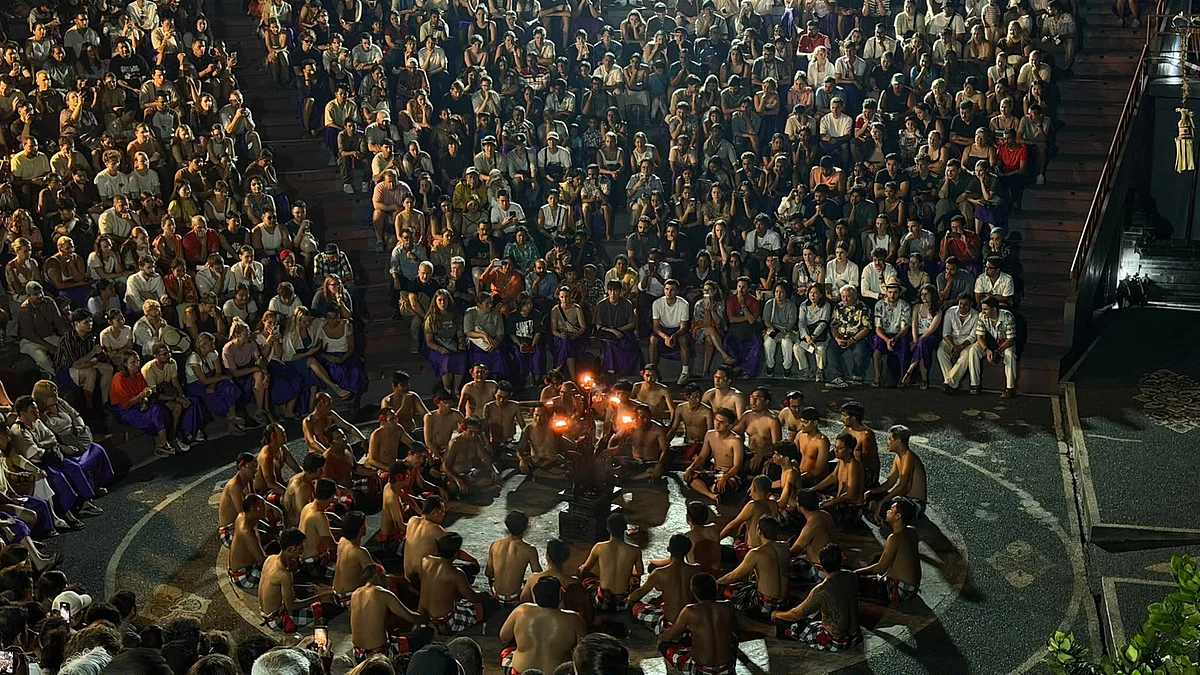
At Uluwatu Temple, one of Bali's best-known cultural landmarks, large crowds gathered to watch the traditional Kecak fire dance, a performance that brings the island's heritage to life through rhythmic chanting, colourful costumes and dramatic scenes involving fire.
Recommended For YouDuring a recent visit, Khaleej Times witnessed the crowds at the temple as visitors gathered for the show, which offers a glimpse into Balinese traditions and storytelling.
Stay up to date with the latest news. Follow KT on WhatsApp Channels.
The performance began with a group of men sitting in a circle, chanting in rhythm. As their voices filled the open-air theatre, different characters entered the stage, bringing an ancient story to life.
Among them was Hanuman, the white monkey warrior, whose dramatic appearance and encounter with fire became one of the most memorable moments of the performance.
For visitors, the experience offers an opportunity to explore a different side of Bali, one shaped by history, religion and traditions that continue to be passed down through generations.
A performance without musical instrumentsUnlike many traditional dances, Kecak does not rely on a conventional musical orchestra. Instead, dozens of male performers create the rhythm using their voices, repeatedly chanting "cak, cak, cak" while raising their arms and moving in coordinated patterns.
The performance draws inspiration from the Hindu epic Ramayana, telling the story of Prince Rama and his efforts to rescue his wife, Sita, after she is abducted by Ravana.
As the story unfolds, performers dressed in traditional costumes portray different characters, with the chanting continuing throughout the show.
One of the most recognisable characters is Hanuman, who helps Rama in his search for Sita. The fire sequence associated with Hanuman adds another dramatic element to the performance, making it particularly memorable for visitors unfamiliar with the story.
How Kecak became part of Bali's cultural identityAlthough Kecak is closely associated with Balinese tradition, the modern performance developed during the 1930s. It was influenced by elements of the traditional Sanghyang ritual, which involves chanting and spiritual practices, and later developed into a theatrical performance based on the Ramayana.
Over time, Kecak became one of Bali's most recognisable cultural attractions, performed at temples and cultural venues across the island.
Today, the dance continues to introduce visitors to Balinese storytelling, while also providing a platform for local performers to share their traditions with international audiences.
Why Uluwatu attracts so many visitorsPerched on a cliff overlooking the Indian Ocean, Uluwatu Temple is among Bali's most visited cultural attractions. Known locally as Pura Luhur Uluwatu, the temple is an important place of worship for Balinese Hindus and is also famous for its coastal views.
The Kecak performance takes place in an open-air amphitheatre near the temple, with the surrounding landscape adding to the atmosphere.
The show is particularly popular around sunset, when visitors can experience the performance against the backdrop of the ocean.
During the Khaleej Times visit, the temple and performance area were crowded with visitors, highlighting the attraction's popularity. While many tourists travel to Bali for its beaches and resorts, experiences such as Kecak offer an opportunity to discover the cultural traditions that make the island distinctive.
More than a tourist attractionFor Bali, traditional performances such as Kecak are not only a form of entertainment but also a way of sharing cultural heritage.
The dance brings together elements of religion, storytelling, music and theatre, reflecting traditions that remain important to Balinese identity.
Its popularity among international visitors also shows how cultural experiences can become an important part of tourism, alongside natural attractions and hospitality.
By watching the performance, visitors are introduced to characters and stories that have influenced Balinese artistic traditions for generations.
The experience also creates opportunities for local performers to continue practising and presenting traditional art forms.
What visitors should knowThose planning to attend the Kecak performance at Uluwatu Temple should arrive early, particularly during busy travel periods, as the attraction can draw large crowds.
Performances are generally scheduled around sunset, although timings and ticket arrangements may vary. Visitors should also respect the temple's cultural and religious significance by following local dress requirements and guidelines.
For travellers hoping to experience more than Bali's beaches, the Kecak fire dance offers a memorable introduction to the island's heritage, combining traditional storytelling with one of Indonesia's most striking coastal settings.
ALSO READ- Free live music, hula hoop shows: Bluewaters turns Dubai into open-air stage on weekends Watch: Recreation of Kerala festival in Dubai pays tribute to UAE leaders Travel: How to explore the key sights and sounds of Greenland's capital

Legal Disclaimer:
MENAFN provides the
information “as is” without warranty of any kind. We do not accept
any responsibility or liability for the accuracy, content, images,
videos, licenses, completeness, legality, or reliability of the information
contained in this article. If you have any complaints or copyright
issues related to this article, kindly contact the provider above.


Comments
No comment