


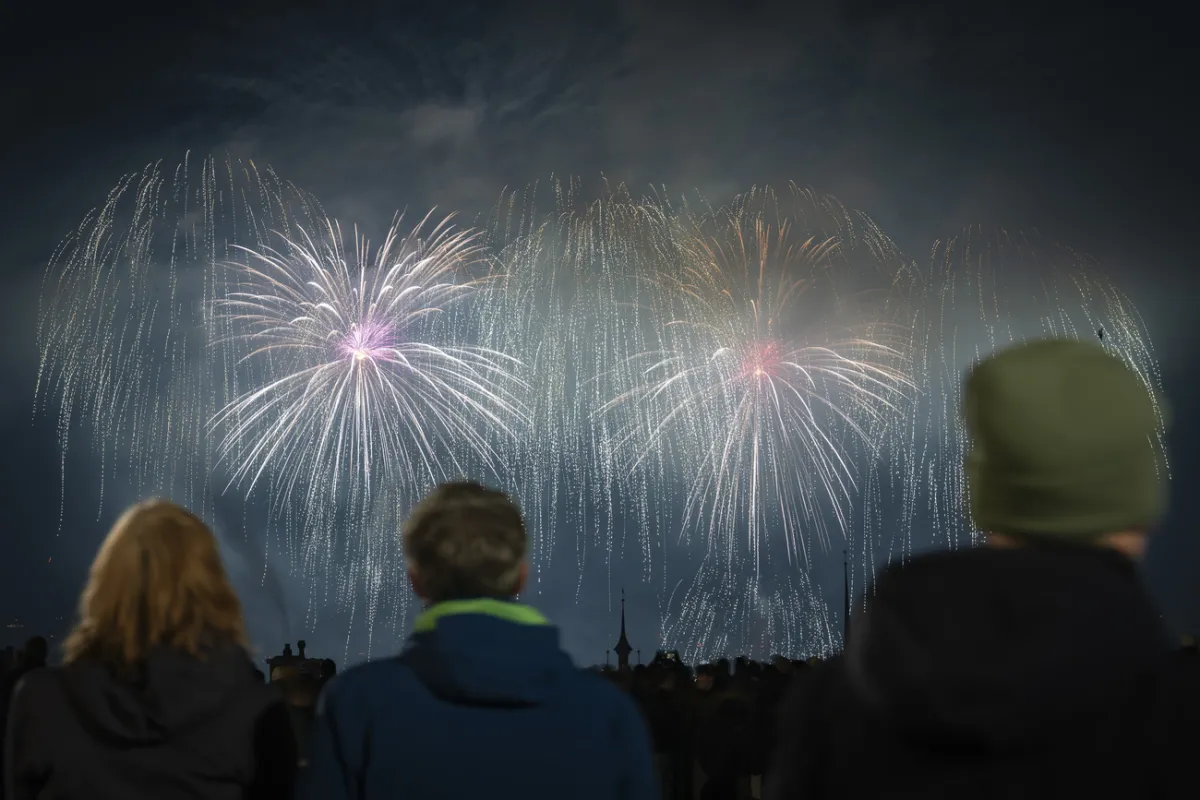
Nuisance Or Festive Tradition? Swiss Vote On Fireworks Ban


As a correspondent at the Federal Palace for SWI swissinfo, I report on federal politics for the Swiss Abroad. After studying at the Academy of Journalism and Media at the University of Neuchâtel, my career path initially took me to various regional media, working in the editorial offices of Journal du Jura, Canal 3 and Radio Jura bernois. Since 2015, I have been working in the multilingual editorial department of SWI swissinfo, where I continue to practise my profession with passion.
-
More from this aut
French Departm
-
Deutsch
de
Feuerwerksinitiative: Am 29. November stimmt die Schweiz über Böller und Raketen ab
Read more: Feuerwerksinitiative: Am 29. November stimmt die Schweiz über Böller und Raket
Français
fr
Nuisance ou tradition festive? Les Suisses voteront le 29 novembre sur une restriction des feux d'artifice
Original
Read more: Nuisance ou tradition festive? Les Suisses voteront le 29 novembre sur une restriction des feux d'art
Italiano
it
Tradizione da salvare o fastidio da limitare? La Svizzera vota sui fuochi d'artificio
Read more: Tradizione da salvare o fastidio da limitare? La Svizzera vota sui fuochi d'arti
For a long time in Switzerland, no one could imagine Swiss National Day on August 1 without fireworks displays and other noisy firecrackers. In recent years, however, drought has regularly led to bans on them in several cantons. At the same time, fireworks are at the centre of a heated debate over their usefulness and the nuisance they cause. Their fate will be decided at the ballot boxExternal link on November 29.
What does the initiative call for?It calls for a ban on the sale and use of noisy fireworks. Pyrotechnic devices that do not produce noise, such as Bengal lights or volcanoes, would remain permitted.
The initiative does, however, provide for exceptions. The cantons could grant special permits for events of supra-regional importance. Large fireworks displays could therefore still be organised for certain celebrations, such as August 1 or New Year's Eve, provided a cantonal exemption is obtained.
It specifies, however, that these events should take place within a clearly defined timeframe and location, to allow a wide audience to enjoy them and to significantly reduce any negative effects.
Who is behind the initiative?The initiative was launched by animal welfare organisations. A broad alliance of organisations from the fields of agriculture, health and nature conservation has formed in support of it. The initiators collected 137,429 signatures – more than the 100,000 required to trigger a popular vote.
What do supporters argue?Supporters of the initiative claim they want to protect animals, people and nature by reducing the nuisance caused by fireworks. They argue that sudden loud bangs can trigger panic in animals and harm their welfare. Some animals run away and are never found by their owners.
They believe the public is also affected by this noise pollution. Children, the elderly and people with mental health conditions are said to be particularly sensitive to the loud bangs.
Supporters of the initiative also highlight the environmental impact of fireworks. According to them, these generate around 1,300 tonnes of waste each year, some of which ends up in public spaces or on agricultural land. They also point out that the burning of fireworks releases several hundred tonnes of fine particulate matter, metals and other pollutants into the air.
What do opponents argue?In the eyes of its opponents, the initiative goes too far. First and foremost, they point out that the cantons and municipalities already have the right to restrict the sale and use of fireworks. Indeed, several of them have imposed restrictions this year due to the fire risks associated with the drought.
Opponents also emphasise that fireworks are only used for a few days a year. In their view, the nuisance they cause is therefore already limited in time and space.
They also believe that the initiative threatens a deeply rooted popular tradition, associated with the August 1 celebrations and, increasingly, with New Year's Eve celebrations. Finally, they argue that a ban would infringe upon the economic freedom of businesses that manufacture, import, sell or use fireworks for professional purposes.
Who supports it, and who opposes it?Parliament and the government recommend rejecting the initiative. In parliament, the left-wing Green Party and the left-wing Social Democratic Party supported the initiative, while the right-wing Swiss People's Party, the centre-right Radical-Liberal Party and the Centre Party strongly opposed it.
How many fireworks does Switzerland use?Annual fireworks consumption varies significantly from year to year in Switzerland. According to the Federal Office of Police, between 1,200 and 2,300 tonnes of fireworks have been sold in the country each year over the past decade. Around three-quarters of the pyrotechnic devices used are imported. China is by far the main supplier. Swiss production mainly consists of volcanoes, Bengal lights, sparklers, confetti cannons, table bombs and other table fireworks.
How do other countries regulate fireworks?The debate on fireworks extends far beyond Switzerland's borders. Several countries have already restricted or banned the use of fireworks.
In the Netherlands, where New Year's Eve celebrations are regularly marred by accidents and violence, a ban on most fireworks intended for the public is set to come into force before the end of the year. The country would thus become the second European nation, after Ireland, to impose such strict limits on the use of fireworks by private individuals. Outside Europe, Australia and Singapore have also adopted highly restrictive regulations, with the use of fireworks largely restricted to authorised professionals.
Other countries have opted for a more nuanced approach. In Germany, for example, fireworks may generally only be set off around New Year's Eve, and several cities have established zones where they are banned.
Edited by Pauline Turuban. Adapted from French by Patrick Julian Huwyler/ts
Popular Stories Most DiscussedIn compliance with the JTI standards
More: SWI swissinfo certified by the Journalism Trust Initiati
You can find an overview of ongoing debates with our journalists here. Please join us!
If you want to start a conversation about a topic raised in this article or want to report factual errors, email us at ....
Read more
Legal Disclaimer:
MENAFN provides the
information “as is” without warranty of any kind. We do not accept
any responsibility or liability for the accuracy, content, images,
videos, licenses, completeness, legality, or reliability of the information
contained in this article. If you have any complaints or copyright
issues related to this article, kindly contact the provider above.


Comments
No comment