


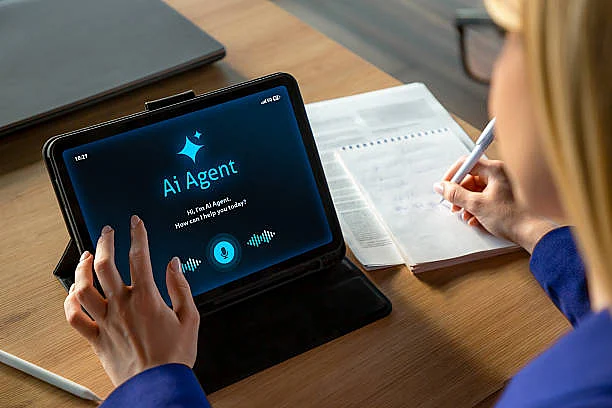
AI Agents Could Be Tricked Into Accessing Sensitive UAE Government Data, Cyber Chief Warns


As government agencies move towards AI-native operations, the Department of Government Enablement is building layers of oversight around AI models and agents, including monitoring, auditing, guardrails and the ability to shut down systems if they misbehave.
Recommended For YouNajyb Al Maskari, executive director of the Government Cybersecurity Operations Sector at DGE, said the biggest danger was not simply an AI system making a mistake, but an attacker manipulating it into carrying out an action that appears authorised.
Stay up to date with the latest news. Follow KT on WhatsApp Channels
“Malicious attackers will tell the agent to do certain things, and the agent will carry out those tasks as if they were authorised,” he said.“You don't want to have someone hack into your system and then say, 'Give me all your financial records or transfer money.'”
“I can tell you that we are securing all 50 entities,” he added, saying the DGE has more than 50 government entities under its umbrella and is working towards an AI-native government across all of them.
The security approach, he added, has to be built around“defence in depth”, rather than relying on a single protection.
“That includes oversight, auditing, observation of the models, limitations imposed by guardrails, and the ability to shut down a model if it misbehaves,” he said.
The critical element is being able to see what an AI agent is doing after it has been deployed, he said.
“In many cases, models are created, and then agents are built on top of those models to do something, and then they're just left to run. That's where you have significant issues arising.”
His warning comes as AI agents move beyond answering questions to performing tasks, accessing systems and carrying out multi-step workflows on behalf of users.
Dr Najwa Aaraj, CEO of the Technology Innovation Institute, separately warned at AI Everything last week, that an AI agent operating inside a computer system without real-time monitoring could effectively become a piece of malware.
“If you cannot, in real time, monitor the execution of this agent, this is a malware that got access to your machine."
Aaraj called for stronger standards around AI agents, including clear identities for non-human systems and controls over what they can access and execute.
The concern is already being reflected in the cybersecurity industry.
Vladislav Tushkanov, Head of the Kaspersky AI Research Center, said AI agents were becoming an attractive target because they can operate from machines with access to corporate systems, credentials and sensitive information.
“AI agents are actually a very valuable target for attackers."
He pointed to malicious“skills” - packaged instructions and tools that allow an agent to perform specific tasks - as one emerging attack route.
An attacker could hide malicious code inside a skill or instruct an agent to download and run a file from an external address, he said.
“What we are seeing is a new kind of attack called 'living off local agents',” Tushkanov said, describing attacks in which criminals use an AI agent already installed on a machine to search for valuable information rather than carrying out the search themselves.
“They can ask the agent to do that for them,” he explained.
The risk extends beyond government systems. Tushkanov said AI was also lowering the barrier for less sophisticated cybercriminals, allowing them to launch more attacks, against more targets, at greater speed.
“The nature of cyberattacks is still the same, but there are much more of them and at a much faster scale."
Kaspersky has also detected attacks in which criminals impersonated popular AI services to distribute malware, as well as fake software packages aimed at AI developers that appeared legitimate but contained malicious code.
For organisations deploying AI agents, Tushkanov said conventional cybersecurity protections remain important, but must be adapted to the new technology.
“If there is a prompt injection attack in the skill that tells the agent to download a malicious file, you still need to detect just that.'
He recommended a layered approach combining endpoint protection, detection and response, and threat intelligence.
Al Maskari said the objective for Abu Dhabi was ultimately an AI-native government that people could trust.
“We are working on an AI-native government that is trusted by the citizens and residents of the UAE and is secure at all levels,” he said.“AI is working with a focus on the human as the main stakeholder.”
ALSO READ- Abu Dhabi firm explores security concerns as AI agents act on users' behalf Abu Dhabi says governments should use AI to 'rewire' services, not just automate UAE firms lead world in AI agent adoption but face control gap

Legal Disclaimer:
MENAFN provides the
information “as is” without warranty of any kind. We do not accept
any responsibility or liability for the accuracy, content, images,
videos, licenses, completeness, legality, or reliability of the information
contained in this article. If you have any complaints or copyright
issues related to this article, kindly contact the provider above.


Comments
No comment