


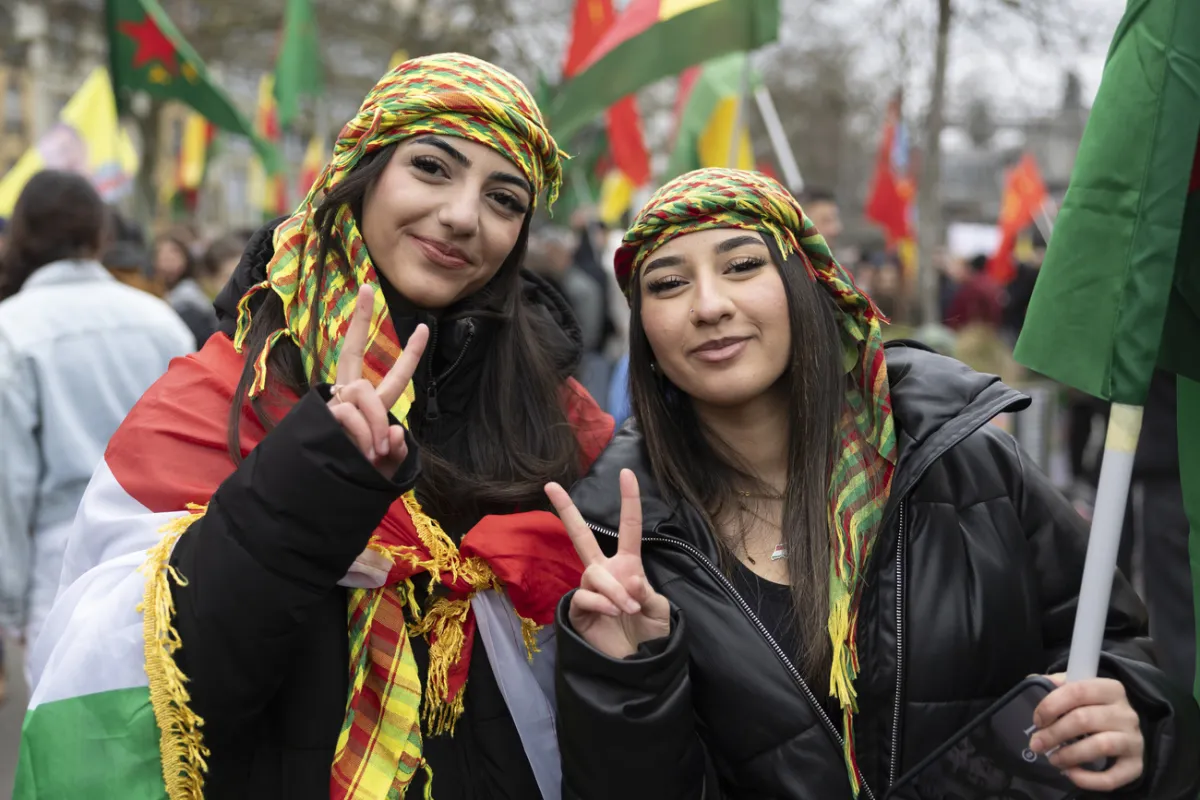
Is Switzerland's Decentralised Democracy A Helpful Model For The Kurds?


-
Deutsch
de
Schweizer Föderalismus als Modell für das kurdische Volk?
Read more: Schweizer Föderalismus als Modell für das kurdische
Français
fr
Le modèle suisse est-il pertinent pour la question kurde?
Original
Read more: Le modèle suisse est-il pertinent pour la question k
العربية
ar
الفدرالية والتعدد اللغوي: ما الذي يمكن للنموذج السويسري تقديمه للمسألة الكردية؟
Read more: الفدرالية والتعدد اللغوي: ما الذي يمكن للنموذج السويسري تقديمه للمسألة الك
The Kurds, whose population is estimated at 40 to 50 million, are one of the largest ethnic groups without their own country. After the First World War, their historical territory was divided – by a treaty signed in Lausanne, Switzerland – between four states: Turkey, Iran, Iraq, and Syria.
For decades, the Kurds have led political and military struggles to defend their status in these countries, with mixed results. Recently, Kurdish autonomy in northern Syria was dissolved after negotiations with the government in Damascus. This summer, Turkey passed a law aimed at ending the armed conflict with Kurdish militants.
Today's debates about the Kurdish question are generally no longer limited to the expansion and protection of Kurdish minority rights. They also consider models of governance and democracy that would include and recognise the distinct identities of all citizens of a country.
Although Switzerland does not appear, at first glance, to be an obvious model for the Kurds, some Kurdish activists and intellectuals living in the country are intrigued by its example. Even if an independent Kurdish state is never established, they believe Switzerland's multilingualism and elements of its federal system could inspire reforms in the countries where Kurds live as minorities, allowing greater autonomy.
More More History When the Middle East was reinvented in SwitzerlandThis content was published on Jul 12, 2023 The 1923 Lausanne Peace Treaty oversaw the end of the Ottoman Empire. One hundred years later, it is still a political issue.
Read more: When the Middle East was reinvented in Switze
Legal Disclaimer:
MENAFN provides the
information “as is” without warranty of any kind. We do not accept
any responsibility or liability for the accuracy, content, images,
videos, licenses, completeness, legality, or reliability of the information
contained in this article. If you have any complaints or copyright
issues related to this article, kindly contact the provider above.


Comments
No comment