


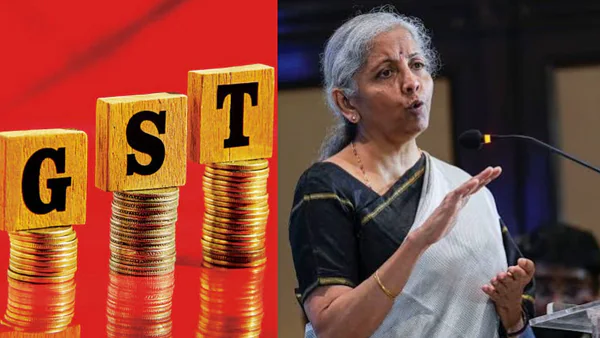
GST Compliance May Tighten For Businesses Paying For Overseas Software, Cloud And Consulting Services


The proposal, recommended by the 57th GST Council, applies to businesses with an annual turnover of ₹5 crore or more. If implemented, it could require companies to modify how they document, validate and report transactions on which they pay GST under the reverse charge mechanism.
Under the existing framework, Indian businesses purchasing services from overseas suppliers are generally required to account for applicable GST under reverse charge. Since foreign suppliers do not issue Indian GST invoices, the Indian recipient issues a self-invoice where required under GST rules.
Quick answers to key questions
.5 QUESTIONS1Which businesses could be covered by the proposed GST e-invoicing rules for imported services?⌵The proposal recommended by the 57th GST Council would apply to businesses with annual turnover of ₹5 crore or more. It could cover imported services and purchases from unregistered suppliers subject to reverse charge.
2How do Indian businesses currently report GST on services purchased from overseas suppliers?⌵Indian businesses generally account for applicable GST under the reverse charge mechanism. Because overseas suppliers do not issue Indian GST invoices, the Indian recipient issues a self-invoice where required under GST rules.
3What could change for self-invoices under the proposed GST e-invoicing expansion?⌵The proposal could bring transactions involving imported services into a more standardised e-invoicing framework. The detailed requirements, including how these invoices would be integrated into the Invoice Management System, have not yet been clarified.
4How could the proposed GST return changes affect ITC reconciliation?⌵The proposed mechanism aims to reduce mismatches between tax liabilities declared in returns and input tax credit claimed. It could strengthen reconciliation between GSTR-3B and credit available in GSTR-2B.
5When could the proposed GST return correction mechanism take effect?⌵The proposed changes could take effect from the April 2027 return period. The revised mechanism is to be published for time-bound consultation, and final requirements will depend on the detailed framework and approval.
Also Read | India's steel industry bucks global slowdown as demand and output rise: FMThe proposed expansion could bring these transactions into a more standardised e-invoicing framework, although the precise implementation requirements are yet to be clarified.
GST return correction mechanism proposedAlongside the e-invoicing proposal, the council has recommended a mechanism to correct tax liabilities and input tax credit (ITC) reported in GST returns. The changes could take effect from the April 2027 return period.
The revised mechanism will be placed in the public domain for time-bound consultation. Finance Minister Nirmala Sitharaman has been authorised to approve modifications based on stakeholder feedback.
According to the council, the proposed changes aim to reduce discrepancies between tax liabilities declared by businesses and the ITC they claim. This could help limit demand notices and system-generated intimations arising from mismatches in GST returns.
Invoice Management System is gaining importanceThe proposals come as GST compliance increasingly relies on the Invoice Management System (IMS), which allows buyers to accept, reject or keep supplier invoices pending for review.
The proposed changes could strengthen the reconciliation of credit reported in GSTR-3B with the credit available in GSTR-2B. Businesses may therefore need to improve invoice validation, supplier verification and the accuracy of their accounting data.
Most companies may not need to replace their existing accounting systems, but modifications could be necessary to accommodate the additional compliance requirements, according to experts.
Businesses that depend heavily on manual reconciliation could face greater operational challenges as invoice matching and return reporting become more closely integrated.
Credit notes and delayed adjustments may pose challengesThe transition could also create reconciliation issues involving credit notes, delayed supplier adjustments and ITC reversals. Companies may need closer coordination among procurement, accounts payable and tax teams to ensure that invoices and credit claims are recorded correctly.
Also Read | Rent paid to parents: How to claim HRA exemption and reduce your tax liabilityFor imported services, a standardised self-invoicing process could improve the connection between GST payments, return reporting and ITC claims.
However, the manner in which invoices relating to imported services will be integrated into IMS remains to be clarified.
Experts said the GST Council's recommendations indicate a gradual shift towards an IMS-driven compliance framework. The proposed measures are intended to improve reporting accuracy and reduce mismatches, while businesses may need to strengthen internal controls and review their existing GST compliance processes.
The final operational requirements will depend on the detailed framework issued after stakeholder consultation and approval of the proposed changes.

Legal Disclaimer:
MENAFN provides the
information “as is” without warranty of any kind. We do not accept
any responsibility or liability for the accuracy, content, images,
videos, licenses, completeness, legality, or reliability of the information
contained in this article. If you have any complaints or copyright
issues related to this article, kindly contact the provider above.


Comments
No comment