


Gold Jewellery At Home: Know When Income Tax Applies And When It Doesn't


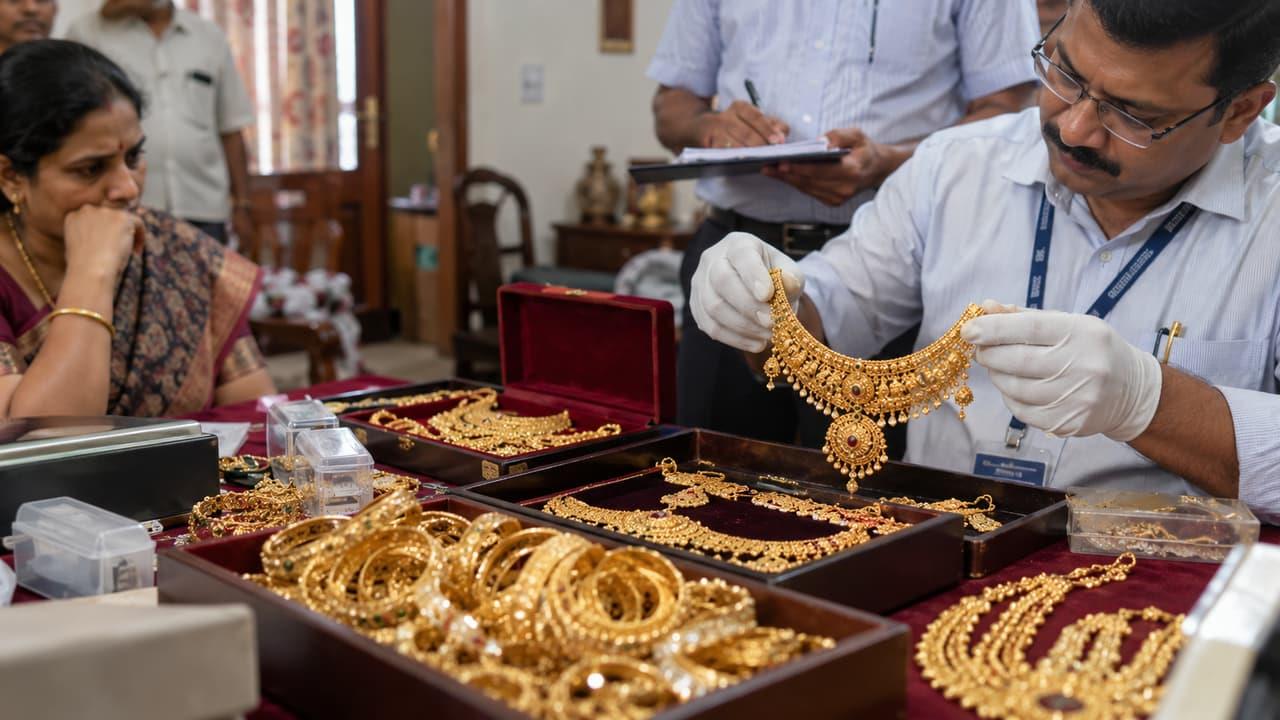
Income tax officials found 3,877.5 grams of gold jewellery during a raid at Ankur Sharma's family house in Ghaziabad, Uttar Pradesh. The gold was worth around ₹1.46 crore.
The family explained that they collected these jewels over many generations. They said the gold included ancestral property and gifts from weddings and family functions. But the officials did not accept the source for a part of the jewellery. They added ₹20.45 lakh each to the income of three family members.
The Delhi Income Tax Appellate Tribunal heard this case. The tribunal checked the family's financial status and ordered the removal of this income addition. So, can you keep unlimited gold at home?
Income tax officials generally do not seize gold jewellery during raids if a married woman has up to 500 grams, an unmarried woman has 250 grams, and a male family member has 100 grams. These limits link back to the guidelines issued in 1994.
But these are not the legal maximum limits for holding gold. The central government issued a clarification on December 1, 2016. The government stated that there is no general limit for holding gold jewellery if you bought it with explained income or received it as an inheritance.
The officer has the power to not seize even higher quantities of jewellery based on family customs and traditions. So, you cannot say that keeping more than 500 grams of gold is illegal or automatically attracts tax.
Keeping a large amount of gold jewellery at home does not automatically cause an income tax problem. But officials can ask questions about how you got the jewels, whether you had the income to buy them, or if they came as ancestral property.
You might face an inquiry if your explanation about the jewellery's source is not believable. Officials will also check if the assets match your family's financial status. They must consider available documents and other circumstances instead of just looking at the quantity of jewels.
Your jewellery does not become taxable just because you do not have old receipts. At the same time, you might have to provide an explanation if officials question the source of the jewels.
Many families do not have purchase receipts for jewellery handed down from their grandmothers and mothers. You might have also lost the documents for jewels received during weddings many years ago. Other proofs become very important in such situations to explain how you got the jewels.
You can use old jewellery valuation documents, insurance records, wills, or property partition deeds. Wedding photos, family income records, and bank transaction statements can also help you.
We cannot guarantee that officials will accept all these as sufficient proof in every case. The final decision depends on when you bought the jewels, your family background, and the available proofs. So, you should always keep your available documents safe.
The income tax officer accepted 2,250 grams of jewellery out of the 3,877.5 grams found at Ankur Sharma's family house. The officer calculated this based on the guideline limits for nine family members. The officer treated the remaining 1,627.5 grams of jewels, worth about ₹61.35 lakh, as unexplained wealth. He then added ₹20.45 lakh each to the income of three family members.
But the tribunal checked the family's income tax returns, financial status, and cash withdrawals made over many years. The tribunal also considered the family's explanation that they got the jewels through inheritance and family functions. The tribunal then ordered the removal of this income addition.
The tribunal passed this order on October 6, 2023. The main point of this case is that officials cannot treat the remaining jewels as unexplained wealth just because the quantity exceeds the guideline limits.
You cannot say that you have to pay tax just because you have a large amount of gold jewellery at home. Similarly, we cannot guarantee that the income tax department will never ask questions under any circumstances.
- The 500, 250, and 100 grams limits are not the legal maximum limits for holding gold. You must safely keep the proofs that help explain the background of your ancestral jewels and wedding gifts. You should get help from a qualified tax consultant based on your situation if you receive a notice from the income tax department.
The tribunal passed this order after checking the specific family's income, financial status, and proofs. So, you should not take this as an automatic exemption that applies to all families.
In short, the amount of gold you have at home is not the only thing that matters. Your ability to explain how you got it is equally important.

Legal Disclaimer:
MENAFN provides the
information “as is” without warranty of any kind. We do not accept
any responsibility or liability for the accuracy, content, images,
videos, licenses, completeness, legality, or reliability of the information
contained in this article. If you have any complaints or copyright
issues related to this article, kindly contact the provider above.


Comments
No comment