


CJP Leaders Released: What The One-Year Peace Condition Means


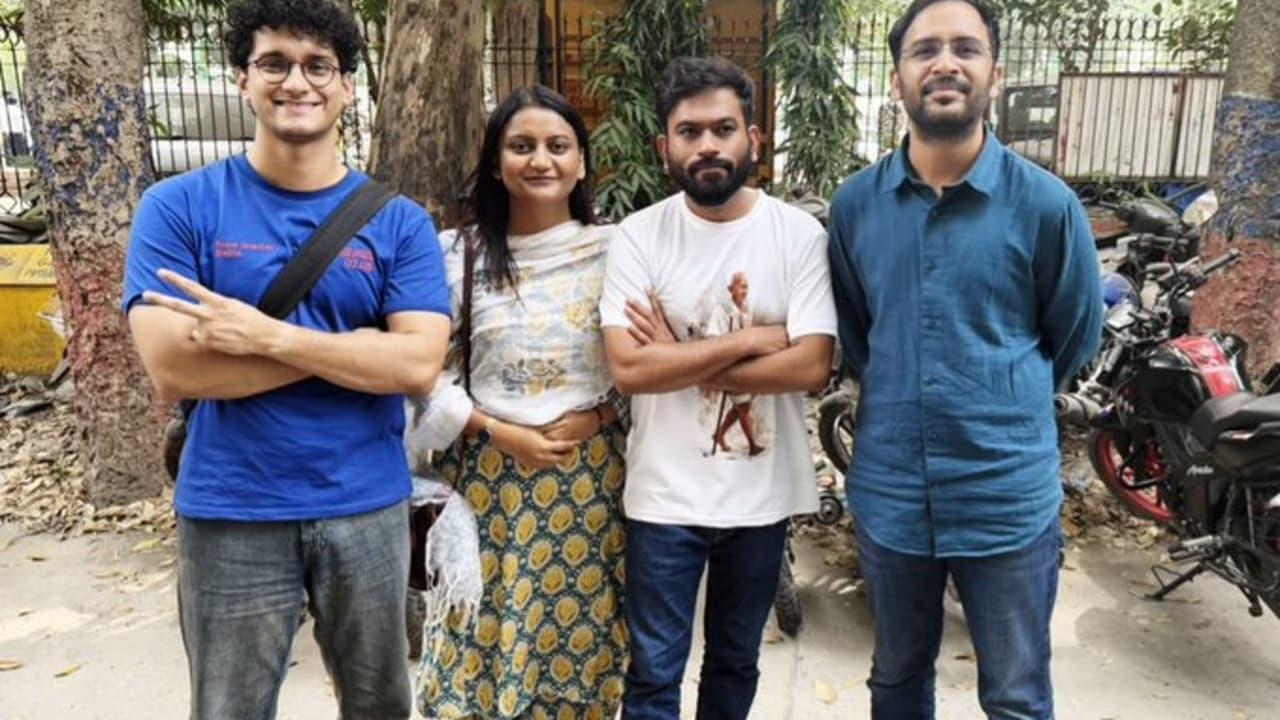
CJP's Dipke, Ranka and Das were released in Delhi on October 11 after furnishing a Rs 50,000 surety bond. Their release follows preventive arrests under Sections 126 and 170 of BNSS, with a condition to maintain peace and good behaviour for one year.
Cockroach Janata Party (CJP) leaders Abhijeet Dipke, Ashutosh Ranka and Saurav Das were released from detention in Delhi on Sunday, October 11, after furnishing a surety bond of Rs 50,000. However, their release comes with a key condition i.e. they must maintain peace and good behaviour for one year.
#WATCH | Delhi: CJP leaders Abhijeet Dipke, Ashutosh Ranka, and Saurav Das at a police station after they were released from Delhi Cantt Police Station. ANI (@ANI) October 11, 2026
#WATCH | Delhi: CJP leaders Abhijeet Dipke, Ashutosh Ranka, and Saurav Das arrive at a Police Station after they were released from Delhi Cantt Police Station. ANI (@ANI) October 11, 2026
The three leaders were produced before the Special Executive Magistrate (SEM) Court in Delhi Cantonment following their preventive arrest on October 10. Delhi Police said the necessary legal procedures had been followed and that the court released them after the bond was furnished.
The detention came as Delhi witnessed a major security clampdown ahead of a planned protest at Jantar Mantar. CJP leaders and opposition parties have been demanding the resignation of Chief Election Commissioner Gyanesh Kumar over alleged irregularities in the Special Intensive Revision (SIR) of electoral rolls.
According to Delhi Police, the three leaders were released after a surety bond of Rs 50,000 was furnished for maintaining peace and good behaviour for a period of one year.
CJP leaders under preventive arrest have been released by a Special Executive Magistrate (SEM) Court in New Delhi. All India Radio News (@airnewsalerts) October 11, 2026
The condition means that the leaders are required to comply with the peace bond and avoid conduct that could lead to a breach of peace or disturbance of public tranquillity during the specified period. It is a preventive legal measure rather than a punishment imposed following a criminal conviction.
The police announcement did not describe the release as an unconditional one. The surety bond forms part of the proceedings initiated against the three leaders under the Bharatiya Nagarik Suraksha Sanhita (BNSS).
CJP legal affairs head Ratna Singh confirmed their release in a post on X, stating that the Executive Magistrate's court had released Abhijeet Dipke, Saurav Das and Ashutosh Ranka.
The development brought their detention to an end, although the peace and good behaviour requirement remains in place for the period specified by the court.
The three CJP leaders were detained on October 10 after their flight landed in Delhi. They had travelled to the national capital to participate in a protest against Chief Election Commissioner Gyanesh Kumar.
Delhi Police subsequently confirmed that preventive arrests had been made under Sections 126 and 170 of the BNSS. The leaders were produced before the SEM Court in Delhi Cantonment on October 11.
In its statement on X, the police said: "All due legal procedures were followed and they were produced before the SEM Court, Delhi Cantt on 11.10.2026."
The authorities said a surety bond of Rs 50,000 had been furnished for maintaining peace and good behaviour for one year before the three were released.
Preventive action is intended to avert a possible breach of peace or the commission of a cognisable offence. It is legally distinct from an arrest made to investigate an alleged offence that has already taken place.
The two provisions invoked by the police serve different purposes in preventive policing.
Section 126: Security for keeping the peace
Section 126 of the BNSS allows an Executive Magistrate to initiate proceedings against a person when there is sufficient ground to believe that the person is likely to commit a breach of peace or disturb public tranquillity.
The magistrate can require the person to show cause why they should not be ordered to execute a bond, with or without sureties, to maintain peace. The period of such a bond cannot exceed one year.
The provision is preventive in nature. Its purpose is to address a potential threat to public order before a breach of peace occurs, rather than to punish a person for an offence already proved in court.
Section 170: Arrest to prevent a cognisable offence
Section 170 of the BNSS deals with preventive arrests by the police. It permits an arrest without a warrant when a police officer knows of a design to commit a cognisable offence and believes that the offence cannot otherwise be prevented.
The provision also places a limit on detention under this section. A person arrested under Section 170 cannot ordinarily be detained for more than 24 hours under that provision unless further detention is authorised under another applicable legal provision.
The invocation of these sections does not, by itself, establish that the three leaders committed a criminal offence. Their detention was preventive, and their release followed proceedings before the Executive Magistrate.
The detention of the CJP leaders came amid heightened security in the national capital. More than 7,000 protesters were detained at several locations on Saturday as police prevented groups from reaching Jantar Mantar.
Several opposition leaders, including former chief ministers Arvind Kejriwal, Mamata Banerjee, Pinarayi Vijayan and Manik Sarkar, were also detained while attempting to join the protest, according to the information provided.
The CJP renewed its call for a protest at Jantar Mantar on Sunday, while security arrangements remained tight. More than 30,000 police and paramilitary personnel were expected to be deployed across Delhi.
The protest was linked to demands for the resignation of Chief Election Commissioner Gyanesh Kumar over alleged irregularities in the Special Intensive Revision of voter rolls. The allegations have become a point of contention between the opposition and the authorities.
The CJP's planned demonstration and the preventive detentions have placed the spotlight on the police response to protests and the use of legal provisions intended to maintain public order.
Following the release, the CJP announced that it would hold a press conference at 2 pm on Sunday. National spokesperson Ashutosh Ranka told ANI that the party would address the media after the leaders were released.
The briefing is expected to provide the party's response to the detention and the conditions attached to the leaders' release.
For now, the immediate legal development is that Dipke, Ranka and Das are out of detention after furnishing the required surety bond. However, their release is subject to the one-year peace and good behaviour condition specified in the proceedings.
The distinction is important: the three leaders have been released, but the preventive proceedings and the conditions attached to their release should not be confused with a finding of guilt in a criminal trial.
(With inputs from agencies)

Legal Disclaimer:
MENAFN provides the
information “as is” without warranty of any kind. We do not accept
any responsibility or liability for the accuracy, content, images,
videos, licenses, completeness, legality, or reliability of the information
contained in this article. If you have any complaints or copyright
issues related to this article, kindly contact the provider above.


Comments
No comment