


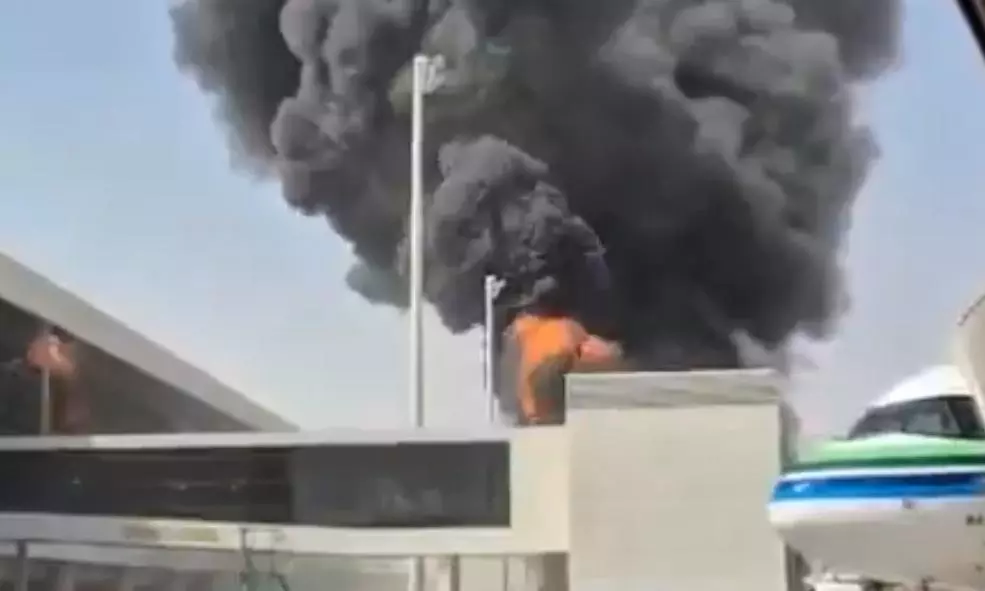
Houthi Attack On Riyadh Airport Kills 12, Injures 309


The General Authority of Civil Aviation said the dead included four Saudi citizens, two Bangladeshi nationals and one citizen each from the United States, Egypt, Jordan, Syria, Palestine and Sudan. Several of the injured were in critical condition and were receiving treatment at hospitals. The attack also caused damage to airport facilities.
The strike was the third attack on King Khalid International Airport within a week. Reuters reported that the latest incident occurred without warning, and Saudi Arabia's threat-warning system had not issued an alert before the attack. The earlier incidents also caused casualties and significant damage to a Saudi commercial aircraft.
The Iran-backed Houthi movement in Yemen claimed responsibility for the latest attack, according to Reuters. The Saudi-led coalition fighting the group described the strike as a war crime under international humanitarian law and vowed a decisive response, although it did not immediately provide details of possible retaliatory action.
Airport operations were temporarily suspended as authorities assessed the damage and checked the safety of facilities. Airlines cancelled or diverted flights, while Western diplomatic missions advised their citizens to avoid the airport and surrounding areas. Hospitals in Riyadh received large numbers of casualties, with some victims transported by ambulance and helicopter.
U.S. President Donald Trump said Washington was considering whether to join Saudi Arabia's military campaign against the Houthis. The prospect of direct U.S. involvement raises the risk of a broader regional confrontation as attacks on Saudi infrastructure and shipping routes intensify.
The attack comes amid renewed fighting in Yemen after the collapse of a ceasefire that had helped contain the conflict. Saudi-backed Yemeni government forces have launched an offensive against Houthi-held territory, while the Houthis have expanded attacks on Saudi targets and threatened commercial aviation.
The escalation has also raised concerns about regional shipping and energy security, particularly around the Bab el-Mandeb Strait, a strategic maritime passage connecting the Red Sea with the Gulf of Aden. Continued attacks could disrupt air travel, threaten civilians and deepen instability across the Arabian Peninsula.

Legal Disclaimer:
MENAFN provides the
information “as is” without warranty of any kind. We do not accept
any responsibility or liability for the accuracy, content, images,
videos, licenses, completeness, legality, or reliability of the information
contained in this article. If you have any complaints or copyright
issues related to this article, kindly contact the provider above.


Comments
No comment